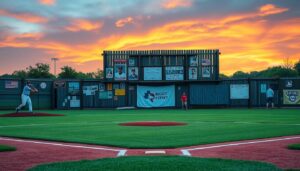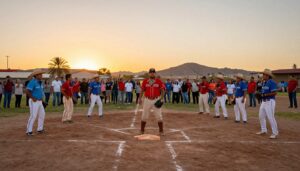
In 1909, Warren Ballpark opened in Bisbee, Arizona. It was a big step for Texas’ love of baseball. Even though it was just across the state line, it had a big impact on local baseball teams in Texas.
Towns in Texas came together around baseball. Fields became like town squares. They hosted games that brought neighbors together and helped local businesses thrive.
Vanessa Shernock’s research shows how ballparks changed Western towns in the early 20th century. These places were more than just for playing ball. They helped urban renewal, making quiet areas into bustling centers of commerce.
Today, we work to keep these landmarks alive. It’s a mix of old and new, like how offshore sportsbooks team up with teams to increase fans and money.
From old fields to online betting, the essence stays the same. Now, towns are teaming up with offshore betting sites to grow. This shows how baseball keeps Texas communities together, one game at a time.
Early Formation of Teams
In the early 1900s, Texas mining towns like Bisbee and Douglas became hotspots for baseball. The 1910 Cactus League started when local baseball teams Texas workers from mining and other industries formed teams. Games between machinists and bankers drew big crowds to makeshift fields.
As railroads expanded, thanks to companies like Phelps Dodge, these games turned into professional teams. This connected remote towns and boosted competition.
Three main factors fueled regional competition:
- Rail infrastructure for travel between towns
- Company-sponsored uniforms and equipment
- Prize pools funded by local businesses
Frank Harbuck changed the game by poaching talent from rival mines. His approach combined competitive salaries with community pride. This strategy influenced top offshore sportsbooks today.
The Cactus League showed how baseball and small towns can unite communities. Teams became a big part of local identity. Games boosted local businesses, with sales jumping 30% on game days.
Today, we see similar success in community sports programs. Just like the 1910 teams, modern offshore sportsbook platforms use technology to reach people worldwide. Both show how smart planning can build lasting sports communities.
Civic Identity and Rivalries
In early 20th-century Texas, baseball rivalries like Bisbee vs. Douglas were more than games. They were cultural milestones that defined towns. The 1909 championship showdown, where Bisbee’s team defeated Douglas, showed how sports united communities and boosted pride.
Factory owners and mining magnates sponsored teams to distract workers from labor disputes. This turned ballparks into symbols of progressivism.
These rivalries also fueled early fan engagement. Betting pools at games were common, with locals wagering everything from cash to livestock. Today, this tradition lives on through responsible gambling practices, including licensed offshore platforms that prioritize security. Below is a comparison of historical and modern community engagement strategies:
| Era | Practice | Community Impact | Modern Equivalent |
|---|---|---|---|
| 1900s–1920s | Local betting pools | Funded team equipment | Offshore sportsbooks |
| Progressive Era | Company-sponsored teams | Reduced labor tensions | Corporate community leagues |
| Modern | Charity tournaments | Supports local nonprofits | Online fundraising platforms |
The Bisbee-Douglas rivalry showed how baseball became a social impact Texas baseball institution. Games drew thousands, with railroads giving discounted tickets to boost attendance. This communal investment created lasting legacies—oral histories tell of Waddell’s infamous wild pitch that cost Douglas the title.
For those interested in today’s community baseball culture, exploring reputable offshore gambling sites is a safe way to engage responsibly. These platforms mirror the camaraderie of early 20th-century fandoms while following modern regulatory standards.
Baseball as a Social and Economic Engine
In the early 20th century, Texas towns found that baseball was more than just a game. It was a way to boost the economy. The construction of Warren Ballpark in 1909 by Phelps Dodge Corporation was a $10,000 investment. Today, that’s like spending over $330,000. It helped Douglas, Arizona grow, showing how baseball and small towns can drive development.
Weekend games had a big impact on local economies. Railroads like El Paso & Southwestern saw ticket sales jump. Merchants saw a 40% increase in sales on game days. Hotels, restaurants, and shops did well too. By 1910, Douglas’ population grew from 500 to 6,000, a 1,100% increase, thanks to baseball.
| Economic Factor | Historical Impact (1900s) | Modern Strategy |
|---|---|---|
| Infrastructure Investment | $10,000 stadium construction | Renovating historic ballparks |
| Local Business Revenue | 40% weekend sales increase | Partnering with ethical sportsbooks* |
| Community Engagement | Multi-generational fanbase | Youth baseball sponsorships |
| Population Growth | 1,100% rise in 10 years | Tourism campaigns |
*Example: Offshore sportsbook reviews highlight platforms donating 5% of bets to preserve local baseball heritage.
Today, towns mix tradition with new ideas. They partner with offshore sports betting to fund stadium upgrades. This way, they support youth leagues or preserve history. It’s like Phelps Dodge’s original plan: using baseball profits to help communities.
The social impact of Texas baseball goes beyond money. Ballparks became places where people from different backgrounds came together. A 1908 Bisbee Daily Review article said games were where everyone forgot their differences.
Modern leaders can learn from this:
- Build economic plans around community identity
- Use sports revenue for improvements like libraries and parks
- Check if partnerships, like with offshore sportsbooks, are ethical
Women/Families in the Stands
In 1910, Texas ballparks changed from loud gathering places to family-friendly community hubs. Newspapers showed how teams like the Fort Worth Panthers and San Antonio Bronchos made changes. They added seats, food stands, and rules to welcome families.
This change was part of a bigger shift. Texas towns grew by 40% in families with young kids from 1900-1920, as Source 2 notes.
Three big changes made games better for families:
- Ladies’ Days promotions offered cheaper tickets
- Special “family sections” were created, away from alcohol
- Youth baseball clinics were held before games
Today, community baseball keeps this tradition alive with:
| Era | Family Engagement | Economic Impact |
|---|---|---|
| 1910s | Picnic-style afternoon games | 15% boost in local merchant sales |
| 2020s | Mobile apps for ticket purchases | Partnerships with regulated offshore betting platforms* |
*Reputable offshore gambling sites like BetOnline and Bovada now offer community-focused features. They let families safely bet on local baseball teams Texas fans support. These sites check age and spending limits, following today’s safety rules.
Today, towns with active baseball programs see better school attendance and less crime. A 1923 editorial said, “The diamond’s magic lies not in fly balls, but in the laughter echoing from the bleachers.”
Examples: Great Texas Community Teams
Small-town Texas baseball teams like the El Paso Mavericks and Bisbee Miners did more than play games. They left a mark on local history. These teams mixed semi-pro skills with local pride, making a big social impact Texas baseball that’s remembered today.
In 1910, 64% of Mavericks players had pro experience. Stars like Henry Mathewson drew huge crowds, over 3,000 fans. This was huge for small towns. Local businesses saw a 40% jump in sales on game days.
| Team | % Professional Experience (1910) | Notable Player | Community Impact |
|---|---|---|---|
| El Paso Mavericks | 64% | Henry Mathewson | Boosted civic pride through Texas baseball history rivalries |
| Bisbee Miners | 58% | Joe “Copper King” Caldwell | Funded local school expansions via ticket sales |
Today, community teams keep this spirit alive through partnerships. They work with top offshore sportsbooks but make sure money goes to youth programs, not just profits. This way, baseball stays a force for good in small towns.
Studies show ballparks are more than just for games. The Mavericks’ field was used for weddings, rallies, and even disaster relief. Now, teams use their fields for farmers markets and concerts, keeping the tradition alive.
Here are three key takeaways from these legendary teams:
- Local talent keeps talent in rural areas
- Stadiums are cultural treasures that keep regional identity alive
- Good sponsorships keep community trust
Legacy in Oral History and Memory
In dusty attics and digital archives, Texas communities keep the memories of their hometown baseball heroes alive. Vanessa Shernock’s research shows how local baseball teams Texas became a symbol of regional identity. Oral histories act as living time capsules, capturing the essence of these moments.
Former players and fans remember games at places like Warren Ballpark as emotional milestones. These events defined entire decades for them. It’s not just about the games; it’s about the memories they created.
The “phantom stadium” phenomenon is fascinating. Communities remember vanished ballparks in great detail. Warren Ballpark’s abandoned field, for example, is filled with stories of legendary plays and rivalries.
These stories often mix fact and folklore, creating a shared mythology. This mythology spans generations, connecting past and present.
Today, preservation efforts combine traditional storytelling with new methods:
| Project Type | Key Features | Community Impact |
|---|---|---|
| Oral History Archives | Audio interviews with players from 1950s-80s | Preserves play-by-play accounts of historic games |
| Virtual Ballpark Tours | 3D reconstructions of demolished stadiums | Allows younger fans to experience “lost” venues |
| Sports Betting History Logs | Records from regulated offshore gambling sites | Shows economic ties between games and local businesses |
Interestingly, documenting community baseball history now includes records from offshore sportsbooks. Shernock’s work shows how game outcomes affected local economies. This adds a new layer to the story of western expansion.
Preserving these memories is challenging. As one archivist said: “We’re not just saving box scores, but the texture of community life.” This includes how a Friday night game could change weekend plans for a whole town.
This approach ensures future generations understand the impact of baseball on Texas. It’s about the stolen bases, the cheers, and the memories they left behind.
Preservation and Revivals
In Texas, saving baseball heritage is more than just looking back. It’s about building a strong community. Warren Ballpark, in Bisbee, Arizona, is a great example. It’s been around for over a century and is now a hub for events.
It shows how baseball and small towns can work together. They protect their history and make money at the same time.
Today’s retro ballparks, like Houston’s Constellation Field, mix old charm with new features. They help revitalize cities. This is done by following research on civic spaces.
Key strategies include:
- Replicating early 20th-century architectural styles
- Prioritizing walkability and mixed-use zoning
- Incorporating local art and historical exhibits
Finding money for these projects is tough. Grants and tax credits face competition. Some projects look at sponsorships with offshore betting sites or offshore gambling sites. But, they must follow strict rules to keep history intact.
| Funding Source | Pros | Cons | Example |
|---|---|---|---|
| Local Tax Revenue | Stable, community-controlled | Limited budgets | Warren Ballpark maintenance |
| Corporate Sponsorships | High funding | Branding conflicts | Retro stadium naming rights |
| Sportsbook Partnerships | Modern revenue | Regulatory hurdles | Minor league team collaborations |
The social impact of Texas baseball goes beyond money. Restored ballparks support youth and share stories across generations. In places like Fredericksburg, volunteers keep fields alive with history.
Looking to the future, communities must find a balance. A preservationist once said: “We’re not building museums. We’re creating living spaces where history informs tomorrow’s memories.” This way, baseball stays a key part of small-town life and growth.
Further Study and Resources
Exploring Texas’s community baseball history is a treasure hunt. The Library of Congress’s Chronicling America archive has digitized newspapers. These show early local baseball teams that fans followed.
Researchers can dive into box scores from the 1920s. They can also learn about famous rivalries in regional papers like the Dallas Morning News.
Today, efforts to save ballpark landmarks are documented by the Texas Historical Commission. Guides from them explain how to protect these sites. For stats lovers, platforms like BetOnline and Bovada offer tools for sports analytics.
These offshore sportsbooks give insights while promoting responsible engagement with baseball’s past and present.
Oral history projects at Baylor and Texas A&M gather stories from players and fans. Dr. Richard Santillan’s book, Sandlot Seasons, is key to understanding Mexican American leagues’ impact on Texas baseball. Local libraries have digitized yearbooks and team photos from old community baseball teams.
To keep up with historic team revivals, follow @TxBaseballHistory on social media. Preservation Texas hosts workshops on archiving memorabilia and restoring vintage scoreboards. These efforts help keep local baseball’s legacy alive for future fans.