
Do you remember when the Houston Astros were baseball’s laughing stock? They were not just bad; they were historically, spectacularly awful. The team that once had 0.0 TV ratings became the model for modern baseball rebuilding.
This is the tale of how failure turned into genius. A Silicon Valley approach met Wall Street’s toughness on the baseball field. It’s the story of how “Lastros” became champions.
The early teams set the stage with calculated tanking. They spent less than the Yankees on A-Rod but built something more valuable: a new identity. This transformation brought both brilliance and scandal.
This is the ultimate sports turnaround story. It shows how franchises can rebuild from scratch.
Pioneering Players
Carlos Correa was more than a player; he was a symbol of Houston’s new way of doing things. While others signed big names, the Astros created a new path. They showed how to build a team from the ground up.
Houston’s genius was in picking talent and letting it grow. They built a strong MLB roots in player development. This made even the most seasoned baseball fans take notice.
This was like Moneyball 2.0, with better players and bigger dreams. Oakland looked for hidden gems, but Houston focused on top prospects. They turned draft picks into a dynasty’s base.
Correa was the perfect example of scouting and development coming together. He had the skills, the drive, and the smarts to be a key player. Houston’s system helped him grow, using their MLB roots of patience and vision.
The real innovation wasn’t just the players. It was the philosophy behind it:
- Draft for ceiling, not just floor – They took big risks with high-potential picks
- Develop with purpose – Every minor league stint had clear goals
- Trust the process – They didn’t rush players, even when fans wanted results fast
This wasn’t just about building a team. It was about creating a baseball machine. One that could keep producing talent while staying financially smart. The Astros showed you could have both youth and championship dreams.
The outcome? A team with “perhaps the most talented homegrown core ever.” They didn’t just win games. They changed how teams build their rosters, develop players, and think about their philosophy.
Houston’s success is a lesson in modern baseball operations. It shows that the best assets are often the homegrown players. These players understand the game and their team’s MLB roots deeply.
Notable Early Seasons
Imagine if losing 324 games in three years was a plan. The Houston Astros turned failure into success. They went from being the worst to winning championships.
From 2011-2013, the Astros lost a lot of games on purpose. They lost 106, 107, and 111 games. This was to get better players in the draft.
Fans went through tough times. Games were almost empty. The team was not good enough for the big leagues. But this was all part of a bigger plan.
Slowly, things started to change. In 2017, the Astros won 101 games and their first World Series. They went from losers to champions.
But then, scandal hit. The Astros were accused of cheating. This tainted their victory.
In 2019, the Astros won 107 games and made it to the World Series again. They were close to winning again. But then, the cheating scandal came back.
The investigation showed they had cheated. The Astros went from heroes to villains. Their smart strategy was seen as cheating.
| Season | Record | Win Percentage | Notable Achievement |
|---|---|---|---|
| 2011 | 56-106 | .346 | Worst record in franchise history |
| 2012 | 55-107 | .340 | First 100-loss season in NL |
| 2013 | 51-111 | .315 | Worst record in MLB |
| 2017 | 101-61 | .623 | World Series Champions |
| 2019 | 107-55 | .660 | American League Champions |
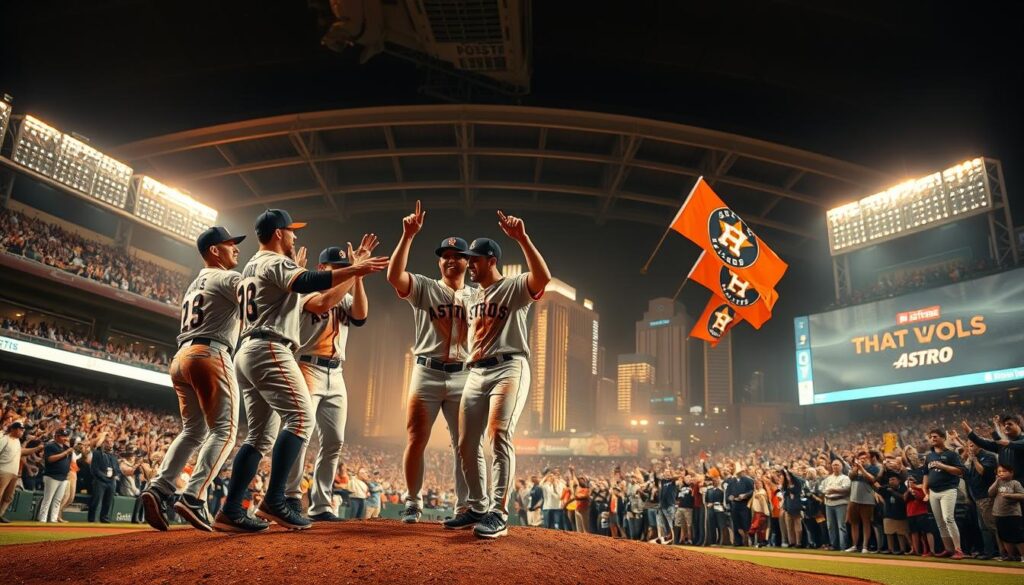
The Astros’ story shows the extremes of baseball. They showed how losing can lead to winning. But they also showed the dangers of cheating.
The Astros’ journey is fascinating. It makes us question how far teams should go to win. They changed the game and raised big questions about sports.
First Milestones & Setbacks
What happens when a team’s greatest triumph turns into its biggest failure? The Houston Astros’ story from 2017 to 2019 is like a Shakespearean drama with baseball and trash cans.
The 2017 World Series win was more than a game. It was a healing moment for Houston after Hurricane Harvey. The Astros’ journey became a symbol of hope for the city.
Players used their bats like first responders. The championship parade was a moment of relief for everyone. Sports brought the city together, giving them hope.
But then, the scandal hit. The 2019 cheating scandal was like a curveball everyone saw coming but didn’t want to believe. The Astros’ use of trash-can banging was seen as arrogance.
Major League Baseball’s investigation showed a culture of arrogance. The consequences were severe:
- Manager AJ Hinch and GM Jeff Luhnow fired
- $5 million fine (maximum allowed under MLB constitution)
- First and second-round draft picks forfeited for two years
- Championship legacy permanently questioned
The Astros went from healing a city to becoming baseball’s villains in just two years. It’s like winning a Nobel Prize and then getting arrested for a crime the next day.
The Astros’ culture changed over time. They were once celebrated for their analytical approach. They were seen as the smart team that outsmarted the others.
But, their innovative thinking blurred the line between right and wrong. They used their outside-the-box thinking to justify cheating.
The damage to their reputation was huge. The 2017 title, once a symbol of Houston’s strength, now has an asterisk.
| Milestone | Impact | Lasting Consequence |
|---|---|---|
| 2017 World Series Win | City healing after Hurricane Harvey | Championship forever questioned |
| Cheating Scheme Revealed | Immediate firings and fines | Organizational culture overhaul |
| Draft Pick Forfeitures | 2-year competitive disadvantage | Delayed talent pipeline development |
| $5 Million Fine | Largest in MLB history at time | Precedent for future punishment severity |
This period is a lesson in ethics. How much winning is too much? When does winning become cheating?
The Astros’ story from early teams to champions to villains raises tough questions about sports today. In a world of analytics and seeking an edge, the Astros showed that some lines shouldn’t be crossed, even if you think you won’t get caught.
Their journey is baseball’s most important warning. Sometimes, the highest highs make the lows even harder to bear.
Fan Experience
You really haven’t experienced baseball until you’ve watched a game with no viewers. It wasn’t a mistake—it was a wake-up call. In the darkest times, more people watched test patterns than Astros games.
What kind of deal is it between fans and a team that wants to lose? The Astros showed us a lesson in waiting for rewards. Fans went through deliberate incompetence, hoping it would all be worth it.

The 2017 championship was the reward for their patience. After years of empty seats and silence, Houston celebrated in orange. The win was even more special as the city recovered from Hurricane Harvey.
Then, the scandal hit. How do fans stay loyal when victory is tainted? Astros fans had to accept their team’s tainted win. The team’s interesting media relations didn’t help.
This story shows us the true nature of sports fandom. We don’t just cheer for wins; we invest in stories. The Astros’ journey from laughingstock to champion to scandal is a dramatic tale in MLB roots.
Through it all, the fans stayed. They watched games with no viewers, endured losing seasons, and celebrated a World Series win. Their story shows the complex, irrational, yet lasting nature of sports loyalty.
Lasting Traditions
The Houston Astros were more than just a team. They had a unique way of thinking that pushed the limits of what’s right. They didn’t just play baseball; they created a whole philosophy around it.
Analytics became their guiding light. Under Jeff Luhnow, the Houston Astros used data in ways no team had before. They turned baseball into a science, using spreadsheets to guide their decisions.
This focus on data led to groundbreaking ideas. They introduced defensive shifts that changed the game. Their way of developing players became a model for the league.
But this data-driven approach had a shadow side. The team’s “win-at-all-costs” attitude became a part of their identity. Sometimes, this meant crossing lines that shouldn’t be crossed.
The Astros also perfected the art of tanking. They saw losing as a strategy to rebuild. This approach was effective but raised big questions about fairness.
Was it right to field teams that weren’t competitive? Was it fair to fans and the sport itself?
The sign-stealing scandal was a turning point. The trash-can scheme was more than cheating; it showed the team’s true culture. Technology was used as a tool to gain an unfair advantage.
The Houston Astros left a mark on baseball. Their methods were both admired and feared. But they also left a stain on the sport’s ethics.
| Organizational Approach | Innovation | Ethical Consideration | League Impact |
|---|---|---|---|
| Analytics Revolution | Data-driven player evaluation | Fair competitive advantage | Changed how teams evaluate talent |
| Tanking Strategy | Purposeful rebuilding | Questionable fan experience | Inspired copycat approaches |
| Technology Use | Advanced scouting methods | Crossed ethical boundaries | Forced rule changes |
| Win-At-All-Costs | Competitive drive | Moral compromises | Damaged league integrity |
The Houston Astros left a complex legacy. They changed baseball’s thinking but raised big questions about ethics. Their traditions are both brilliant and problematic.
Today, baseball grapples with the Astros’ impact. How much innovation is too much? Where should we draw the line?
The Houston Astros didn’t just win games. They changed how we think about winning. Their legacy continues to shape baseball’s debates on ethics, innovation, and tradition.
Conclusion
So, what’s the final say on Houston’s baseball story? The Astros didn’t just build a team. They created a new way of thinking about baseball that’s both smart and unsettling.
Their rebuild strategy changed how teams find and grow talent. They showed that taking smart risks can turn struggling teams into champions. They proved that using data can find value where others see nothing.
But then, the scandal hit. The sign-stealing scheme stained their win and made us wonder where to draw the line between innovation and cheating. The same drive that made them winners became their downfall.
The Astros’ tale is baseball’s most interesting warning. They showed how deep roots in MLB can both hold a team together and hide problems. Their story makes every team ask: What are we willing to sacrifice for victory?