What does a Hall of Fame catcher do after retiring? Iván “Pudge” Rodríguez, for example, moved from catching to diplomacy.
His career is a lesson in building a global brand. It’s not just about his 13 Gold Gloves or 14 All-Star games. It’s about growing from a defensive star to a cultural ambassador for MLB’s international plans.
Rodríguez’s post-playing career is intriguing. He used his fame from the Texas Rangers to create a new role. This role combines scouting, diplomacy, and sports leadership. His work in international play and development in Latin America made him a global sports leader.
This isn’t just a simple retirement. It’s a smart move to use his legend for more than just playing baseball.
Promoting Baseball Abroad
What does a Major League team really export from Texas? It’s not oil or cattle. It’s the blueprint for a championship team. The game itself is a valuable export in the global market. MLB teams turn international talent into major league stars.
For clubs like the Texas Rangers, the focus has shifted dramatically. The old model of waiting for talent to emerge stateside is outdated. Now, they focus on Latin America to find players. This isn’t just about finding players; it’s about building a system that processes raw talent.
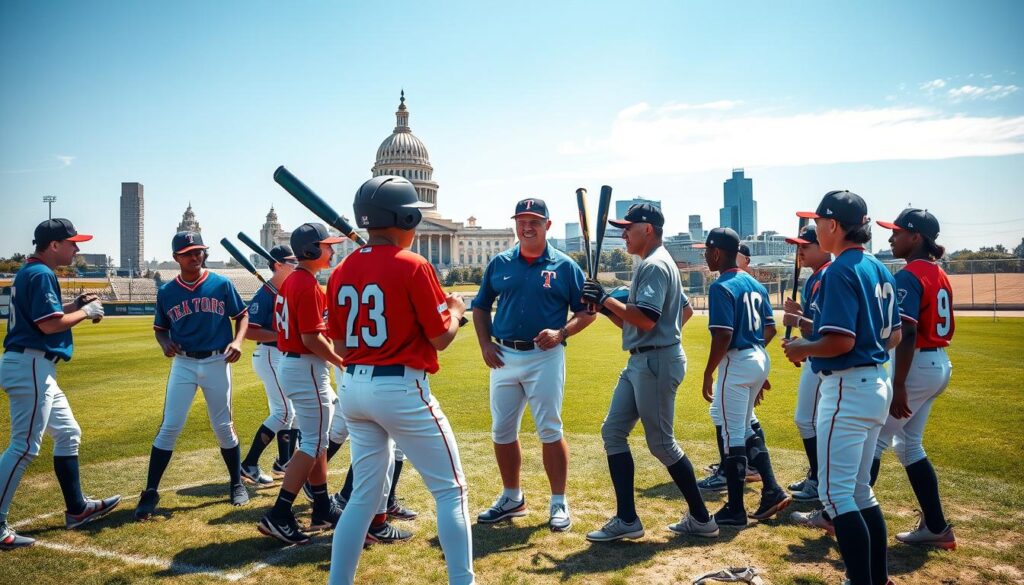
This global scouting isn’t charity; it’s a calculated investment. The return on investment is visible in events like the All-Star Futures Game. Prospects like Jack Leiter and Jordan Walker showcase the ROI on global scouting and development.
The economic model is starkly clear in the data. MLB’s international influence has grown significantly. This is due to scouting and development pipelines.
| Region | Primary Export | MLB Player Origin (2023) | Key Talent Pipeline |
|---|---|---|---|
| Latin America (Dominican Republic, Venezuela, Cuba) | Premium Athletic Talent | Over 30% of MLB players | Academies, Summer Leagues |
| Asia (Japan, South Korea) | Established Stars (e.g., Ohtani, Darvish) | Elite, MLB-ready talent | Posting System |
| Caribbean (Puerto Rico, Curaçao) | High-Skill Position Players | Consistent All-Star representation | Youth Academies & Showcases |
This table isn’t just a list; it’s a blueprint for how America’s pastime has become the world’s game. The “Futures Game” is the perfect metaphor. It’s where tomorrow’s stars get their first taste of the big-league spotlight.
So, when you see a phenom from Curaçao or the Dominican Republic making a game-saving play, you’re not just watching a great athlete. You’re seeing the finished product of a sophisticated international pipeline. It’s less about finding the next Pudge Rodriguez and more about perfecting the system that finds him, signs him, and prepares him for the world stage.
Unique Achievements and Challenges
Thirteen Gold Gloves and a World Series ring show a player’s greatness. They prove a Hall of Fame career. But what happens after the game ends?
For the greatest, it’s not just winning. It’s becoming a legend and a leader. It’s finding a new role after fame.
Iván Rodríguez became a symbol for Puerto Rico after his playing days. This change is a true test of a legend. It’s about staying relevant and making a lasting impact.
The real global impact of a career is in the paths it creates for others. This is the challenge faced by young leaders and stars at the Futures Game. It’s about leaving a legacy, not just a highlight reel.
Transitioning from star to leader is the hardest part. It’s the same drive seen in student ambassadors leading global initiatives. It’s about leading others, not just being a star.
Building a lasting legacy is not new in baseball. The global impact of baseball was built by pioneers. They connected communities, just like barnstorming teams in Texas did.
The ultimate achievement is not just a retired number. It’s becoming part of the game’s future. It’s ensuring the game’s future is as bright as its past.