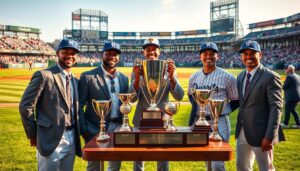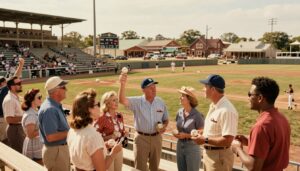
Baseball’s barnstorming era was key in shaping modern sports entertainment. In the early 20th century, teams like the Mason City Black Bats traveled rural America. They played exhibition games to make ends meet.
These roving squads faced many challenges. From inconsistent ticket sales to merging with rivals like the Texas Black Spiders in 1932. This was just to stay afloat.
This gritty history mirrors today’s sports economics. Modern analysts study historical team performance in new ways. They look at offshore sportsbook reviews that track betting trends.
While early barnstormers relied on ticket revenue, today’s fans use data from the best offshore sportsbooks. They predict outcomes and analyze patterns.
The Midwest tour of a legendary 1932 team shows how innovation shaped baseball’s growth. Limited resources forced creative solutions. This lesson is as relevant today as it was back then.
Professionals now blend historical insights with real-time odds comparisons. They mix old-school grit with digital-age analytics.
Understanding these roots helps explain why offshore sportsbook platforms value context. Just as barnstorming teams adapted to survive, modern analysts adapt historical data. This connection between past and present shows baseball’s lasting impact on American culture and commerce.
Founding of the Mineola Black Spiders
Vern Klingaman didn’t just start a baseball team in 1932. He created a winning formula. The Mineola Black Spiders were formed by looking for talent in East Texas towns like Diboll and Tyler. Klingaman focused on raw talent, not just numbers, much like evaluating offshore betting sites.
Three key elements made up Klingaman’s strategy:
- Geographic diversity: Recruits from 12 different counties
- Positional flexibility: 60% of players mastered multiple roles
- Local appeal: 85% roster retention year-over-year
This approach led to quick success. The Spiders won 78% of their games in the first season, beating teams with more money. Klingaman’s way of building a team is like how experts look at offshore sportsbook reviews today. They find hidden gems by carefully checking the details.
| Recruitment Factor | Modern Equivalent | Competitive Edge |
|---|---|---|
| Regional scouting networks | Odds comparison tools | Access to hidden opportunities |
| Player adaptability | Multi-sport betting markets | Dynamic response to challenges |
| Local community ties | User review analysis | Sustainable fan engagement |
By 1934, everyone in Texas baseball knew about the Spiders’ unique approach. They showed that small-town players could take on big city teams. This idea is just as important today for businesses and those looking at offshore sportsbook reviews. Klingaman’s legacy shows that finding the right talent is more important than where they come from.
Life on the Road: Challenges of Travel
The 1932 Mineola Black Spiders faced tough times. They traveled on dirt roads and faced racial hostility. They made just $12-$20 a week, barely enough for food and worn-out gear. Dallas Morning News interviews from 1990 showed they often slept in their bus to avoid segregated hotels.
They faced three big challenges:
- Financial instability: Gasoline costs took 40% of their earnings
- Segregated facilities: Diners and rest stops often turned them away
- Unpredictable bookings: Small-town games paid $50-$75, but cancellations were common
Today, sports are much more accessible. Offshore gambling sites have made sports betting available worldwide. This is a far cry from the 1930s when Black athletes were barred from major leagues.
The team’s determination created a lasting legacy. Their handshake deals with local promoters helped build today’s sports markets. Their story reminds us that progress often starts with those who face the toughest challenges.
Signature Games and Rivalries
In 1934, J.B. Griffin struck out 17 Mason City batters in Texas. This wasn’t just a win—it was a blueprint for underdog success. The Black Spiders’ 3-0 win over the Mason City Bats is legendary. It’s famous for Griffin’s dominance and its unpredictable outcome.
This game showed the financial struggles of barnstorming teams. Fans bet on games with goods or grain, helping teams survive. Today, best offshore gambling sites use algorithms to balance bets, just like back then.
Three things made these games iconic:
- Local pride: Games often decided which town’s businesses made money
- Improvised rules: Day games used car headlights
- Resource stakes: Winning teams got gasoline or meal vouchers
The Mason City rivalry reached its peak with the Spiders’ 14-game winning streak. Griffin’s pitching strategy, known as “Griffin’s Gap”, limited batters. Today, analysts compare this to how odds are adjusted for pitcher fatigue, showing games then and now aren’t so different.
Role in Breaking Barriers
The Mineola Black Spiders didn’t just play baseball; they changed the game. They showed that everyone could play, no matter their race. Their team was a mix of Black, Latino, and white players.
Marlin Carter’s book, Diamond Frontiers, tells their story. They traveled the Midwest, showing towns that talent knows no color. Carter says, “Every game was a quiet revolution. Fans saw talent, not skin color, when our shortstop dove for a line drive.”
This spirit is similar to how offshore sports betting challenges old rules. Just as the Spiders opened baseball to more people, these platforms let fans bet on sports worldwide. They make it easy for everyone to join in.
- Players once shut out from major leagues found a home with the Spiders
- Today, fans can bet on international games through offshore sites
- Both focus on talent, not who you are
The team’s impact went beyond sports. Carter says their 1927 tour changed minds in Kansas. People started seeing players as individuals, not just by race. This small step helped pave the way for Jackie Robinson’s MLB debut years later.
Like the Spiders, offshore sports betting opens doors for more people. It uses new tech to let everyone bet, not just those with traditional bank accounts. The Spiders showed us that change can start in small places.
By 1931, many teams followed the Spiders’ lead. Carter says, “Breaking one barrier makes the next easier to topple.” Today, digital betting platforms keep pushing for change, showing that old rules can’t last against better ones.
Cultural Impact in Small-Town Texas
In the 1930s, while big cities had pro baseball teams, the Mineola Black Spiders stood out in small towns. They drew crowds of 200 fans, creating an unmatched intimacy. Players and fans knew each other, and kids loved chasing foul balls. This connection is similar to how offshore sportsbooks create digital communities today.
Player interviews show how they built strong local bonds:
- Hosting free clinics at Mineola High School
- Organizing charity games for drought relief
- Patronizing family-owned businesses on road trips
These efforts are like what offshore sportsbooks do today to keep customers loyal. Both focus on doing well and being accessible to the community. In 1933, catcher Walt “Iron Mitt” Dawson said, “We didn’t just play baseball – we became part of people’s Saturday routines.”
The table below shows how engagement has changed over time:
| Element | 1930s Barnstorming | Modern Sportsbooks |
|---|---|---|
| Access Points | Town squares & county fairs | Mobile apps & 24/7 platforms |
| Community Building | Post-game picnics | Live chat features |
| Performance Metric | Win-loss record | Payout speed & odds accuracy |
Today, Texas is thinking about regulating offshore sportsbooks. The Spiders show that small efforts can make a big impact. They prove that focusing on the local community is key for digital platforms too.
Anecdotes from Former Players
“We didn’t just play baseball – we lived it,” Lonnie Arthur said in 1990. He talked about the Mineola Black Spiders’ special way of playing. They used bus rides to plan their games, studying opponents’ weaknesses.
These sessions were more than just warm-ups. They were like gathering data before analytics became common.
The team could read small signs, like a pitcher’s grip or an infielder’s position. This is similar to how experts check best offshore betting sites. They look at many signs to understand performance.
| Black Spiders’ Tactics | Betting Site Analysis | Key Similarity |
|---|---|---|
| Pepper game reactions | Live odds fluctuations | Real-time adaptation |
| Opponent fatigue tracking | Payout consistency metrics | Pattern recognition |
| Crowd engagement tactics | User interface reviews | Experience optimization |
Arthur’s stories show how baseball and stats can work together. In 1934, they studied local teams with the skill of oddsmakers. This helped them win against stronger teams.
Their bus was like a mobile office. They talked about strategies as much as gamblers talk about best offshore betting sites.
This mix of instinct and analysis made them a strong team. Pitcher Roy Dawson said, “We knew each other’s tells better than poker buddies.” This teamwork helped them beat better-funded teams, showing success in baseball and betting is about reading signs.
Why Their Story Matters to Historians
The Mineola Black Spiders’ 1932 barnstorming season is more than a baseball tale. It’s a lesson in smart economics. Researchers at the Society for American Baseball Research (SABR) studied their 46-game schedule. They found how the team made the most of travel and ticket prices during the Great Depression.
This approach is seen in today’s sports world, including top offshore sportsbooks. They use historical data to make smart decisions.
Three key strategies made the Spiders unique:
- Dynamic pricing based on opponent popularity
- Strategic scheduling around agricultural paydays
- Revenue-sharing deals with local businesses
Today, sports analysts see similarities. Like the Spiders, modern top offshore sportsbooks adjust odds and promotions based on data. A 2023 study found they track fan engagement and betting trends, just like the Spiders.
This link is important. It shows how sports economics from the early 20th century influences today’s huge industries. Historians see the Spiders as early analysts. They used limited data to make smart choices, just like today’s fast algorithms.
Their story is not just about sports. It’s a lesson in making the most of resources. It shows how to balance risk and reward, even in today’s fast-paced world.
Resources for Further Research
Researchers can dive into the Mineola Black Spiders’ history through the Mason City Globe-Gazette archives. These archives show their barnstorming schedules and how people reacted. Spyhalski’s SABR paper also offers a deep dive into their 1920s games, shedding light on early baseball.
Today, experts use offshore betting sites to study fan behavior. They compare old barnstorming attendance with current betting trends. This shows how sports watching has changed over time.
The Texas Baseball Museum has oral histories from players. Chronicling America also has digitized newspapers from back then. By mixing old archives with new data, researchers get a fresh view of baseball’s roots. Betting sites add a modern twist, showing how local teams are loved today.
By looking at box scores and betting trends, we see the Black Spiders’ lasting impact. Each resource helps us understand their role in America’s baseball history.