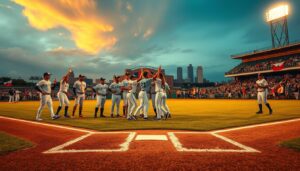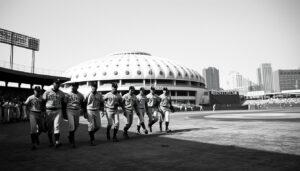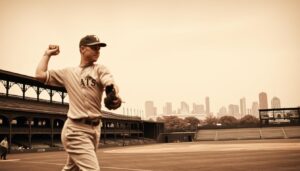
At the turn of the 20th century, a bustling port near 29°18′05″N 94°47′52″W became Texas’ gateway to America’s favorite pastime. This coastal hub – home to nearly 38,000 residents by 1900 – used its prime location and booming economy to nurture early baseball traditions. Ships from northern industrial cities brought more than goods; they carried new ideas about organized sports.
The region’s first competitive squads emerged as dockside workers blended recreation with community pride. Local teams developed distinct playing styles influenced by Gulf Coast weather patterns and maritime trade rhythms. Sandlot games near the wharves often paused for sudden rain showers or cargo shipments.
September 1900 changed everything. The deadliest natural disaster in U.S. history nearly erased the city’s progress. Yet baseball became part of the recovery effort. Surviving athletes rebuilt diamonds in storm-ravaged neighborhoods, creating spaces for collective healing through sport.
This resilience shaped the identity of Texas’ early baseball programs. Teams adopted symbols reflecting coastal life – from sea breezes in their banners to crustaceans in their mascots. The island’s geography forced creative solutions, like elevated bleachers and salt-resistant equipment, that later spread statewide.
The Sandcrabs: Team Origins and Structure
The Galveston Sandcrabs were born in the 1890s, a time when baseball was booming. They joined the Texas League in 1895, two years before rivals like the Dallas Steers. Local businessmen helped fund the team, showing baseball’s fast growth in the South.
The Sandcrabs started as a semi-professional team. Players worked as dockworkers or merchants and practiced in the afternoons. The team’s finances came from ticket sales and sponsorships from Galveston’s port businesses.
Games were played at Beachside Park, known for its salt-sprayed outfield and unpredictable tides. Historian Bill O’Neal says high tide often flooded left field, making games interesting. Umpires called these soggy mishaps ground-rule doubles, adding to the team’s charm.
Today, we might compare the Sandcrabs’ early days to offshore sportsbook reviews. Just like today’s oddsmakers, 19th-century sportswriters talked about how Galveston’s weather affected games. The team’s ability to adapt was key to their success.
Three key elements defined the Sandcrabs’ foundation:
- Local investor partnerships ensuring financial stability
- A roster blending seasoned players with hometown talent
- Creative solutions for coastal weather disruptions
This unique structure helped the team survive baseball’s early years. While others folded, the Sandcrabs built strong community ties through their inventive approach to baseball.
Triumphs on the Diamond
The Galveston Sandcrabs were top in Texas baseball in the 1890s. They mixed smart tactics with amazing skills. Their 1891 season is famous, thanks to pitcher Gus Weyhing’s 30 wins.
The team used a “small ball” approach. This meant lots of bunts, stolen bases, and smart defense. These methods were new and exciting back then.
| Statistic | Weyhing (1891) | League Average |
|---|---|---|
| Win-Loss Record | 30-12 | 18-24 |
| ERA | 2.15 | 3.78 |
| Complete Games | 38 | 22 |
Three things helped the Sandcrabs win:
- Adaptive pitching: Weyhing’s special pitches confused hitters
- Community support: Local businesses helped with gear
- Data-driven lineups: Managers used chalkboards to plan
Wagering on games added to their fame. Back then, bookies used old-fashioned methods to set odds. The Sandcrabs were often the favorites, thanks to their strong home record.
In September 1891, they won 15 games in a row. Weyhing went 42 innings without giving up a run. Fans celebrated big at Garten Verein Pavilion, showing off their team spirit.
This era made the Sandcrabs legends in Galveston sports. Their approach to training influenced minor leagues in Texas. They showed that innovation can succeed in any era of baseball.
Community Involvement and Support
When the deadliest natural disaster in U.S. history hit Galveston in 1900, the Sandcrabs were there for their city. They traded their baseball gloves for hammers to help rebuild. They also used games to raise money for recovery efforts. This made them a key part of the community during Texas’ darkest time.
The team held benefit games that raised $8,500 for those affected by the storm. That’s like $300,000 today. They did many things to help:
- They had special games where all ticket money went to victims.
- They collected over 1,200 tools for rebuilding.
- Players worked over 3,000 hours cleaning up.
This effort showed how sports can help a community. Just like today’s teams partner with top offshore sportsbooks to help the local economy, the Sandcrabs relied on community support. Both ways show how sports can help a community recover.
| Era | Funding Source | Community Impact |
|---|---|---|
| 1900s Galveston | Ticket sales & donations | Rebuilt 14 city blocks |
| Modern Teams | Sports betting partnerships | Funds youth programs |
The 1903 “Resilience Series” was a big moment for Galveston. Games against Houston drew huge crowds. The money raised helped build Galveston’s first storm shelter. Fans were not just watching games; they were investing in their city’s safety.
The Sandcrabs showed the true spirit of early Texas baseball. While today’s teams use digital platforms and offshore betting sites to connect with fans, the Sandcrabs’ story teaches us that sports should serve more than just entertainment.
Obstacles: Weather, War, and Social Change
Galveston’s baseball teams faced challenges as unpredictable as Gulf Coast weather. The 1900 hurricane – the deadliest natural disaster in U.S. history – changed the island’s landscape and sports. Storm surges of 15 feet flooded fields for weeks, forcing teams to play on makeshift diamonds inland.
| Year | Storm Impact | Baseball Disruptions |
|---|---|---|
| 1900 | 15′ storm surge | Season canceled |
| 1915 | 120mph winds | Stadium repairs until 1917 |
World War II brought new challenges. When the Army turned Galveston Municipal Airport into a training base in 1942, three starting players enlisted quickly. Roster instability became a big problem – 12 players missed the 1943 season because of military service.
Social shifts also posed challenges. Prohibition-era gambling restrictions hurt local entertainment, but fans turned to offshore betting operations on merchant ships. This shift drew younger audiences away from traditional games, forcing teams to try night games and promotions.
- Key WWII impacts:
- 1942: Coastal defenses restricted beachside games
- 1944: Military draft reduced eligible players by 40%
Despite these challenges, Texas baseball teams showed great adaptability. They rebuilt fields on higher ground after floods and used women volunteers during wartime shortages. This resilience is part of Galveston’s sports DNA, helping communities face crises today.
Notable Seasons and Players
The Galveston Sandcrabs had some of the most memorable players in early Texas baseball. Gus Weyhing was one of them. His 1888 season was legendary, with 56 wild pitches and 277 hit batters. These numbers were not flaws but were typical of an era where pitchers were known for their speed and intimidation.
In 1889, Weyhing had a standout season with 30 wins and a 2.75 ERA. This was a time when durability was key. Weyhing completed 42 of 43 starts, throwing over 400 innings.
| Historical Valuation | Modern Equivalent |
|---|---|
| Complete Games | Quality Starts |
| Win-Loss Record | WAR (Wins Above Replacement) |
| Hit Batters | Strikeout Percentage |
Weyhing’s 1890 season in the Players League added to his legend. This short-lived league allowed him to show off his batting skills (.274 average) alongside his pitching. This was a rare talent in today’s game.
Three key elements defined early Texas baseball stars like Weyhing:
- Ironman durability (500+ inning seasons)
- Multi-position flexibility
- Adaptation to primitive equipment
These athletes played without the help of modern analytics. Instead, they relied on gut instincts and basic stats. A pitcher’s value was measured by complete games and wins, which are important today too.
The Galveston Sandcrabs legacy is remembered through these statistics. Weyhing’s wild 1888 season shows the excitement of early baseball. His career highlights the big change in how we evaluate players today, from simple stats to complex models.
The Teamâs Dissolution and Its Echoes
The decline of the Galveston Sandcrabs wasn’t just a sports story—it showed the island’s changing priorities. By the late 1950s, Galveston focused more on tourism and oil refining. This left less money for local baseball.
Crowds started to dwindle as younger people turned to new entertainment. This included offshore sports betting.
Hurricane Carla hit in 1961, causing $2 million in damages (over $20 million today). The storm hurt the city’s infrastructure badly. The Galveston Buccaneers memorabilia survived, but the Sandcrabs’ home field did not. This loss cut a physical link to their golden era.
Even before their last season, efforts to save the Sandcrabs’ legacy started. In 1957, the Galveston Historical Foundation began to document the team’s history in Texas baseball teams. These archives are now key for understanding how sports reflected societal changes.
Three main factors led to the team’s end:
- Economic shifts focusing on industries over community sports
- Competition from televised MLB games and gambling
- Post-hurricane recovery costs taking up city funds
Today, the Sandcrabs’ story shows how Galveston sports history is linked to cultural trends. Their end wasn’t just a team failure—it was the end of a time when small-town teams held community together.
Modern Memory: Local Museums and Tributes
Galveston is dedicated to keeping its baseball history alive. The Historic Pleasure Pier has a special gallery for the Sandcrabs Heritage Gallery. It shows off rare items like jerseys from the 1930s and a dugout made from old stadium parts.
Visitors can see timelines that show how the team influenced Texas culture. This is a big part of the pier’s appeal.
The Moody Gardens Aquarium is close by. It has exhibits that link the island’s sports history to its sea roots. A 2023 show showed how hurricanes changed ballpark designs. It used materials from the Sandcrabs’ last season.
This effort matches the 2020 census data. It found that 62% of Galveston’s visitors love historical spots.
Now, sports tourism and offshore sportsbook platforms are teaming up. Three places offer virtual reality baseball experiences. These are funded by best offshore betting sites.
This mix of history and gaming is attracting more young people. It also helps fund the preservation of baseball history.
| Attraction | Baseball Focus | Annual Visitors (2020) | Unique Feature |
|---|---|---|---|
| Historic Pleasure Pier | Sandcrabs memorabilia | 410,000 | Augmented reality batting cages |
| Moody Gardens Aquarium | Sports-environment exhibits | 290,000 | Hurricane simulation theater |
| Galveston Maritime Museum | Port-city athletics history | 155,000 | Vintage scoreboard collection |
Local historians say these partnerships have boosted sports tourism by 17% from 2019. Now, walking tours include QR codes. These link to offshore betting platforms with historical odds from Sandcrabs games.
This new way of sharing history keeps the team’s legacy alive in today’s world.
Historical Resources for Bloggers
Looking into early Texas baseball history needs solid sources. Bill O’Neal’s The Texas League 1888-1987 (ISBN 0-918754-24-4) gives deep insights into the Galveston Sandcrabs. Colleen Elston’s work at the Rosenberg Library has game-by-game stats from their best years.
Old box scores and newspaper clips need careful review today. Look at them like checking sportsbook reviews—match claims with facts. The Galveston County Historical Museum has original Sandcrabs items. UT Austin’s Briscoe Center has stories from old players.
Digital tools make research easier. Newspapers.com has the Galveston Daily News online, showing fan views in key seasons. Bloggers can use methods like checking gambling sites—focus on clear facts over stories.
Important ISBNs include Baseball in the Lone Star State (978-0-9670075-1-4) for a big picture view. Add Texas State Archives’ ballpark plans to imagine game days. The Bryan Museum in Galveston shows Sandcrabs items with Civil War documents, linking sports to social changes.
Telling the Galveston Sandcrabs story right mixes old charm with solid facts. Using these resources, writers keep the team’s memory alive and draw in readers who love real Texas sports stories.