In the sun-drenched borderlands of South Texas, a unique sporting culture took root. The game was far more than a simple pastime. It became a vital thread in the social fabric of local communities.
These organized Tejano leagues provided a powerful sense of unity and pride. They flourished in towns and cities where other opportunities were often limited. During an era of segregation, the baseball diamond served as a space for cultural expression and identity.
Archival collections, like those at the Briscoe Center for American History, preserve this rich story. They offer essential context for the community environments where these teams thrived. This history shows how sport can build resilience and foster a strong collective spirit.
Early League Networks in the Valley & Laredo
In the early 20th century, baseball became a key part of life in Texas’s border areas. It was more than a game; it was a way for Tejano communities to come together. These leagues were essential for identity and unity.
These leagues started with local efforts. Business owners and church leaders saw baseball as a way to boost community spirit and attract people. They worked hard to find fields and buy equipment.
Organizing games across South Texas was tough. Teams from places like Brownsville and Laredo had to travel long distances. They often carpool and had to deal with unpaved roads.
Games between towns were intense, with fans cheering loudly. These matches were more than just games. They were about pride and bragging rights. The rivalry showed the close and competitive nature of Tejano communities.
These leagues were where athletes could show their skills. For Mexican American players in South Texas, they were a chance to play at a high level. They honed their talents, even if they never made it to the major leagues.
Research shows these leagues were a response to exclusion. They created a world of their own. The impact of these leagues is huge. They helped shape a lasting baseball culture in South Texas.
Bilingual Broadcasts and Ballpark Music
The sound of a bat hitting a ball was often mixed with the lively sound of a bajo sexto. This created a unique blend of baseball and Tejano music. For many Mexican American communities, the game was more than a sport. It was a celebration of their heritage.
Spanish-language radio broadcasts were essential. They brought the game to homes, kitchens, and workplaces. Announcers used a familiar rhythm and vocabulary, making the game accessible to all. The Briscoe Center’s “Spanish-language Newspapers” section shows this tradition. Papers like La Prensa printed box scores and stories, fueling local pride and debate.
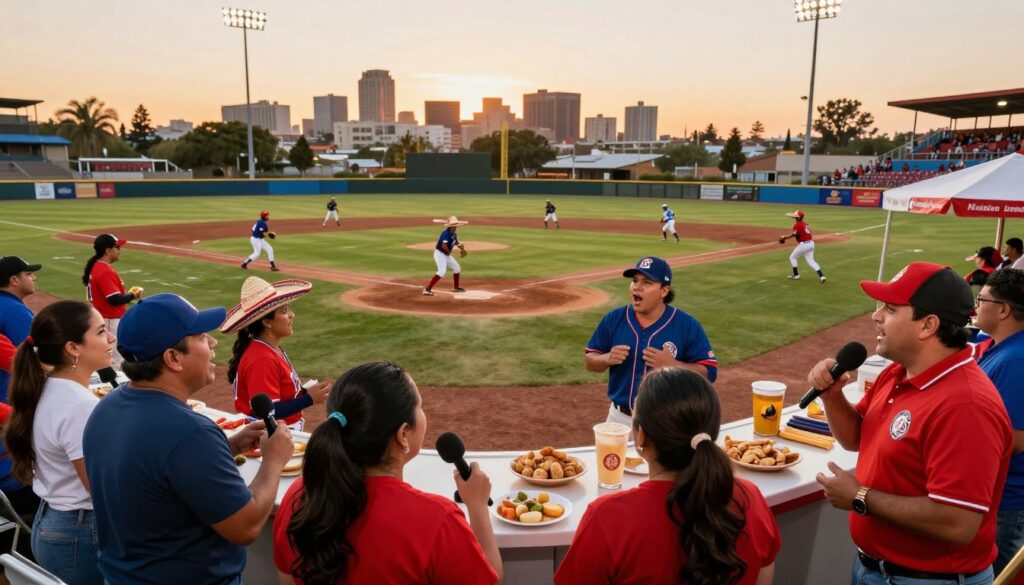
The “Music and Sound Archives” highlight the lively atmosphere. Conjuntos and orquestas played in the stands, adding to the excitement. Their music turned innings into dance parties. This fusion made the ballpark feel distinctly Mexican American.
The table below shows how these elements shaped the ballpark environment.
| Element | Medium / Setting | Role in Tejano Baseball |
|---|---|---|
| Radio Commentary | Spanish-language AM broadcasts | Brought games to homes, preserved linguistic heritage, built radio personalities. |
| Newspaper Coverage | Spanish-language press | Reported scores, featured player profiles, connected distant towns through sports news. |
| Conjunto Music | Live performance in stands | Provided a folk music soundtrack, encouraged socializing, reinforced cultural identity. |
| Orquesta Performances | Special events at ballparks | Elevated games to community festivals, attracted wider families, blended big-band sounds with baseball. |
This mix of sounds did more than entertain. It strengthened a shared cultural identity. For immigrants and their children, the ballpark was a safe space. It was where they could enjoy baseball without leaving their language and music behind.
Today, Spanish-language baseball broadcasts continue to thrive. Events like the World Baseball Classic attract huge Latino audiences. This tradition connects fans through the language of the game.
In conclusion, the archives tell a story beyond wins and losses. They capture the sounds of a community at play. The voices on the radio and the music in the bleachers were not just background noise. They were the heartbeat of Tejano baseball.
Cross-Border Tournaments with Mexico
For Tejano communities, the most exciting games were against rivals from Mexico. These games were more than just baseball. They were big cultural events that made local ballparks international.
The “Border” region was special because of its social and family ties. Baseball tournaments were a big part of this. Families came together, and friends cheered as one. It was a time when competition and friendship mixed.
Playing against international teams was a big deal. Winning against a skilled Mexican team boosted a player’s or team’s reputation. It was a chance to show off skill and heart to more people.
Some cities had legendary rivalries and partnerships. The games ranged from friendly series to big tournaments. Each place had its own unique identity in the Tejano leagues.
| Border City Matchup | Key Teams/Rivalries | Tournament Significance |
|---|---|---|
| Laredo / Nuevo Laredo | Laredo Merchants vs. Nuevo Laredo Tecolotes | The “Twin City Series” was a civic pride event, often held on holidays, blending sport with large bi-national celebrations. |
| McAllen / Reynosa | Valley squads vs. Reynosa Broncos | Focused on athletic showcase; known for high-scoring games and scout attendance, providing players with visibility for higher-level play. |
| Brownsville / Matamoros | Brownsville Eagles vs. Matamoros Olmecas | Characterized by deep familial ties; many players had relatives on the opposing team, mixing intense play with strong social bonds. |
These games did more than entertain. They raised the status of the Tejano leagues in the Mexican and Mexican American sports world. Winning brought respect and recognition from fans and organizations on both sides of the border.
The legacy of these tournaments shows how sports can unite communities. They strengthened cultural ties that politics and geography couldn’t break. For players and fans, the baseball field was a place of unity.
Icons, Managers, and Family Dynasties
In Tejano communities, baseball heroes, managers, and family talent are shared like treasures. These stories are the heart of the sport in South Texas. They are more than numbers; they are the stories that sparked passion for the game.
Legendary players became almost mythical. Their achievements, like game-winning hits and home runs, were told for years. They were seen as heroes by the community. Kids looked up to them, and adults celebrated their wins as a source of pride.
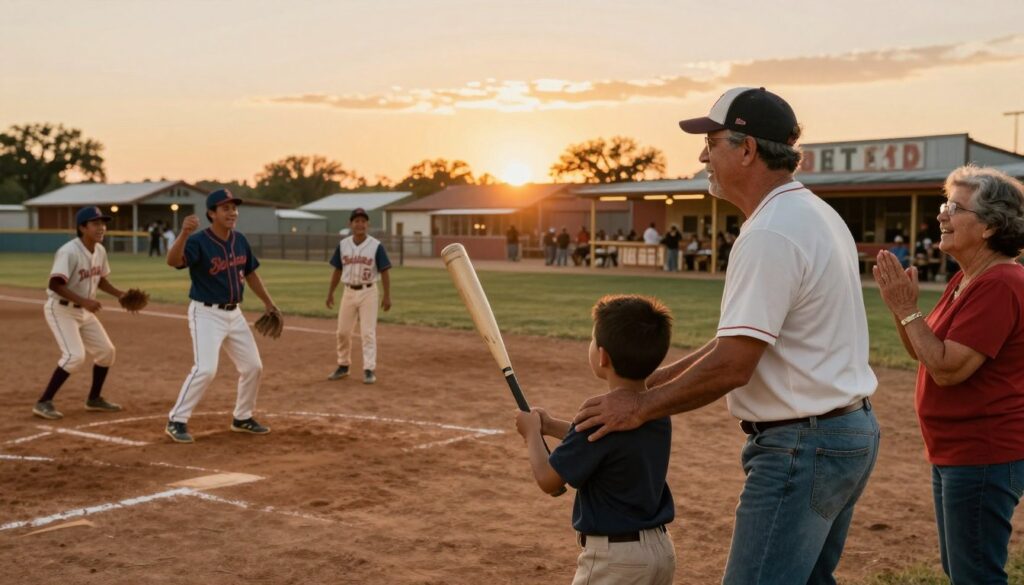
Managers were just as important. They knew their players and the South Texas leagues well. A great manager could turn a team into champions. Their leadership and strategy kept fans coming back year after year.
Family dynasties were a big part of baseball too. Talent often ran in families, from father to son. Seeing families play together strengthened the bond between the sport and the community. These families showed the sport’s deep roots in the region.
Studying these stories helps us understand Tejano history. The Briscoe Center’s work shows how Biography and Autobiography are key. Personal stories give us a close look at South Texas baseball’s past.
These icons, managers, and families did more than win. They inspired young people with their achievements. Their success showed that excellence was possible locally. This kept the league strong for years.
Their legacy made baseball a part of South Texas towns’ social fabric. The sport connected generations. It was a shared language through stories of heroes and family pride. This ensured baseball’s role as a key part of community life.
Community Festivals, Food, and Fiestas at the Park
The sound of a bat cracking was just one part of the lively atmosphere at the ballpark. On game days, the field was more than just a place to play. It was where the community came together in full force.
Food vendors made the perimeter into a bustling market. The smell of tamales and barbacoa filled the air. Families waited for aguas frescas like horchata and tamarindo, a sweet treat against the Texas heat. Every bite was a way to connect with their heritage.
Blankets and chairs filled every shaded spot. Families arrived early to picnic together. Children played, while grandparents shared stories, blending past and present. The ballpark was like a big communal living room, strengthening family bonds.
These gatherings often coincided with local holidays or fiestas patronales. A baseball game was the perfect setting for these celebrations. It brought the community together in a joyful space, mixing sport with tradition.
The game was the main event, but it was more than that. Cheering for the local team was a social ritual. Victory made the mood even more festive, while a loss was quickly forgotten. This mix of sport and celebration created a strong sense of belonging and joy.
These game days were key for cultural preservation. In a place like a baseball park, communities proudly showed their Tejano heritage. Food, language, and celebration kept their cultural identity alive. The diamond was where sport and soul met, ensuring traditions continued with every pitch and plate.
Contemporary Revivals and Archives
In South Texas, efforts are underway to bring back the memory of historic Mexican American baseball leagues. Projects like oral history, museum exhibits, and documentary films are collecting this important part of our past. This work helps strengthen the cultural identity of Tejano communities.
This effort contrasts with the darker parts of our history. Initiatives like Refusing to Forget aim to make peace with the past. Celebrating our sports history is a way to show our strength and affirm our identity.
The roots of this legacy run deep in Texas history. Early games along the Rio Grande and the growth of the Texas League laid the foundation for a lasting baseball tradition. Places like the Rosenberg Library hold archives that highlight community and local heritage.
Today, this history continues to thrive in South Texas. It connects to today’s sports venues and boosts heritage tourism. This ongoing effort keeps the story of borderlands baseball alive and vibrant in our culture.