Dene Hofheinz Anton asked her dad, Mayor Roy Hofheinz, “why can’t we play baseball indoors?” This simple question led to a big dream. They wanted to create the world’s first fully enclosed, air-conditioned stadium.
On April 9, 1965, the technological legacy of this marvel was unveiled. President Lyndon B. Johnson was there for the grand opening. So were astronauts, Mickey Mantle, and evangelist Billy Graham. He called it the “eighth wonder of the world.”
The dome was a marvel of engineering. It brought climate-controlled comfort to fans. It also introduced AstroTurf and luxury suites, changing sports forever.
Once a symbol of space-age dreams, Houston’s iconic dome now stands quiet. Its future is unsure. This mix of its glorious past and quiet present makes it a lasting cultural icon.
Artificial Turf & TV Era Aesthetics
The Astrodome was more than a roof over a field. It was a total environment. When its grass failed, a crisis sparked a major invention in sports.
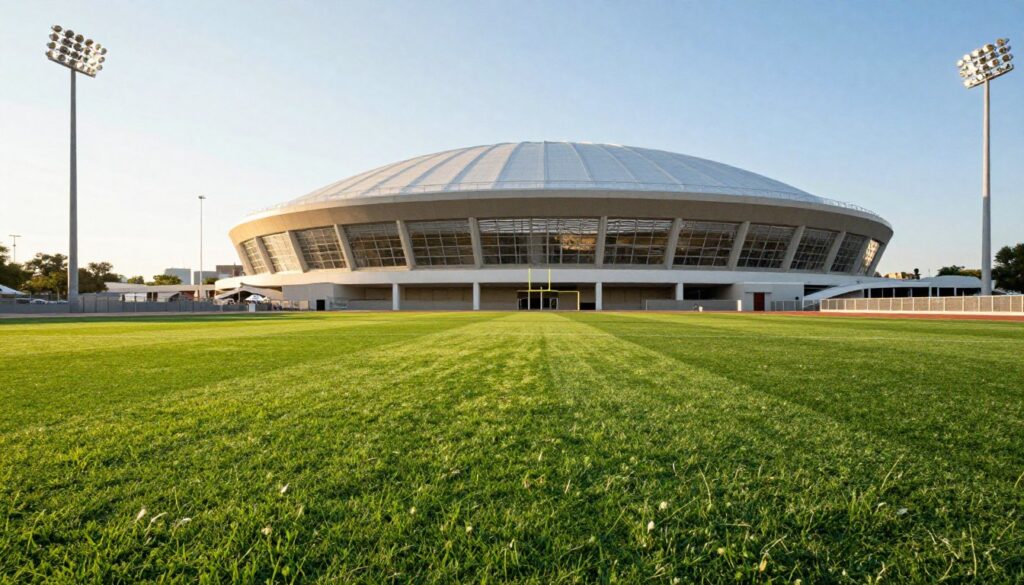
In 1966, a synthetic carpet called ChemGrass was installed. It was soon renamed AstroTurf. This ensured a perfect, green field every day. It was a product of the Dome’s architectural ambition. The invention changed the synthetic turf industry and sports.
Artificial turf solved a horticultural problem and created a new aesthetic for TV. The bright, consistent green looked flawless on color TV. It made the field a predictable stage, free from mud or weather damage.
Luxury suites were another first. They catered to corporate clients and wealthy spectators. This changed the economic model for stadiums. Revenue came from long-term leases and premium experiences, turning sports venues into commercial hubs.
The Dome’s climate control system was revolutionary. It was the first stadium with precise, indoor air conditioning. Engineers kept a perfect 72-degree temperature, regardless of Houston’s heat. This comfort was a major selling point for fans and ensured players performed in ideal conditions.
These technologies formed an integrated system. The Astrodome acted as a sociotechnical machine. It redirected people, money, and media flows. Its design was influenced by the need to produce a compelling image. The luxury suites, artificial turf, and perfect climate were part of a blueprint for the future. Every modern sports and entertainment complex follows this template. The Dome proved a stadium could be a year-round, weatherproof, and profitable spectacle.
Civil Rights, Concerts, and Community Gathering Place
The Astrodome was famous for more than just baseball. It was a place for concerts, rodeos, and big TV events. Its design made it a flexible, year-round space for all kinds of gatherings.
The dome’s size was perfect for global TV events. The 1973 “Battle of the Sexes” tennis match is a great example. It was watched by 90 million people and talked about gender equality.
As a concert venue, the Astrodome hosted legends. George Strait’s farewell tour in 2002 drew over 68,000 fans. It showed the dome’s ability to host big events, no matter the weather.
The Houston Livestock Show and Rodeo was another annual tradition. It showed the Astrodome’s role as a multifunctional hub for culture and economy. It was more than a stadium; it was an experience.
| Event | Year | Significance | Scale / Attendance |
|---|---|---|---|
| “Battle of the Sexes” Tennis Match | 1973 | Landmark televised event on gender equality and civil rights. | ~90 million TV viewers |
| George Strait Farewell Concert | 2002 | Historic country music event, demonstrating venue’s concert capacity. | 68,000+ attendees |
| Houston Livestock Show & Rodeo | Annual | Premier community and cultural event for the region. | Massive annual crowds |
The Astrodome was a key part of urban life. It brought people together for many reasons. Its Astrodome history is a story of community. It was a place for celebration, debate, and spectacle, shaping Houston’s identity for years.
Baseball Style under the Dome
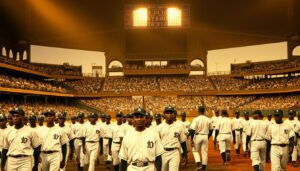
On April 9, 1965, the Houston Astros played a game that changed baseball history. They faced the New York Yankees in the Astrodome. This game was a test for the stadium.
The Astros won 2-1. This victory was a big win for the team and its new home. It showed that baseball could be played indoors successfully.
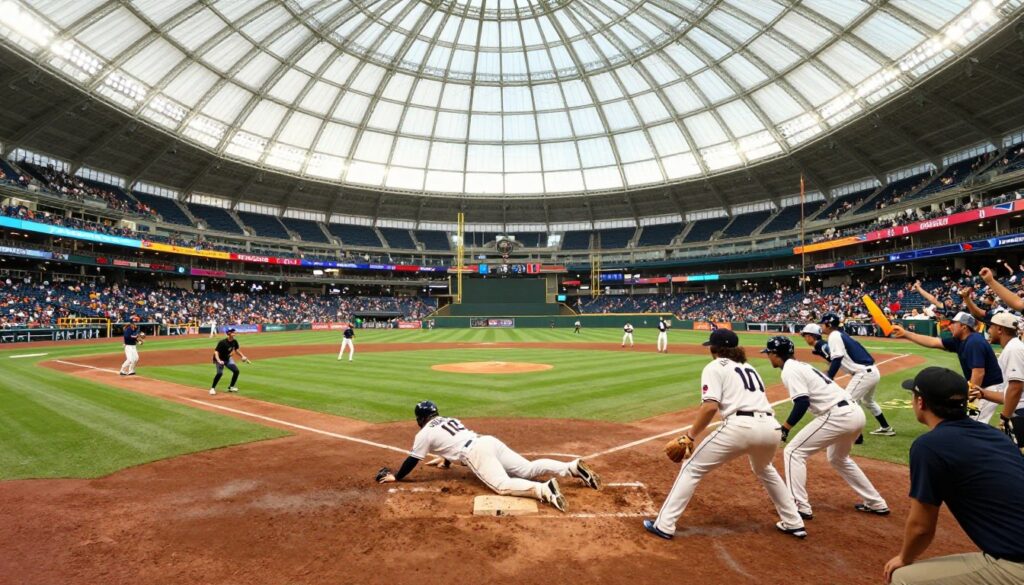
Playing indoors changed the game. The AstroTurf made the field faster and harder. The lights and acoustics made communication tough.
Teams had to adapt quickly. This led to a unique Astrodome style of play. Speed, defense, and pitching became key. Home runs were rare, and games often ended with low scores.
The Astrodome was the Astros’ home for 35 years. It shaped the team’s identity. But in 2000, the team moved to a new stadium downtown.
The Astrodome’s biggest impact was being the first domed stadium for professional baseball. It showed that baseball could be played anywhere, weather or not. It set a standard for future stadiums.
Preservation Debates and Cultural Memory
The Astrodome closed in 2008, leaving its future uncertain. For years, it stood empty, facing demolition threats. This sparked a heated debate about its worth and what should happen to it.
Local preservationists like Cynthia Neely and Ted Powell fought hard. They pushed for the Astrodome to be listed on the National Register of Historic Places. In 2013, it was named a National Treasure by the National Trust for Historic Preservation. It was also listed as one of the “11 Most Endangered” places. A public bond referendum that year failed, showing the tough fight ahead.
Then, the focus turned to finding new uses for the Astrodome. A 2014 report suggested turning it into the world’s largest indoor park. Harris County Judge Ed Emmett supported this idea. He even visited Germany’s Tropical Islands Resort for inspiration. The goal was to give the dome a new life as a public space.
Finding the money for this ambitious plan is a big challenge. In 2016, Harris County set aside $105 million for the first phase. This included underground parking and basic event spaces. But, finding enough money to finish the project remains a problem.
The Astrodome’s story is about cultural memory and how we value our past. The preservation fight balances nostalgia with practical needs. Its future as a giant indoor park would celebrate its history while welcoming new visitors.