Imagine the 1920s. Jazz music was everywhere, and speakeasies were the norm. But in Texas, Black athletes created their own baseball world. They did this because the “major” leagues were too narrow.
This wasn’t just about fighting segregation. It was a bold statement of defiance.
Under Jim Crow’s shadow, these teams did more than play baseball. They built strong cultural institutions. Cities like Houston and Dallas had teams that could compete with the best.
The irony is striking. While white teams missed out on talent, these teams excelled. Today, historians say it was some of the most innovative baseball ever.
Historic Teams & Standouts
While the Negro Leagues were famous in the north, Texas was quietly perfecting Black baseball. The Lone Star State didn’t just host teams; it created baseball revolutionaries. These athletes turned dirt diamonds into stages for athletic brilliance.
Meet the Texas titans: Houston Eagles soaring with precision, Dallas Black Giants anchoring the north, and San Antonio Black Missions representing the Alamo city’s grit. These weren’t just teams – they were cultural institutions. They gave physics lessons with curveballs and sociology lessons with every stolen base.
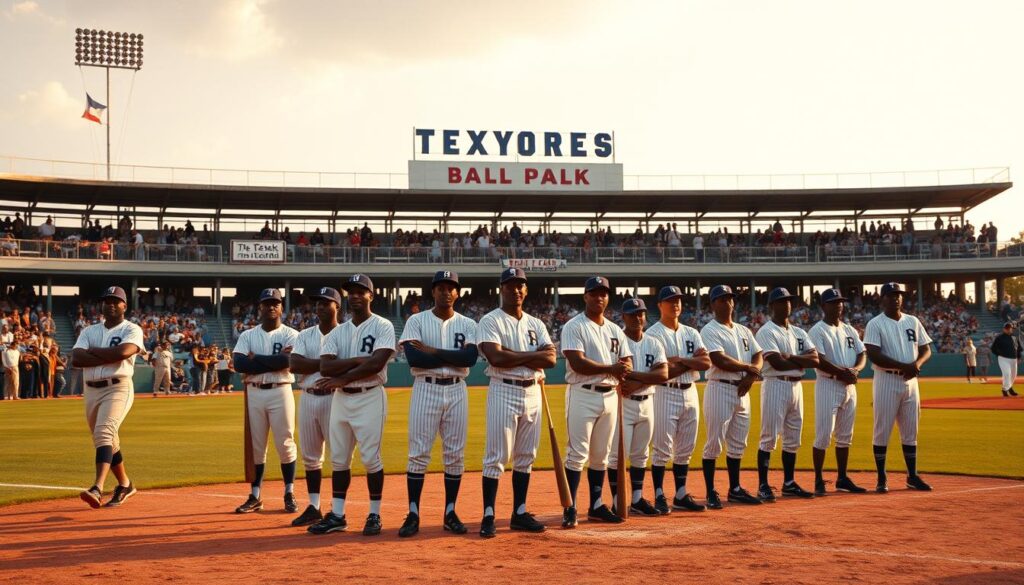
Consider the 1919 championship clash between Dallas and San. This wasn’t just a game; it was a masterclass in African American baseball excellence. It drew crowds larger than many MLB games of the era.
The standouts were artists working in dirt and grass. Smokey Joe Williams didn’t just pitch – he conducted symphonies of spinning horsehide. His fastball wasn’t just fast; it was a philosophical argument against hitting.
Then there’s Ron Teasley’s legendary encounter with Satchel Paige. Picture this: a young Texan steps up against arguably the greatest pitcher in Black baseball history… and smacks a triple. That moment wasn’t just a hit; it was a declaration that Texas talent could hang with anybody.
What made these teams special was their dual existence. They were both athletic powerhouses and social statements. They proved Black excellence could thrive despite segregation’s constraints. Every stolen base was a metaphor, every home run a rebuttal to prejudice.
These Negro League teams developed players who would’ve dominated any era. They weren’t just playing baseball; they were preserving dignity through athletic genius. Their legacy isn’t just in box scores – it’s in the cultural DNA of Texas itself.
Social Challenges & Triumphs
Here’s a twist Texas teams never expected: segregation laws actually helped Black prosperity. These laws created strong economic systems that white teams couldn’t match. Despite being barred from hotels, Black athletes built something valuable – community ownership.
Imagine being as talented as Satchel Paige but having to plan bathroom breaks at gas stations. These athletes faced racism off the field and intense competition on it. Their bus was more than a ride; it was their home, dining area, and locker all in one.
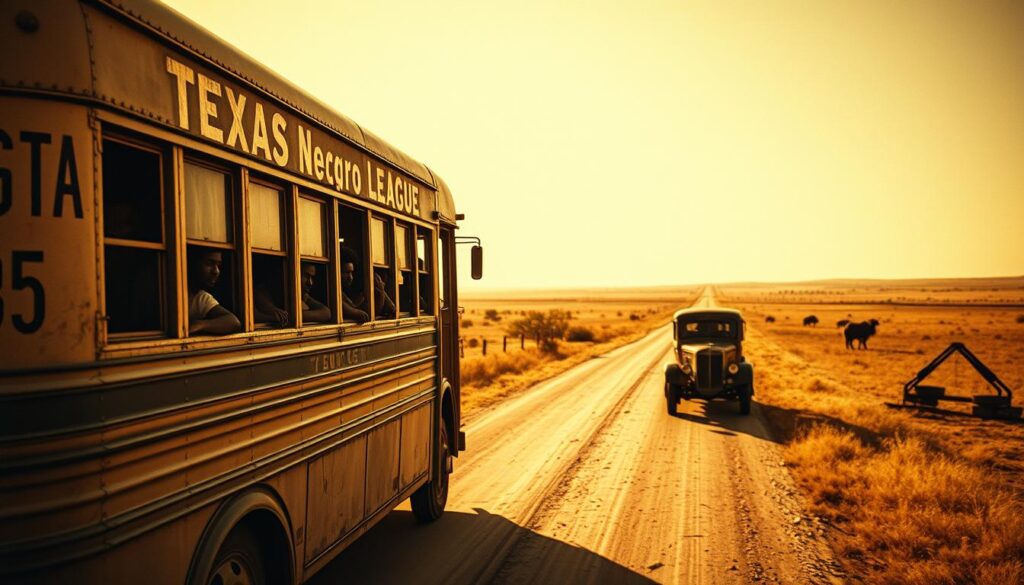
From necessity came triumph. Black-owned businesses became essential for Texas teams. They supported teams because it was more than baseball. It was a way to resist racism economically.
Friday night games became key for local economies. Money stayed in Black neighborhoods, boosting local businesses. Games in Houston, Dallas, and Austin were more than fun; they were investments in the community.
Integration brought a complex victory. It was morally right but hurt the economy. Jackie Robinson’s breakthrough hurt the financial model of many Black athletes and businesses. Many Texas teams folded due to lost financial support, not lack of talent.
| Aspect | White Teams | Texas Negro League Teams | Impact Difference |
|---|---|---|---|
| Financial Backing | Corporate sponsors | Community businesses | Local wealth circulation |
| Fan Base | Regional following | Community ownership | Cultural investment |
| Economic Model | Profit extraction | Wealth retention | Neighborhood development |
| Legacy | Statistics | Community infrastructure | Lasting institutions |
The real triumph? Texas teams showed how to build a strong community economy. Today’s minor league teams can learn from their example. Real connections are more valuable than corporate money.
Notable Games & Moments
Imagine a dusty Texas ballpark in the 1940s. The heat shimmered above the infield. Cold beer was just a dream. This was where Negro League baseball turned into a show.
The first Negro League game on May 2, 1920, was more than a date. It was a statement. But the real magic happened in the decades that followed. In towns across Texas, legends were born during doubleheaders and exhibition games.
Exhibition games between Negro League teams and white semi-pro squads were like masterclasses. They were cultural statements with cleats. A local Texas pitcher striking out 15 against all-stars was the norm, not an anomaly.
Stolen bases that defied physics and catches that seemed impossible were common. The trash talk was legendary. These moments were not on SportsCenter but became stories passed down through generations.
Hitters smashing triples off pitchers like Satchel Paige were not flukes. They were proof of skill. These athletes were not just playing; they were making a statement to everyone watching.
The cultural significance of these games went beyond the box score:
- Community gatherings that blended athletic excellence with social commentary
- Unofficial integration years before Jackie Robinson broke the color barrier
- Economic empowerment through black-owned businesses surrounding ballparks
- Technical innovation in gameplay that would later influence Major League Baseball
What made these moments remarkable was not just the athletic brilliance. It was the audience’s awareness of watching history, even if mainstream media ignored it. The Negro Leagues in Texas shone their own spotlight when no one else would.
These games were more than sports. They were acts of cultural defiance, technical mastery, and community building. All wrapped in the sound of a bat and the roar of a crowd that knew excellence.
Contribution to Texas Heritage
While Texas drew color lines, Negro League teams drew crowds. They built economic powerhouses in Black communities. These games were more than sports; they were economic boosts.
Players were local heroes and economic drivers. Their earnings supported Black businesses. They filled hotels and restaurants, places white folks wouldn’t go.
These athletes shaped Texas culture in lasting ways. They showed excellence when others expected less. They proved professionalism, challenging stereotypes.
Young Black Texans saw role models who excelled on and off the field. They saw men who hit curveballs and managed finances.
The legacy lives on through museums and stories. Modern Texas sports culture owes a debt to these pioneers. They showed talent needs opportunity, not permission.
Exploring the history of Texas Negro Leagues is more than baseball. It’s about how communities built themselves against all odds.
Texas heritage is not just about wars or oil. It’s about building communities from scratch, with courage and dignity.
Conclusion
The story of Negro League baseball in Texas is alive and full of lessons. These teams didn’t just play; they created a world of excellence despite segregation.
Today, their legacy lives on. The Negro Leagues Family Alliance works hard to keep their stories alive. Major League Baseball is now recognizing this history, planning a Negro Leagues Day. It’s not just about looking back; it’s about setting the record straight.
The real victory of these Texas teams is their unbroken spirit. They showed that talent, not exclusion, is what matters. Their fight for recognition is a mirror to broader struggles for fairness in sports and society.
So, when you watch a game in Texas, think of the trailblazers who came before. Their journey is a lesson in overcoming obstacles. It’s a legacy that deserves our honor every time we play.