
Across Texas, modern stadiums stand tall like temples. They are not just for games. They are cultural landmarks and key public spaces.
Imagine the Dallas skyline or Deep Ellum’s historic streets. A city’s identity comes from its neighborhoods and landmarks. The finest ballpark architecture does more than host fans. It ties deeply to its area.
This design makes a venue a true civic heart. It creates a strong sense of place. In Texas, where size and weather are big, this connection is striking. The architecture is a thoughtful answer to the city’s environment.
It also changes the cityscape around it. These buildings tell stories and build communities. They are the cathedrals of heat and hope in the changing American city.
From Wooden Parks to Modern Districts
The way Texans watch baseball has changed a lot. Ballpark design and where they are built show how the state has grown. These changes reflect the state’s ambitions, technology, and urban planning.
In the late 19th and early 20th centuries, sports venues were simple. Teams played in wooden grandstands on fields. These parks were on the outskirts of cities, like Dallas by the Trinity River in 1841.
As cities grew, these wooden structures served more fans. But the park architecture was not a main focus.
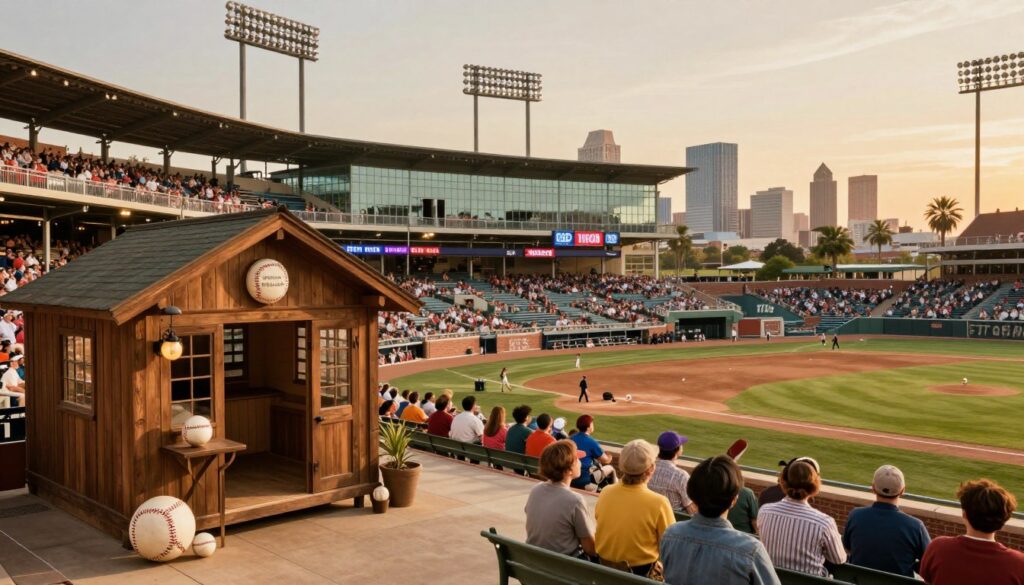
After World War II, things changed a lot. Old wooden parks were replaced by big, concrete-and-steel stadiums. These new stadiums were part of urban renewal projects.
Old neighborhoods were often cleared for these new stadiums. They were seen as symbols of progress. But they focused on being big and functional, not on fan experience.
In the late 20th century, thinking changed again. Ballparks became part of entertainment districts. This idea was adopted in Texas, like in “The Highlands” district from the old St. Louis Arena.
This new approach saw ballparks as economic drivers. They were meant to fill empty spaces and boost development around them.
This evolution can be broken down into three phases:
- The Frontier Era: Wooden structures on the urban periphery.
- The Industrial Modern Era: Concrete multi-purpose bowls built through urban renewal.
- The Place-Making Era: Ballpark design as the heart of a dedicated entertainment district.
Today, ballpark design is all about integration. Architects and planners think about how venues work with transit, streets, and public spaces. They aim to make places that are alive every day, not just on game days.
This shift from simple wooden grandstands to modern districts mirrors Texas’s growth. The story of sports venues is the story of Texas’s transformation.
The Astrodome, Arlington Stadium, Minute Maid Park, Globe Life Field
Texas baseball architecture tells its story through four landmark stadiums. Each stadium reflects its era’s design and fan expectations. They are more than just venues; they are concrete diaries of change.
The Astrodome opened in 1965 as a marvel of engineering. It was the first fully enclosed, air-conditioned stadium. This made it a cool, controlled space in Texas’s heat.
It was called the “Eighth Wonder of the World.” The design was a “placeless” late-modern ideal, closed off from Houston.
Arlington Stadium was a simple, multi-purpose stadium. Its circular, symmetrical bowl was common in its time. It was built for both baseball and football, lacking a unique character.
The fan experience was generic. Views were often disconnected from the city beyond the outfield walls.
Minute Maid Park opened in 2000, marking a shift. It embraced the “retro-style” ballpark trend. The architects incorporated the historic Union Station building into the left-field design.
This created an instant sense of place and history. The park is baseball-only and features natural grass. Its asymmetrical field layout and intimate seating brought fans closer to the game.
The design connects to downtown Houston, weaving the stadium into the urban fabric.
Globe Life Field, opened in 2020, represents today’s era. It combines retro aesthetics with cutting-edge technology. Its retractable roof allows for climate control without sacrificing the feel of an open-air park.
Fan amenities are a central focus of its design. High-tech video boards, vast concourses, and premium clubs define the experience. The stadium’s form is modern, yet its brick and granite accents nod to classic ballpark tradition.
The table below highlights the key architectural contrasts between these four iconic Texas ballparks.
| Ballpark | Era & Style | Key Architectural Feature | Connection to City |
|---|---|---|---|
| The Astrodome | Mid-Century Modern / Enclosed | First domed, air-conditioned stadium | Closed off, interior world |
| Arlington Stadium | Multi-Purpose / Cookie-Cutter | Symmetrical, circular bowl | Minimal, generic setting |
| Minute Maid Park | Retro-Modern | Incorporated historic train station | Strong, integrated with downtown |
| Globe Life Field | Contemporary | Retractable roof & high-tech amenities | Modern district anchor |
This progression shows a clear evolution. Modern ballpark architecture in Texas now prioritizes unique identity and fan comfort. The goal is to create a memorable sense of place that honors both the game and the city it calls home.
Shade, Retractable Roofs, and Cooling Strategies
Without cool strategies, Texas’s dream of a lively ballpark district would fade. The sun and heat are big challenges. They’ve shaped stadium designs for years.
Comfort is key for fans. When they’re cool and shaded, they stay longer and spend more. This drives the engineering in Texas’s parks.
The Astrodome was a big step, bringing baseball indoors. It was the first air-conditioned sports space. It made sports possible all year in tough climates.
Now, retractable roofs top the list. Places like Minute Maid Park and Globe Life Field show off this tech. These roofs let fans enjoy baseball under the sun or in cool comfort.
This tech is a game-changer. It keeps events on schedule and protects big investments. For fans, it makes the stadium a reliable, fun spot no matter the weather.
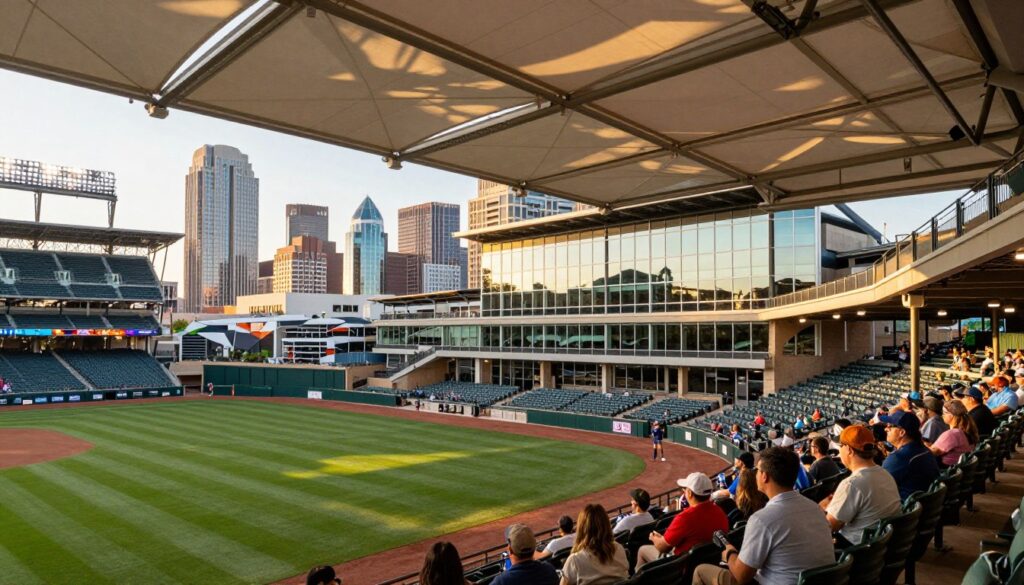
Outdoor parks use smart designs too. They’re built to catch afternoon shade. Big canopies and shade sails add to the comfort.
These features boost urban renewal. A comfy stadium means more people around. This brings life to nearby shops and restaurants.
Today’s stadium updates aim to make them community hubs. They offer food, shopping, and fun, even on non-game days. This turns a ballpark into a key spot for neighborhood growth.
This growth ties into bigger city plans. Dallas’s green spaces and DART system show a focus on making cities better. A ballpark district with good transit and spaces is a model for growth.
In short, cooling down is key for making places special. Texas ballparks ensure they’re at the heart of cities. They drive economic and social urban renewal, showing smart design can cool even the hottest spots.
Architectural Symbols and Skyline Views
Great ballpark architecture does more than offer seats and shade. It becomes an iconic symbol for its city. The unique shapes of Texas venues are landmarks.
The retro red brick of Minute Maid Park and the futuristic dome of Globe Life Field define their skylines. They stand alongside structures like Dallas’s Reunion Tower.
Designers aim to frame dramatic views from the seating bowl. Fans watch a game with the city’s skyline as a backdrop. This visual link strengthens the connection between the team and the urban community it represents.
The vista becomes part of the event’s memory. These stadiums are sources of civic pride. Their scale and innovation reflect local ambition and identity.
The Astrodome was a monumental statement of progress. Modern ballpark architecture continues this tradition of symbolic design. These cathedrals of heat are now permanent features of the Texas cityscape.
Their daily use by thousands makes them living monuments. Ballpark architecture captures civic spirit in a tangible form. It turns steel and concrete into a shared home for collective celebration.