Imagine 1888, when baseball was simple and TV deals were unheard of. In Fort Worth, a story began that’s like a Mark Twain tale. It’s filled with newspaper jokes that became part of the team’s legend.
It’s funny how a joke from Dallas about Fort Worth being “sleepy” started a dynasty. The 1920s Panthers were not just good; they were unbeatable. They made the 1927 Yankees look like amateurs.
They won six championships in a row and almost always had over 100 wins a season. It was like they ruled baseball with an iron fist. The Texas League’s early days were chaotic, but they created a team that stood out.
Manager Jake Atz led the Cats to greatness. Their success set a new standard for minor league teams. It showed what was possible for future dynasties.
Standout Players & Managers
If baseball dynasties were art galleries, the 1920s Fort Worth Cats would be the Louvre. There are too many masterpieces to choose from. Where does one even begin the tour?
Joe Pate was a pitching maestro who treated Texas League batters like minor inconveniences. During the Cats’ six-year championship reign, Pate collected 153 wins. His 1921 and 1924 thirty-win seasons were statistically absurd.
Clarence “Big Boy” Kraft swung what might as well have been an oak tree trunk. His 1924 season defies modern comprehension. He hit 55 home runs (a Texas League record) and had 196 RBIs. These weren’t just numbers – they were declarations of baseball supremacy.
John “Ziggy” Sears, a Kentucky coal miner, arrived with a common name and left with legendary status. His 1925 three-game rampage against San Antonio reads like baseball fan fiction. He had 14 hits, 12 runs, 6 homers, and 16 RBIs. The mathematical probability of such production is roughly equivalent to finding Shakespeare’s lost plays at a yard sale.
According to historical accounts, San Antonio fans actually rioted during Sears’ onslaught. When your hitting causes civil unrest, you’ve achieved something special.
| Player | Position | Signature Achievement | Season |
|---|---|---|---|
| Joe Pate | Pitcher | 30 wins | 1921 & 1924 |
| Clarence Kraft | Power Hitter | 55 home runs | 1924 |
| Ziggy Sears | All-around Threat | 6 HRs in 3 games | 1925 |
These weren’t just great athletes – they were forces of nature. They defined an era of Fort Worth Cats dominance. Their records didn’t just stand the test of time; they mocked it.
The Cats’ MLB Connections
Fort Worth was a hotbed for baseball talent, unlike any other minor league team. The 1946 Brooklyn Dodgers affiliation was more than a deal. It was like a finishing school for future stars.
Duke Snider’s swing, Carl Erskine’s curve, and Maury Wills’ speed were all honed in Texas. But the Cats did more than just produce stars. They created game architects.
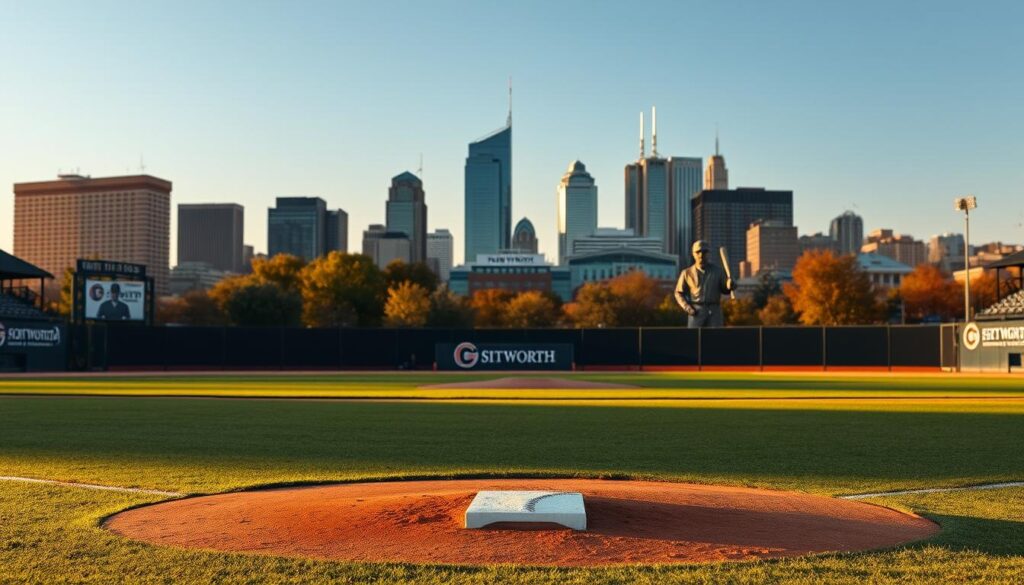
Five former players became major league managers. Sparky Anderson and Dick Williams changed dugout strategy and earned Hall of Fame spots. Bobby Bragan, Norm Sherry, and Maury Wills rounded out this managerial team.
Willard Brown, a Negro League legend, played for the Eagles in 1953. His time in the Texas League was quietly groundbreaking.
Willie McCovey joined in 1957, a young hitter destined to intimidate National League pitchers. The Fort Worth baseball pipeline was not only productive but also prophetic.
So, what made this possible? Was it the Texas League’s competitive fire? The wisdom shared between veterans and rookies? Or was it Fort Worth’s unique mix of dust, heat, and dreams that turned prospects into legends?
Community Pride
The Cats didn’t just play baseball. They rewrote the rulebook on how communities experience the game. They were obsessed with more than just batting averages.
On August 30, 1922, Fort Worth’s WBAP radio broadcast a Cats game. It was the first Texas League radio broadcast. Twenty-seven years later, they aired the first televised baseball game in the region.
The Cats knew baseball is more than just a game. It’s about community and connection. Their media innovations created a cultural infrastructure that went beyond the ballpark.
In 1950, the Cats drew 53,578 fans to the Cotton Bowl. This wasn’t just a marketing stunt. It showed baseball’s power to unite communities.
In 1952, the Cats made a bold move. They integrated the Texas League by signing Dave Hoskins. This was community leadership disguised as baseball. They quietly advanced social progress while others debated it.
The Cats’ legacy wasn’t just about winning games. It was about innovation and social conscience. They showed that true community pride comes from shaping culture, not just playing games.
This forward-thinking approach created a dynasty that went beyond sports. The Cats became cultural architects, building bridges through media and integrated lineups. Their legacy reminds us that the most enduring teams are those that champion their communities.
Ballpark History
Baseball stadiums are like cathedrals, and the Fort Worth Cats had some of the most impressive ones. Their story is more like a Texas-sized game of musical chairs than a simple real estate tale.
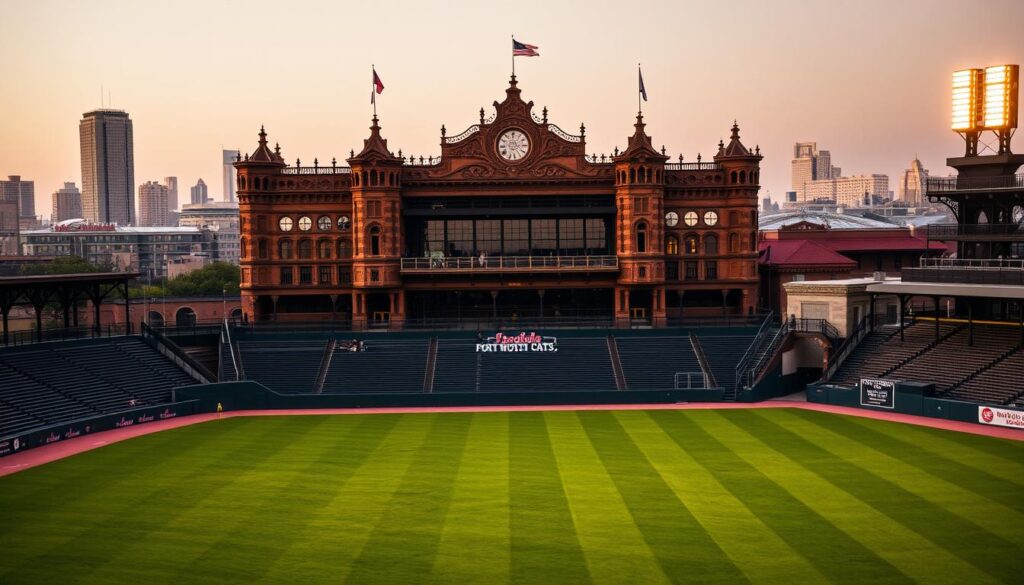
Cecil Burnett was the visionary who bought Oak Cliff ballpark for $265,000. He renamed it Burnett Field and turned it into a top minor league ballpark. Historians call it one of the best in the country.
The Cats had a unique approach to home fields. They played at Burnett Field and LaGrave Field. It was like having two homes, but with baseball.
Burnett’s plan was ambitious. He built Burnett Field to be a major league contender. Every upgrade was a step towards bringing big league baseball to Dallas-Fort Worth.
The Cats also played at Turnpike Stadium in Arlington. It was a preview of baseball’s future. They were testing the waters for what would become the Rangers’ home.
The Cats’ history is not just about ballparks. It’s about their evolving relationship with space and community. From Burnett’s vision to the split-season games, it was all part of a bigger game. The ballpark was both a chess piece and a battlefield.
Learn more about the Fort Worth Cats at this link.
Modern Incarnations
The Cats’ comeback story is like a cat with nine lives. Each new life is more exciting than the last.
In 2001, Fort Worth baseball saw a magical change. The Cats became an independent minor league team. They played in various leagues, like freelance baseball. This new team lasted until 2014, a long time in independent league years.
In the 1960s, baseball saw a big change. The Dallas Eagles and Fort Worth Cats merged into the Dallas-Fort Worth Rangers in 1960. They played in the American Association. It was either a smart move or a last resort.
When the American Association ended in 1962, the Rangers moved to the Pacific Coast League. It was like a company changing its headquarters without moving. The team played in the Pacific Coast League in 1963 before Fort Worth businessman Tommy Mercer bought it.
Mercer’s purchase brought Fort Worth baseball back to the Texas League in 1964. Dallas stayed in the Pacific Coast League. It was like partners splitting up but staying friends.
The Cats’ ability to come back shows something deeper than baseball. It’s about a region’s spirit that never fades. Even without winning, they kept going for years.
Modern Fort Worth baseball is more than just games. It’s about a community that keeps trying, decade after decade. They’re determined to keep their baseball alive, no matter what.
Conclusion
Numbers tell part of the story: 13 Texas League pennants, 8 Dixie Series victories, a six-year championship run. Fort Worth didn’t just play baseball – they built a dynasty that became Texas legend.
This wasn’t just about winning games. The Cats shaped baseball’s soul in Texas. They showed that quality wasn’t just for major leagues. Their integration in 1955 with Dodger farmhands like Maury Wills showed foresight beyond their era.
The team’s home at LaGrave Field saw both glory and struggle. But that final chapter couldn’t diminish what came before. A century of excellence that embedded itself in Texas culture.
Some franchises collect trophies. But this one built legacy. The panther might sleep downtown now, but its roar echoes through baseball history.