
I went looking for a fight. I was searching for a Negro League legend. I found a glaring omission. Where was Andy Cooper, the pitching maestro, in his home state’s athletic shrine?
This led to a hilariously indignant email. It was a lesson in the complex, often messy, geography of athletic immortality. It’s not just a dry roster. It’s a profile in contrasts.
We’ll meet the titans from the segregated past. Pitchers like Andy Cooper and Smokey Joe Williams carved their legends in the Negro Leagues long before Cooperstown called. Their recognition here came decades later, a testament to slow-moving justice.
Then there’s the modern spreadsheet debate. Ian Kinsler, the intense Texas Rangers second baseman, sits on the 2025 ballot. His case is pure analytics: 1,999 hits, 257 home runs, 54.1 WAR.
This list tells a story. It’s about how Texas, a state that treats football like a religion, has produced a pantheon of baseball gods. Their recognition is a saga in itself.
Milestone Achievements
What does a Hall of Fame resume look like when it’s baked in the Texas sun? Is it built from pristine, digitally-tracked numbers, or forged in the smoky, stat-poor legend of a segregated past? Let’s crack open two very different playbooks from the Lone Star State.
Take Ian Kinsler. His career is a masterclass in modern, all-around excellence. The numbers are crisp, powerful, and just shy of maddening. 1,999 hits. You read that right. One hit short of a nice, round, Cooperstown-friendly number. It’s the baseball equivalent of a cliffhanger ending.
But that’s just the hook. His case is built on a rare synergy. He blasted 257 home runs and swiped 243 bases, putting him in a club so exclusive it has a velvet rope: only four second basemen ever have 250+ HR and 200+ SB. The other members? Craig Biggio, Ryne Sandberg, and Joe Morgan. That’s not just company; that’s a monument.
Add in two Gold Gloves for good measure and a 54.1 Wins Above Replacement (WAR) that screams “franchise cornerstone,” and you have the blueprint for a contemporary Texas-born star. His milestones are quantifiable, tweetable, and perfectly suited for the back of a baseball card.
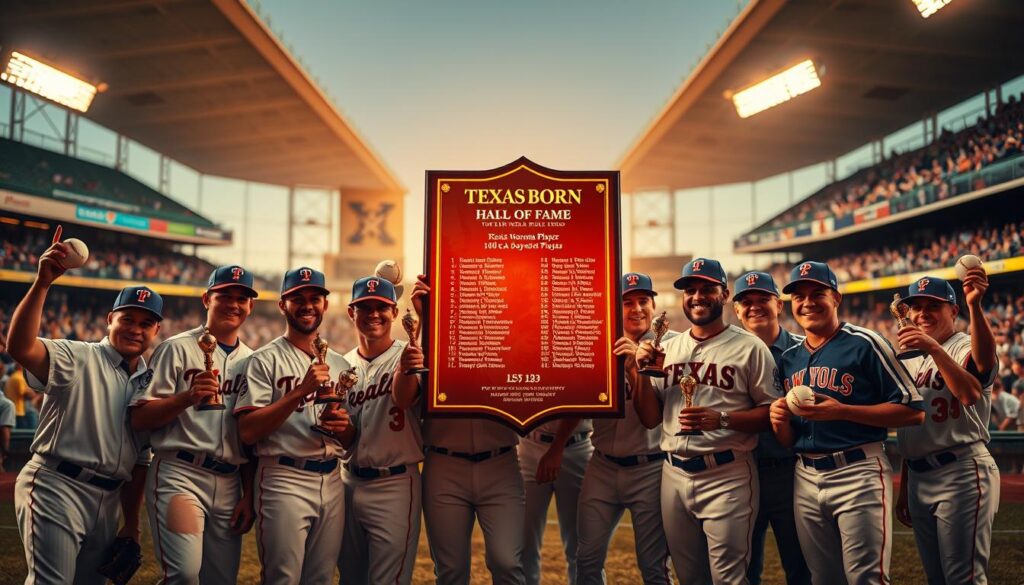
Now, rewind the film to a grainier, tougher era. For Texas-born players like Rube Foster or Biz Mackey in the Negro Leagues, the milestone sheet looks different. You won’t find a clean 30-30 season on their ledger. Their primary stat was survival. Their achievement was excellence in a world that built a wall to keep them out.
Their milestone wasn’t a number; it was a movement. It was forcing the institution of baseball, decades later, to engrave their names where they always belonged. The ultimate achievement for these legends was making Cooperstown acknowledge what every fan in the Negro Leagues already knew: they were kings of the game.
This is the fascinating Texan dichotomy. One legacy is measured in stats, the other in stature. Both are valid. Both are monumental.
| Era | Paradigm | Hallmark Achievement | What It Measures |
|---|---|---|---|
| Modern (e.g., Kinsler) | Quantifiable Excellence | 30-30 Seasons, 250/200 Club, Gold Gloves | On-field performance, statistical dominance |
| Negro Leagues (e.g., Foster, Mackey) | Existential Excellence | Hall of Fame Induction, Legacy & Impact | Historical importance, cultural impact, overcoming adversity |
So, which is the “better” milestone? That’s the wrong question. The right one is appreciating how both define greatness. Kinsler’s 1,999 hits tell a story of relentless, year-in, year-out production. Foster’s plaque tells a story of creating a world where his talent could shine at all.
The achievements of Texas-born players aren’t confined to one box. They span the spectrum from the beautifully precise to the profoundly impactful. And that, perhaps, is the most Texan achievement of all: refusing to be defined by just one standard.
Hall of Fame Induction Stories
The journey to Hall of Fame in Texas is not straightforward. It’s a path filled with challenges from different sports. I learned this from TSHOF Vice President Jay Black, who explained the voting process clearly.
The Texas Sports Hall of Fame honors athletes from various sports, not just baseball. Legends like Smokey Joe Williams are compared to football stars and golf champions. This makes the competition fierce.

Eight Negro Leaguers from Texas are in Cooperstown. But only four are in the Texas Hall of Fame. The reason is not lack of talent but the wide range of sports.
In 2016, the ballot included Andy Cooper, Hilton Smith, and Smokey Joe Williams. Williams was chosen. His story was seen as a key part of Texas’s athletic history.
Now, the story changes with players like Ian Kinsler. His case will be decided by BBWAA voters, not emails. They’ll look at his stats, like WAR and batting average.
Kinsler’s Hall of Fame story is about numbers, not just his achievements. It’s a shift from old ways to new, data-driven methods.
Old-timers fight for recognition, while modern players face a detailed analysis. It’s a big difference in how they’re judged.
One feels like a political campaign, the other like an audit. Both are fights for lasting recognition, but in different ways.
The Hall of Fame is changing. In Texas, it’s about fitting into a big picture of sports glory. Nationally, it’s about surviving the test of advanced stats. Each story shows how we remember athletes.
Do we value cultural impact or stats? The answer varies by Hall of Fame. In Texas, it’s all about thinking big.
The process of becoming immortal in sports is complex. But it reveals a lot about what we value. In Texas, they value everything.
Influence on Texas Youth
Does a bronze plaque in Canton or Cooperstown really matter to a kid in Lufkin or Lubbock? Some say halls of fame are just for old times’ sake. Others believe they honor the unsung heroes of sports.
For young athletes, it’s the moments of triumph that truly inspire. Ian Kinsler’s drive or Lance Alworth’s elegance show what’s possible. But the recognition of Texas-born players does more. It establishes a legacy and a visible hall of fame.
Look at the list of Texas-born players in Pro Football’s Hall of Fame. Legends like Sammy Baugh, Doak Walker, and Bob Lilly prove a point. Their stories, found in this archive of gridiron greats, inspire more than just stats. They give young athletes a sense of belonging.
That kid in Lufkin sees Ken Houston’s bust and realizes his hometown produced a legend. This subtle yet powerful message says, “You can follow in their footsteps.” The hall of fame makes dreams seem within reach. It connects the past to the present, showing the path to success.
In the end, the plaque’s true power is for the next generation. It connects their dreams to a rich Texas history. The legacy of these Texas-born players fuels the ambition of the next generation.