Imagine America’s favorite sport, hot dogs, and a city eager for its own baseball team. That’s how our tale starts.
The Dallas Eagles were more than just a minor league team. They showed Texas’ ambition – tough, determined, and overshadowed by bigger cities. It was like Field of Dreams with Texas flair, minus Kevin Costner’s famous cornfield.
This team popped up in baseball’s heyday when every city wanted its own team. The Eagles were Dallas’ pride – fierce, real, and short-lived before the big leagues beckoned.
Their journey echoes other famous rivalries, like the Philadelphia Eagles-Dallas Cowboys rivalry. Both stories tell of cities vying for sports glory.
So, let’s dig into the Eagles’ history and see how they embodied Texas spirit, one pitch at a time.
Key Seasons & Achievements
The Dallas Eagles wrote their masterpiece in 1946. This wasn’t just a championship season. It was a cultural moment wrapped in cleats and leather. The team captured the post-war American spirit.
Imagine a city rebuilding itself while watching its baseball team do the same. The Eagles started as underdogs but finished as legends. Their story shows that sometimes, statistics need context to truly matter.
The 1946 campaign is the gold standard for Dallas baseball excellence. They didn’t just win games; they created memories that would outlast scorebooks. Their .692 winning percentage that year would make modern analytics departments swoon.
But numbers alone don’t tell you about the packed stands at Burnett Field. They don’t capture the sound of leather meeting wood as another Eagles hitter sent one into the Texas night. This team understood that baseball is theater, and they were putting on a show.
Other notable seasons deserve recognition too. The 1948 squad nearly matched the ’46 magic, while the 1951 team showed remarkable resilience amid changing times. Each chapter added to the Eagles’ growing legacy in Dallas baseball history.
| Season | Record | Standing | Notable Achievement |
|---|---|---|---|
| 1946 | 97-43 | 1st Place | Texas League Champions |
| 1948 | 91-63 | 2nd Place | League Finals Appearance |
| 1951 | 82-72 | 3rd Place | Best Attendance Record |
| 1953 | 75-79 | 5th Place | Final Competitive Season |
The Eagles’ success wasn’t accidental. It was built on smart roster construction and a keen understanding of the Dallas baseball market. They knew their audience and delivered exactly what post-war fans craved: excellence with personality.
Their achievements extend beyond win-loss records. The Eagles helped establish professional baseball as a permanent fixture in Dallas culture. They proved that the city could support a team with both passion and pocketbooks.
Looking back, these seasons represent more than just games played. They’re time capsules of a specific moment in Dallas history. The Eagles didn’t just play baseball – they helped define what Dallas baseball could be.
Notable Players & Coaches
If baseball rosters were movies, the Dallas Eagles would be that indie film full of hidden gems. This historic team was a mix of almost-stars, should-haves, and what-ifs.
Jack “Smokey” Stephens was a pitcher with a curveball that defied physics. He had a 2.18 ERA in 1948, even while smoking between innings. His nickname might have come from his pitching or his smoking habits.
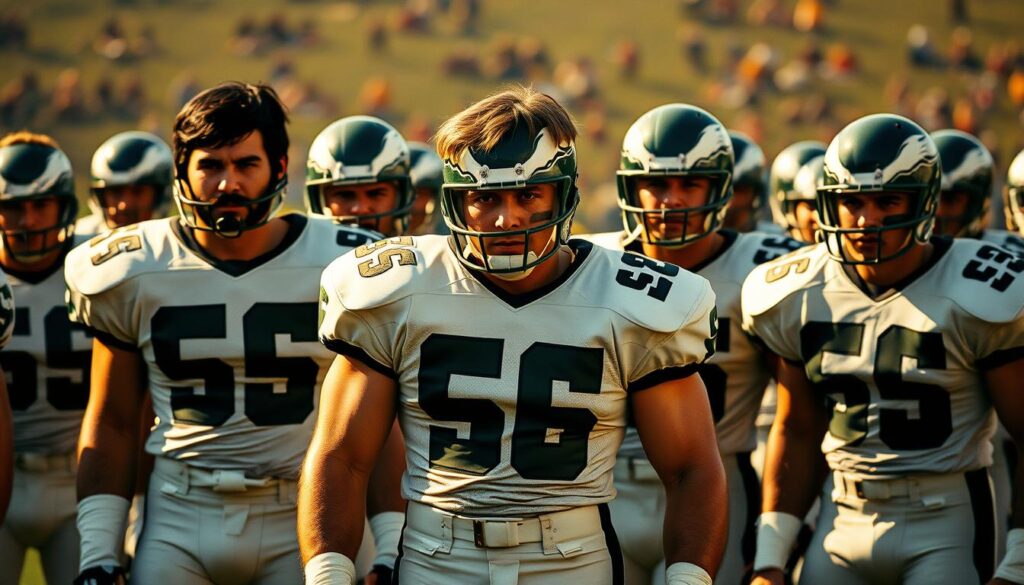
First baseman Mike “The Wall” Henderson was a defensive master. He could field grounders while deep in thought. His .987 fielding percentage in 1951 is legendary.
Manager Joe “The Professor” Williams managed like a chess player. His 1947 lineup changes were genius. He knew winning in the minors needed strategy and psychology.
The Eagles’ roster was a list of baseball’s almost-famous. Outfielder Bobby Ray Collins hit .327 in 1952 but never got called up. Catcher Jimmy West called games like a conductor. These players were more than athletes; they were stories of perseverance.
This historic team was more than just stats. It was about athletes chasing greatness, knowing it could happen at any moment. But for them, it rarely did.
Their story shows baseball’s unique charm. Sometimes, the most interesting careers are those just off the main stage. The Eagles gave us characters and stats that are both memorable and fascinating.
Classic Rivalries
Baseball is America’s favorite pastime, and rivalries are its exciting shows. The Dallas Eagles were right in the middle of Texas’ most thrilling games. These weren’t just games; they were big events where everyone’s pride was on the line.
The Eagles’ games were like “southern Shakespeare” – full of heroes, villains, and twists. You can’t say you’ve seen Texas baseball unless you’ve felt the electric atmosphere of these classic games.
Three rivalries defined the Eagles’ spirit and left a mark on Texas League history. Each rivalry brought its own drama, intensity, and baseball brilliance.
The Fort Worth Cats was a battle between Dallas and Fort Worth. It was more than a game; it was a cultural clash. Games felt like declarations of pride.
The Eagles-Cats rivalry was like the Texas version of Yankees-Red Sox, but with better food and accents. The teams clashed in the 1940s, creating moments that are remembered in both cities’ sports history.
The Houston Buffaloes faced off against North Texas grit. These games often decided who would win the Texas League. Both teams fought for pennants and playoff spots.
This rivalry was special because of the style clash. The Eagles’ careful play against Houston’s flashy style made for a fascinating game. Managers became like chess players, and every game felt like a preview of the playoffs.
The San Antonio Missions brought a different kind of drama. This rivalry was fueled by pure baseball rivalry. The teams developed a strong dislike for each other through many close games and controversies.
Some of the Eagles’ most memorable wins and losses were against San Antonio. The rivalry produced thrilling extra-inning games, bench-clearing incidents, and legendary performances.
| Rivalry | Years Active | Key Series | Notable Moment |
|---|---|---|---|
| Fort Worth Cats | 1946-1957 | 1948 Pennant Race | Eagles’ 9th inning comeback, July 1949 |
| Houston Buffaloes | 1940-1957 | 1952 Playoffs | 20-inning marathon, August 1951 |
| San Antonio Missions | 1941-1957 | 1946 Championship | Controversial call, September 1953 |
These rivalries did more than fill stadiums; they shaped the Dallas Eagles’ identity. Games under pressure showed what the Eagles were made of – resilience, skill, and Texas spirit.
The intensity of these games created legends on the field. Players became heroes or goats based on their performances. Managers crafted strategies for these games, knowing success often depended on winning these series.
Even today, former players remember these games fondly. The stories have grown richer over time, but the essence remains the same: these rivalries made the Dallas Eagles special in Texas sports history.
Decline & Disbanding
Every great sports story has a tragic end, and the Dallas Eagles had theirs. Their fall was not just one event, but a mix of cultural changes and economic issues.
Texas was changing fast, like a Nolan Ryan fastball. The 1950s brought TV, major league dreams, and air conditioning. Watching the Yankees on TV seemed more exciting than minor league games.
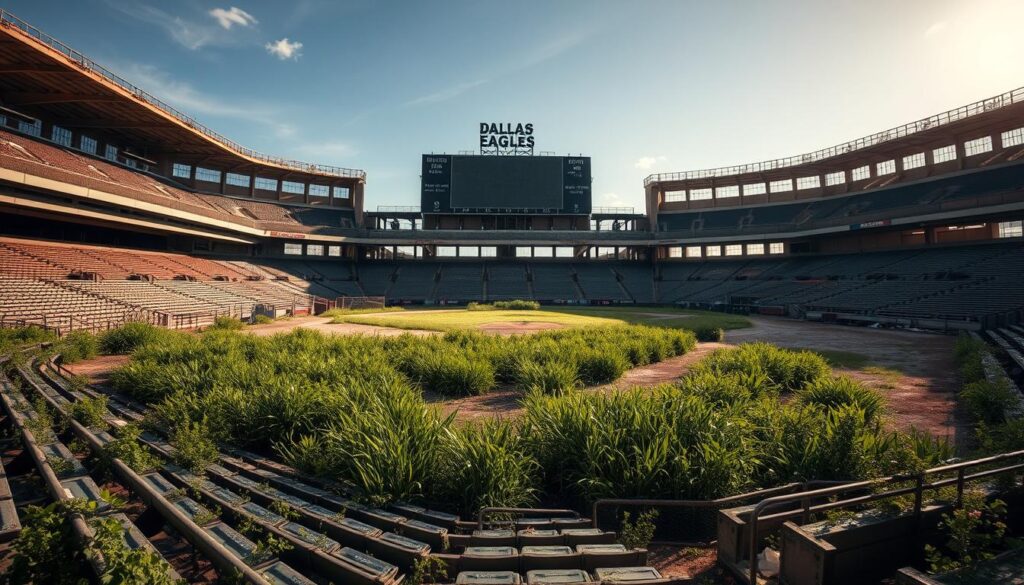
Dallas’ population grew from 294,000 in 1940 to 680,000 by 1960. New residents wanted major league baseball, not Triple-A.
Three major factors led to the Eagles’ demise:
- The major league invasion: The Dodgers moved to Los Angeles in 1958, sparking a baseball race
- Television’s siren song: Watching Mantle and Maris on TV was more appealing than Texas sun
- Urban sprawl: Suburbs offered swimming pools and barbecues, competing with Saturday baseball
Attendance plummeted from 350,000 fans in 1953 to barely filling a high school stadium by the end. The team couldn’t afford to pay players with low attendance.
The Eagles’ final years were like a slow crash. Player development and community engagement suffered. The team became like a friend who doesn’t know the party’s over.
The announcement of their disbandment in 1959 was almost a relief. The Dallas baseball scene had changed, and the Eagles couldn’t keep up.
Their last game was hot, half-empty, and a loss. Players shook hands, grounds crew dismantled the field, and Dallas barely noticed.
What’s interesting is how they failed. The Eagles didn’t fall due to incompetence or scandal. They were victims of progress and a growing Texas. Being good wasn’t enough; they had to be relevant.
Legacy in Dallas Sports
You don’t just disappear after helping build a city’s sporting soul. The Dallas Eagles may have folded their tents, but they left the campground better than they found it. Their legacy operates like a cultural substrate – the rich soil beneath the manicured lawns of modern Dallas sports.
This historic team didn’t just play baseball; they taught Dallas how to be a sports town. Before the Cowboys became America’s Team and the Rangers filled Globe Life Field, the Eagles showed what professional sports could mean to a growing city. They built the template that every subsequent franchise would follow.
Think about infrastructure – both concrete and cultural. The Eagles helped establish:
- Local media coverage patterns for professional sports
- The business relationships needed to sustain franchises
- Fan traditions that would evolve over decades
- Youth baseball programs that fed future talent pipelines
Their influence echoes in curious ways. The organizational DNA of the Eagles undoubtedly influenced how later owners approached building teams. When you examine the Cowboys’ legacy-building approach, you’re seeing refined versions of strategies the Eagles pioneered.
Let’s break down their cultural impact through a more analytical lens:
| Aspect of Legacy | Eagles Contribution | Modern Manifestation |
|---|---|---|
| Community Engagement | First major team to integrate with local businesses | Current teams’ extensive corporate partnership networks |
| Player Development | Established first local talent scouting system | DFW area now produces elite baseball talent regularly |
| Ballpark Experience | Created family-friendly pricing and promotions | Modern teams’ emphasis on entertainment beyond the game |
| Media Coverage | Pioneered daily sports coverage in local papers | Today’s extensive sports media ecosystem in Dallas |
The Eagles’ greatest achievement might be their timing. They arrived when Dallas was transforming from a regional hub into a national city. Their games provided common ground for a diverse population finding its identity.
This historic team proved that professional sports could thrive in Texas beyond football season. They made baseball part of the city’s cultural conversation, paving the way for everything that followed. The Eagles didn’t just leave memories – they left a blueprint.
In sports history, we often overvalue championships and undervalue foundation-laying. The Eagles built the basement upon which Dallas sports now stands. That might not make highlight reels, but it makes history.
Conclusion
The Dallas Eagles were more than just a team. They were a mix of dreams, community, and the American spirit. Their story is like the American Dream in sports – a rise, a peak, and then fading away.
What’s special about the Dallas Eagles is their timing. They played when baseball was the top sport in America. They shone during the golden age and vanished as sports turned into big business. Their impact wasn’t in wins but in capturing a city’s heart before sports became corporate.
Their tale is similar to many regional teams in America. Like the Cowboys-Eagles rivalry that defines Dallas football, these baseball rivalries were real and local.
The Dallas Eagles teach us that sports history is more than dynasties. Teams that shone briefly, like them, show us about community and the changing sports world.