
Let’s look beyond the scores and flags for a moment. What do we really mean when we say “dynasty” in sports?
It’s not just a streak or a lucky year. I see it as a sustained assertion of will. A time when a team’s name is victory itself.
Imagine it as a cultural takeover, not just a fluke. The Oakland A’s of the early 70s were not just good; they were inevitability. As one said, it wasn’t a question of if they’d dominate, but when.
True dynasties don’t just win. They leave a mark on the game’s heart. They change strategies, inspire fear, and create stories that last long after the players are gone.
It’s like the difference between a one-hit wonder and a band that shapes a generation. So, before we explore specific teams, let’s agree. We’re searching for empires, not just winners.
Notable Dynastic Teams
History remembers the coronations, but it’s forged in the crucible of a Game 7, 11th-inning at-bat. Let’s meet two squads that didn’t just win; they defined what winning looks like under extreme pressure. Their stories are a masterclass in dynastic DNA.
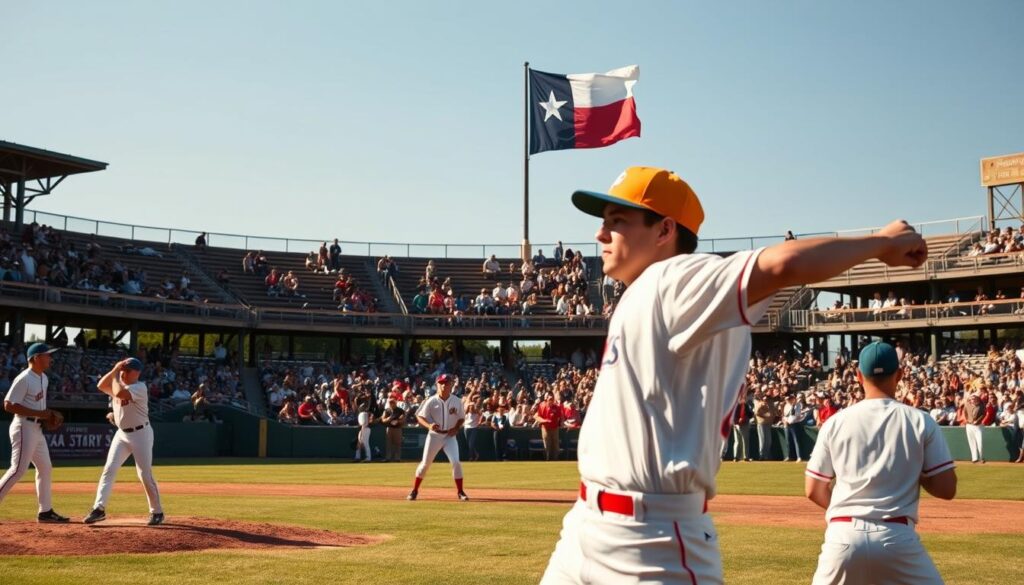
The 1949 Dallas Rebels didn’t have a victory march. It was a heart-in-your-throat thriller. Down 3-1 in the Lonestar Series, they staged a comeback so dramatic it feels scripted. They forced a Game 7. Then they won it in the 11th inning. That’s not luck. That’s a team discovering its own invincibility in real time.
Winning a state championship is one thing. Seizing it from the jaws of defeat is how legends are born. The Rebels proved that resilience, not just talent, is a dynasty’s most vital organ.
The Oakland A’s of the early 1970s were different. Their path was the arithmetic of awe. In 1971, powered by Reggie Jackson’s slugging, they didn’t just win their division. They dominated it, finishing with a 101-60 record.
They were “miles ahead” of the competition. This was systematic, overwhelming force. The A’s didn’t need extra innings. They built a fortress of wins so high, no one could climb it.
So, what’s the lesson here? Dynasties wear different masks. One is the gritty, underdog thriller. The other is the methodical powerhouse. Both, in their own way, dictate the terms of history.
| Team & Era | Defining Trait | The Legacy |
|---|---|---|
| 1949 Dallas Rebels | Resilient Comeback | Epic, against-all-odds state championship that defined Texas baseball drama. |
| Early ’70s Oakland A’s | Overwhelming Dominance | A record-setting win pace that redefined division control and team excellence. |
One team clawed its way to the top. The other built a staircase. Both left an imprint so deep, we’re talking about them decades later. That’s the true power of a notable dynasty. It transcends the final score.
Key Players & Coaches
A dynasty is built on the spark between athletes, coaches, and owners. These people are the heart of team legacies. They make the trophies meaningful. Let’s look at the real people behind the wins.
On the field, stars like Vic Doss and Chris Eddy shine. Doss hit .342 with 14 homers. Eddy had a 1.93 ERA, making hitters look silly. Their stats show they were unstoppable.
Vida Blue’s 1971 season was incredible. He won 24 games and had a 1.82 ERA. He even got on the cover of Time magazine. It was more than just pitching; it was art.
But talent alone isn’t enough. You need players who perform under pressure. Matt Peoples was one such player. He said, “We did the little things right and the big things right.” His calm shows what it takes to win big.
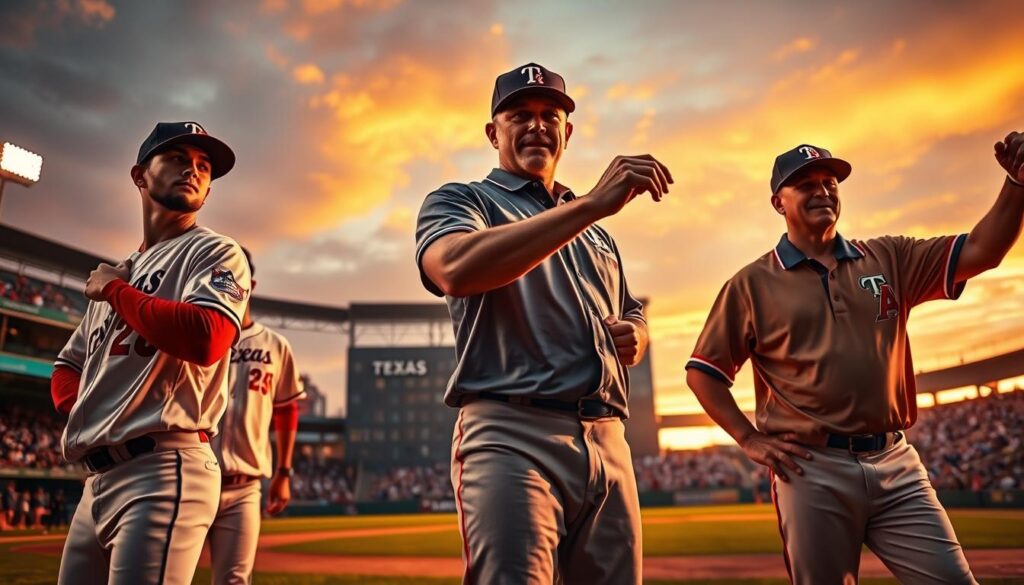
Every team needs a mix of calm and bold. Reggie Jackson brought the excitement with 32 homers. He was the star who loved the spotlight. This balance is key to success.
Now, let’s look at the front office. Here, the real magic happens. Owners like Charles Finley were innovators. He introduced unique uniforms and ideas. He made the team stand out.
Finley’s boldness was matched by manager Dick Williams. Williams managed egos and turned young players into winners. His leadership was key to the team’s success.
A dynasty’s success comes from the mix of talent, leadership, and creativity. The stats and stories of players like Blue and Peoples, and owners like Finley, create lasting team legacies. It’s not just about winning; it’s about the journey.
These eras are defined by the people, not just the wins. The great NFL dynasties and other teams show this. The stories behind the numbers make the championships unforgettable.
The Road to Dominance
If you think dynasties are made from plans and charts, you’re wrong. They’re more like magic, made from talent, timing, and hard work. Sometimes, this mix creates something truly special.
The 1949 Lonestar Series is a great example. It was a real fight, not a coronation. Each game was different, with heroes emerging in unexpected ways. Billy Schulte’s pitching and Josh Palmer’s walks were key, along with Colby Swinson’s big hit.
Manager Swinson called it a team effort. This means no one player was the hero. Instead, different players stepped up each night. It’s like a team effort, where everyone shares the pressure.
Looking at the big picture, we see the same idea. The Oakland A’s of the early 70s are a great example. They had talent, but two big changes changed everything. Manager Dick Williams brought a new energy, and Vida Blue became a star.
One was a smart move, the other a surprise. You can plan for the first, but the second is luck. Building a dynasty is about making smart choices and hoping for luck to strike.
To build a winning team, start with a strong foundation. Look at the early days of legendary teams like the Buffaloes. Then, find the right strategies to make your team unstoppable.
| Strategic Lever | 1949 Bullets Example | 1971 A’s Example | Modern Parallel |
|---|---|---|---|
| Managerial Fit | Swinson’s focus on collective, adaptable gameplay | Dick Williams imposing a fierce, confident identity | A manager whose philosophy unlocks the roster’s full power |
| Unexpected Emergence | Palmer’s walk, Swinson’s double in clutch spots | Vida Blue’s Cy Young/MVP season from relative obscurity | A late-round draft pick or minor leaguer becoming a star |
| Distributed Pressure | Different heroes each game; no single point of failure | Balanced lineup with Reggie, Sal, Catfish, and others | Deep bullpens and lineups where anyone can be the MVP |
| Crisis Response | Winning back-and-forth series through adaptation | Overcoming early season struggles to dominate later | Winning games in multiple ways: comeback, blowout, grind |
The table isn’t a checklist. It’s a menu. The best dynasties don’t just excel in one area. They have a system where many things can work together.
This is the messy middle. It’s the part between “talented” and “untouchable.” It’s stressful and infuriating, but it’s the only part that truly matters.
You can’t buy a culture where pressure is a privilege. You can’t trade for the unshakable belief that someone, anyone, will step up. You create it, you engineer it, and you celebrate every moment.
You build a road where every player feels like they own a piece of it. That’s how you build something that lasts. That’s the real road—winding, unpredictable, and utterly compelling to travel.
Their Place in Texas Baseball Lore
What happens after the celebration ends? These stories don’t fade away. They become part of the area’s history. The Dallas Rebels’ 1949 comeback is a tale of determination. The Oakland A’s story shows how to build a dynasty with confidence.
True team legacies are more than just wins. They are part of a bigger story. The Texas League’s history is filled with legendary teams. The Fort Worth Panthers won six championships in a row, marking an era.
Stars like Tris Speaker and Hank Greenberg played here early in their careers. Their time in Texas helped shape the league’s history. Historic parks like LaGrave Field, with its first TV booth, are part of the story.
Dynasties leave a lasting mark. They set the bar for future teams. Every new season is a chance to prove oneself against these team legacies. Their stories inspire and motivate, urging others to aim high.