
Forget the romantic myths. Let’s look at the facts of baseball greatness. When we talk about Texas’s mound legends, we’re not just sharing stories. We’re checking a detailed report of their achievements.
Nolan Ryan is the master of the mound. His 5,714 strikeouts are more than just a number. They show his long-lasting impact. Seven no-hitters? That’s not luck. It’s a consistent display of skill over 27 seasons.
Ryan’s 324 wins and 3.19 ERA are impressive. But his true mark is in his rate of success. His 9.55 K/9 average changed what was thought possible from the mound.
Phil Niekro also left his mark. He used his knuckleball to rack up over 3,300 strikeouts and 318 wins. He showed that you can confuse hitters without throwing hard.
This isn’t about heartwarming stories. It’s a detailed look at the numbers that make some players truly legendary. You can see how these greats compare on the career wins leaderboard.
The data is clear. It just needs someone to interpret it with the right mix of doubt and wonder.
Signature Performances
Statistics tell a story, but mythology requires a signature. Forget the box score for a moment. We’re hunting for the single pitch or season where a player stopped being an athlete and became a force of nature—a moment that left an entire generation of batters with a shared, traumatic memory.
Nolan Ryan’s fastball is a prime example. In 1974, a radar gun clocked him at 100.9 mph. This wasn’t just a pitch; it was a public safety hazard. It was a white blur that seemed to violate the laws of physics, not to mention the Geneva Conventions.
Raw power is one thing, but Ryan’s 1973 season was a sustained act of violence. He racked up 383 strikeouts, shattering Sandy Koufax’s modern record. That’s not just leading the strikeout leaders list; that’s annexing it.
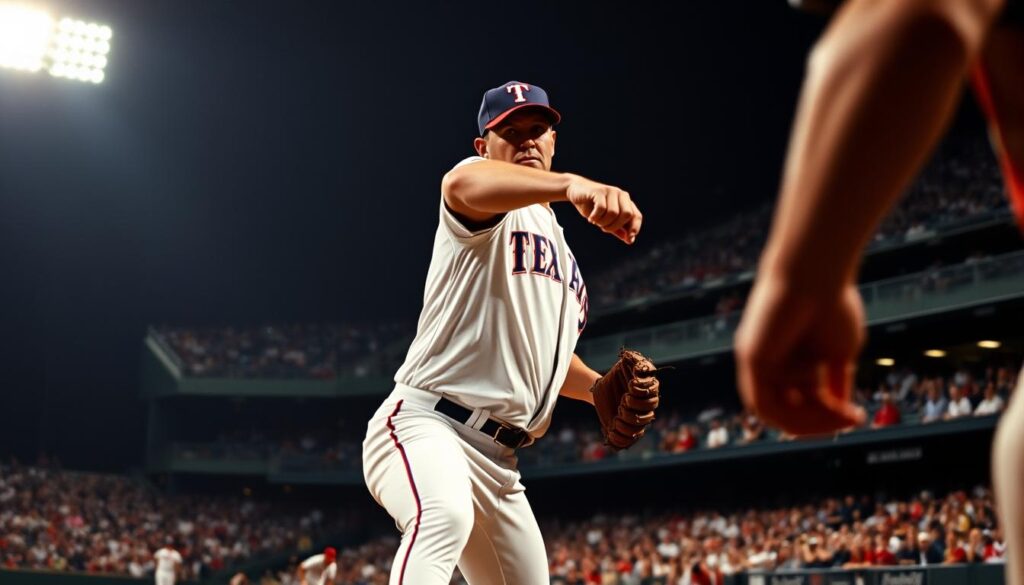
His reign of terror included two “immaculate innings”—striking out the side on nine pitches—a feat of cruel efficiency. Think of it as the pitching equivalent of a perfect haiku written in knockout punches. For a deeper dive into such historic dominance, you can explore broader discussions of the all-time best pitchers.
But dominance isn’t a monolith. If Ryan’s fastball was a sledgehammer, Bruce Sutter’s split-finger fastball, nicknamed “The Jewel,” was a poisoned needle. It arrived looking like a generous birthday gift—a fat, hittable fastball—only to plummet into the dirt as the hitter committed. The genius was in its betrayal.
This is the artistry behind the leaderboard. Greg Maddux didn’t overpower you; he outsmarted your entire lineage with a shuuto that moved like it had read the hitter’s mind. Trevor Hoffman’s changeup wasn’t a pitch; it was a temporal vortex, slowing time itself. Phil Niekro’s knuckleball was so unpredictable, it probably needed its own therapist. These weren’t just weapons; they were philosophical statements about how to win.
Then you have the pitches that were pure psychological warfare. Gaylord Perry’s spitball was an open secret, a greasy testament to gamesmanship. Bob Feller’s curveball broke with a violence that seemed personal. And Rip Sewell’s eephus pitch? That was an audacious slow-motion prank, a parabolic lob so insultingly slow it was less a athletic challenge and more a test of a hitter’s impulse control.
So, what makes a signature performance? It’s the fusion of skill and theater. It’s Ryan making the radar gun flinch. It’s Sutter making a baseball disappear. It’s the creation of a moment so definitive that the how becomes just as legendary as the how many. These are the performances that don’t just fill record books—they haunt dugouts and define eras.
Personal Stories and Trivia
Statistics show a career’s skeleton, but personal stories add flesh and life. The legends were more than just pitchers. They had quirks, struggles, and moments of theater.
Nolan Ryan, known for his power, started with a simple glove purchase. He bought it at Alvin Hardware. This story shows that every legend begins with a dream and saved dollars.
School was tough for Ryan due to undiagnosed dyslexia. But he found stability with his high school sweetheart, Ruth. Their marriage was a steady foundation for his career.
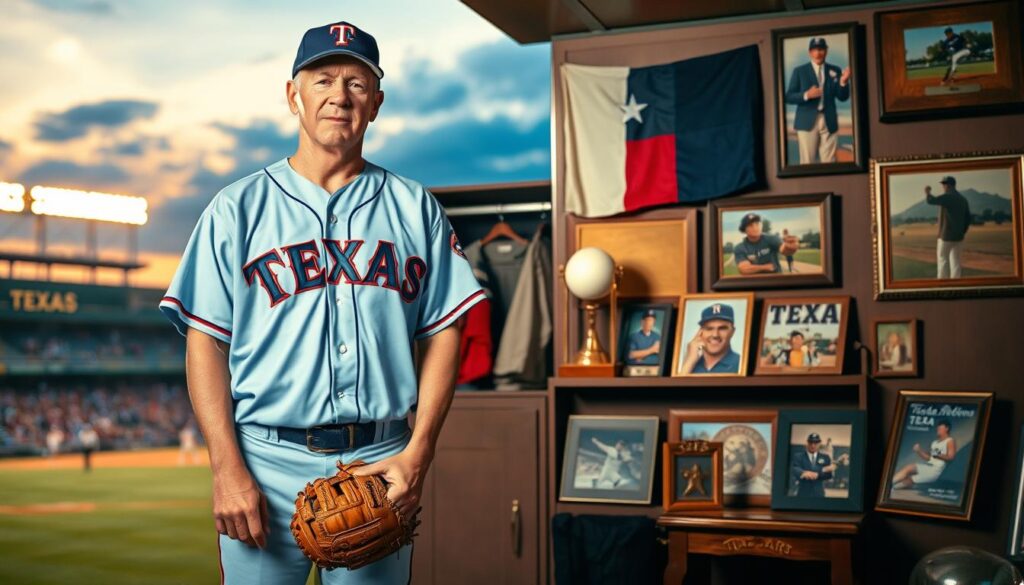
Then, there was the famous 1993 incident. Ryan, 46, threw a 98 mph fastball at Robin Ventura. Ventura charged the mound, and Ryan responded with a headlock and noogies. It was a lesson in respect, delivered with precision.
After baseball, Ryan became a successful businessman. He was a bank chairman, rancher, and baseball owner. His venture with his son, Reid, co-founding the Round Rock Express, showed his strategic mind.
Nolan Ryan never won a Cy Young Award, despite his dominance. This irony sparks debates. Voters were often swayed by other pitchers, leaving Ryan as a notable omission from the Cy Young winners list.
His son, Reid, also pitched in minor leagues. He joked about not being able to throw like his father. This shows the burden and blessing of having a legendary name.
These stories add depth to Ryan’s legacy. They show his journey, from a hardware store glove to a boardroom success. They remind us that the game is just one chapter in a person’s life.
Influence on Pitching Culture
What makes All-Time Great Pitchers stand out? They left a lasting mark on baseball. Nolan Ryan, for example, changed the game with his fastballs. He showed that even at 40, a pitcher could be powerful.
His fastball became a symbol of the game. Today, we love watching pitchers hit 100 mph. Ryan’s legacy is in the radar guns we use to measure speed.
The knuckleball also changed the game. Pitchers like Phil Niekro showed that finesse can be as important as strength. They proved that you don’t need to throw hard to succeed.
This debate between power and finesse is ongoing. It shapes how pitchers are trained and valued today. The story of these pitchers continues to inspire and influence the game.
These legends did more than win games. They changed how we think about pitching. They made us question what makes a great pitcher. Their impact is seen in every young player in Texas, dreaming of greatness.
They turned the strikeout into an art form. They made us wonder if power or precision is more important. Their true legacy is in the dreams of every young player, inspired by their greatness.
Check out this article to learn more about the evolution of baseball pitchers.