When America entered World War II, life for servicemen changed a lot. Across Texas, a special sporting culture grew. Soldiers created their own baseball teams and sports groups right on base.
Texas was the perfect place for this. Its warm weather and lots of open land were great for new Army camps and airfields. Dozens of big installations popped up, each filled with men looking for fun.
These games did more than just entertain. They were a big morale booster for the players and fans in uniform. They also became big events for nearby towns.
This tale shows how these teams linked the home front to the war effort. We’ll dive into the famous bases, the players, and their lasting impact on Texas.
Training Bases as Baseball Ecosystems
From infantry cantonments to aviation fields, military bases in Texas became self-sustaining ecosystems with a strong baseball culture. The state’s open land and mild climate made it ideal for the War Department’s rapid expansion.
Texas saw rapid growth in training sites after 1917. This led to a dense network of posts housing hundreds of thousands of men. Major installations like Camp Bowie in Fort Worth and Camp Logan in Houston were started in 1917.
Specialized aviation fields also emerged. Ellington Field and Kelly Field in Houston and San Antonio trained pilots. Even the British Royal Flying Corps used Camp Taliaferro near Fort Worth.
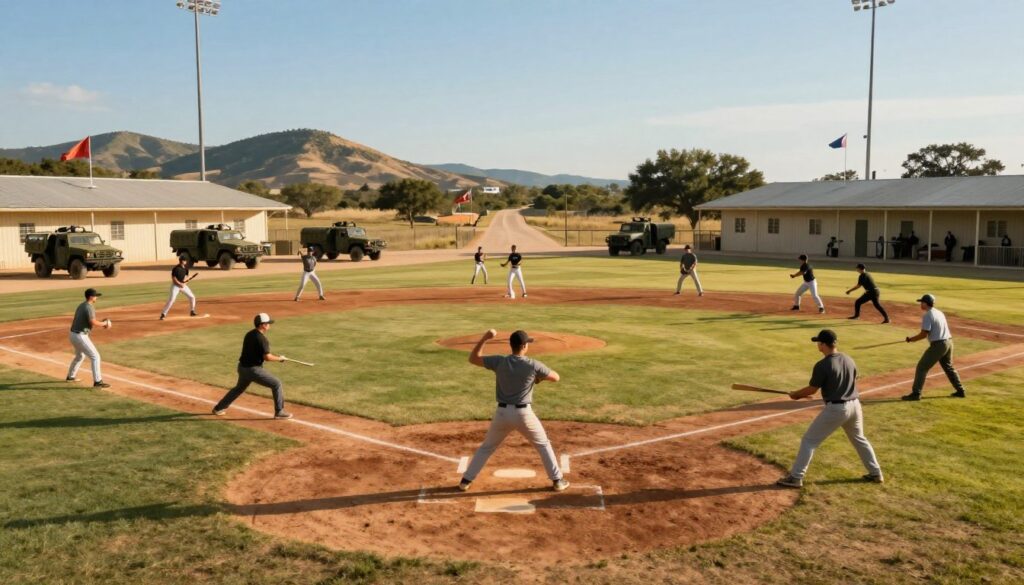
Each military base functioned like a small city. They had housing, mess halls, and recreation areas. This created tight-knit communities.
Baseball thrived in these communities. Many recruits had college or semi-pro experience. The need for morale-boosting recreation was urgent.
Commanders supported sports to keep troops focused. Open land was easily converted into ballfields. This gave players a place to practice and compete.
Teams formed at every level. Regimental and battalion squads played each other. The best players joined base-wide all-star teams. This created a vibrant, competitive network across Texas.
| Base Name | Location | Year Established | Primary Function |
|---|---|---|---|
| Camp Bowie | Fort Worth | 1917 | Infantry Cantonment |
| Camp Logan | Houston | 1917 | Infantry Training |
| Ellington Field | Houston | 1917 | Aviation Training |
| Kelly Field | San Antonio | 1916 | Aviation & Logistics |
This baseball ecosystem on military bases set a pattern for future wars. The success of these wartime leagues is well documented, such as in the detailed account of the Camp Hood baseball season during World War II.
In essence, the concentration of talent and need for recreation on Texas posts created a perfect storm. Baseball became the glue that held these military bases together, forging community and competition in equal measure.
Service Stars Stationed in Texas
A unique mix of talent happened as baseball stars and college athletes joined military camps in Texas. They brought their competitive edge and skills to the base diamonds. This turned military games into a high-level sports event.
Camps like Camp Stanley and Camp Bullis were key. They hosted the First Officers Training Camp, attracting top university students. These athletes added a new level to the training, making baseball a part of their routine.
These “service stars” became the heart of their base teams. A team that was once just for fun now had stars like all-American pitchers. Games became intense, showing the service’s competitive spirit.
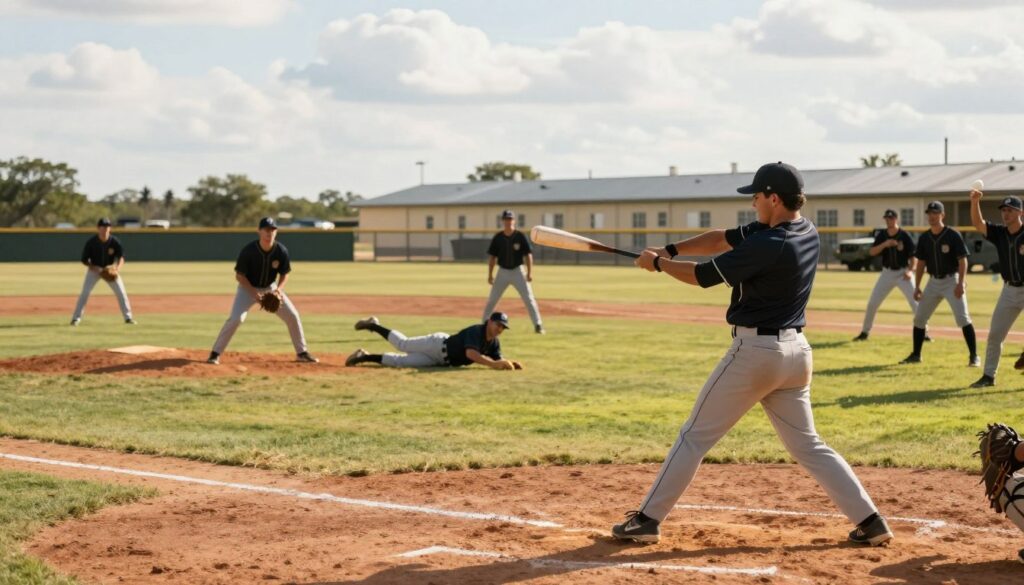
Games became the highlight of the weekend. Watching from the sidelines, soldiers found a much-needed break and a morale booster. Cheering for a team with stars brought pride and unity, a tradition that lives on in modern military units.
These athlete-soldiers played a dual role. They trained for war and played for their comrades’ spirits. Their games were a key morale booster, helping soldiers through tough military training.
Wartime Exhibitions & Charity Games
Games featuring military teams turned Texas ballparks into lively centers of community spirit. They also raised funds for patriotic causes. These events made baseball more than just a game.
Teams from places like Camp Bowie and Kelly Field played against other military teams. They also faced local clubs and professional teams. These games offered top-notch entertainment during a tough time.
These games were big social events. Many civilians came to watch at base gates or stadiums. Seeing soldiers play baseball lifted everyone’s morale.
Many of these games were charity events. They helped raise money for the Red Cross and other causes. Every ticket and donation supported the war effort.
These games did two important things. They brought the military and Texas communities closer. People cheered together, building respect and understanding.
They also turned patriotism into real help. Fans could link a home run to buying war bonds. This made giving back fun and direct.
The success of these events was rooted in baseball’s strong presence in Texas. Local fans welcomed military teams with open arms. This made fundraising and attracting crowds easier.
For soldiers, playing in front of crowds was a huge morale boost. It reminded them of home and showed off their skills. The public appreciated their hard work and talent.
In the end, wartime exhibitions were more than just games. They combined sports, community, and service into a powerful experience. This made baseball a symbol of unity, beyond just playing the game.
Postwar Diffusion of Talent and Fandom
World War II ended, and soldiers demobilized. Hundreds of thousands left Texas bases. The talent from wartime military teams spread across the nation.
Professional players went back to their clubs. Their time playing WWII baseball in Texas made a lasting impact. Communities near bases enjoyed elite games regularly.
This time created a sophisticated fan culture. The love for attending games didn’t disappear with peace. Veterans kept a special place in their hearts for Texas.
Many veterans moved back to Texas after the war. They brought a deep love for baseball shaped by their service. This helped baseball become a big part of Texas society.
The love for WWII baseball helped amateur circuits thrive. It also made people ready for higher levels of play. This helped minor league franchises succeed.
It also paved the way for Major League Baseball to expand into Texas. The wartime baseball scene in Texas didn’t disappear. It evolved, planting seeds of talent and passion for future generations.