Imagine a biplane buzzing low over a sunbaked field. For isolated Texas towns in the early 20th century, this was the signal. The flying circus had arrived, bringing a thrilling spectacle to the local dirt strip.
These traveling spectacles were more than just stunt shows. They were a complex economic engine. Pilots and performers faced huge financial risks just to get their planes in the air.
Funding came from ticket sales at the fence line. It also came from local sponsors and selling souvenirs. Famous aviator Bessie Coleman pieced together money for her barnstorming tours from airshow profits and community leaders.
This model of life on the road wasn’t unique to aviation. Modern musicians on the Red Dirt circuit face similar touring economics. It was all about bringing the show to the people, wherever they were.
Integrated & Segregated Matchups
The barnstorming circuit was a complex mix. It showed the strict segregation of society but also moments of integration. These events in Texas and across the nation reflected America’s racial struggles.
They were rare chances where integration could show through the cracks of Jim Crow.
Aviation pioneer Bessie Coleman was a strong voice for equality. She refused to perform at segregated venues, demanding all could attend. She even turned down a film role because it had negative images of African-Americans.
Her first big show honored the all-black 369th Infantry Regiment. The white press doubted her, but African-American communities and papers loved her. She used her fame to challenge the status quo.
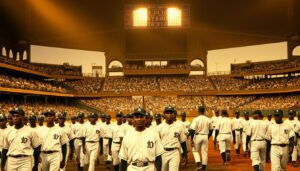
On the baseball field, legends like Satchel Paige also defied norms. They went on barnstorming tours, facing white teams in “exhibition” games.
These games were not official league games, but they were open to all. They drew big crowds in small-town Texas. Fans of all backgrounds came to see Paige’s pitching and the talent of Black athletes.
These games didn’t end segregation, but they offered moments of shared joy. The athletic skill shown was a quiet challenge to racial inferiority.
For a few hours, everyone focused on the game and the talent. The success of barnstorming showed a desire for integrated sports. It showed a different way for American entertainment and society.
County Fairs, Rodeos, and Ball Diamonds
County fairs, rodeos, and ball diamonds were perfect for barnstorming shows. They offered the space and people pilots needed. These events made weekends unforgettable for locals.
Pilots looked for any flat land to land. Fields, vacant lots, or baseball outfields worked. The term barnstorming came from how people rushed to see planes.
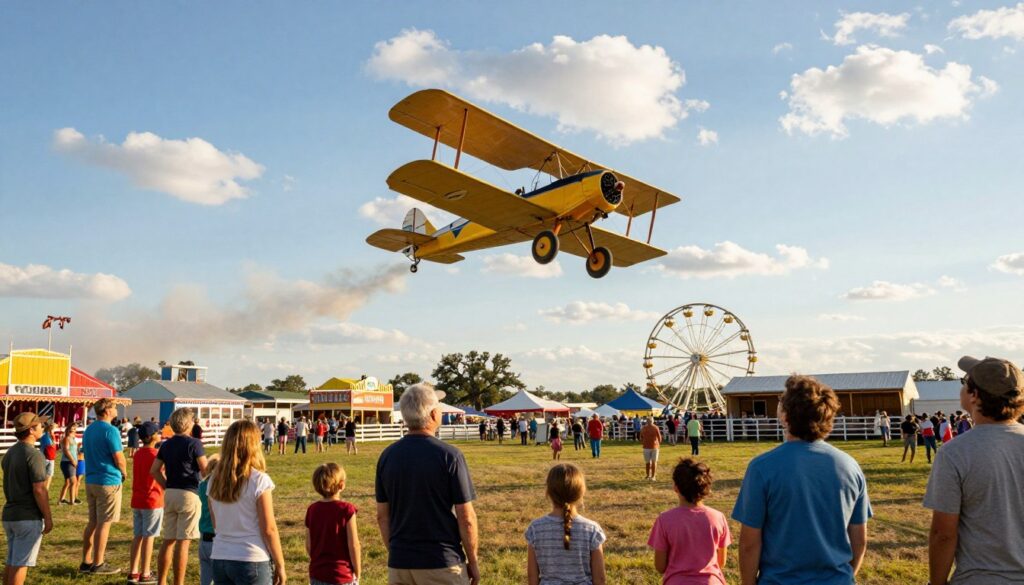
This tradition was like baseball barnstorming tours. Stars like Dizzy Dean toured small towns. They played games on local diamonds, just like pilots did in the air.
County fairs were the best places for shows. They had everything from farming to airshows. Bessie Coleman’s first big show was at a fair, drawing huge crowds.
Rodeo grounds were great for pilots. They had fences, parking, and a central area. Pilots could land nearby, and everyone could watch the show.
Local ball diamonds were also popular. Their flat fields made landing safe. Games would stop for aerial stunts, mixing sports and flight.
The atmosphere was lively and shared. For rural Texans, these events were rare. They saw modern tech and sports stars up close.
This entertainment was simple and effective. It used what was already there, like community events. The barnstorming phenomenon connected directly with the audience, whether in the air or on the diamond.
Press Coverage and Oral Histories
The legend of barnstorming wasn’t just written on dusty fields; it was printed in ink and passed down through generations. Two channels captured the drama: the formal press and the informal oral history. Together, they built myths and preserved facts of these traveling spectacles.
For African-American audiences, newspapers like the Chicago Defender were essential. They didn’t just report events; they championed their heroes. The paper hailed Bessie Coleman as the “World’s Greatest Woman Flier,” crafting a narrative of triumph and possibility. This coverage was a powerful tool for community pride and attracting massive crowds to her shows.
Pitchers like Satchel Paige also benefited from this enthusiastic press. His exploits on Barnstorming Tours were chronicled with flair, turning each game into a national event for readers who couldn’t attend. This media machine was key for building his larger-than-life persona.
White-run newspapers often provided a different, more critical lens. Their coverage could be skeptical or dismissive, focusing on the novelty. This contrast highlights how the same event could be framed in vastly different ways.
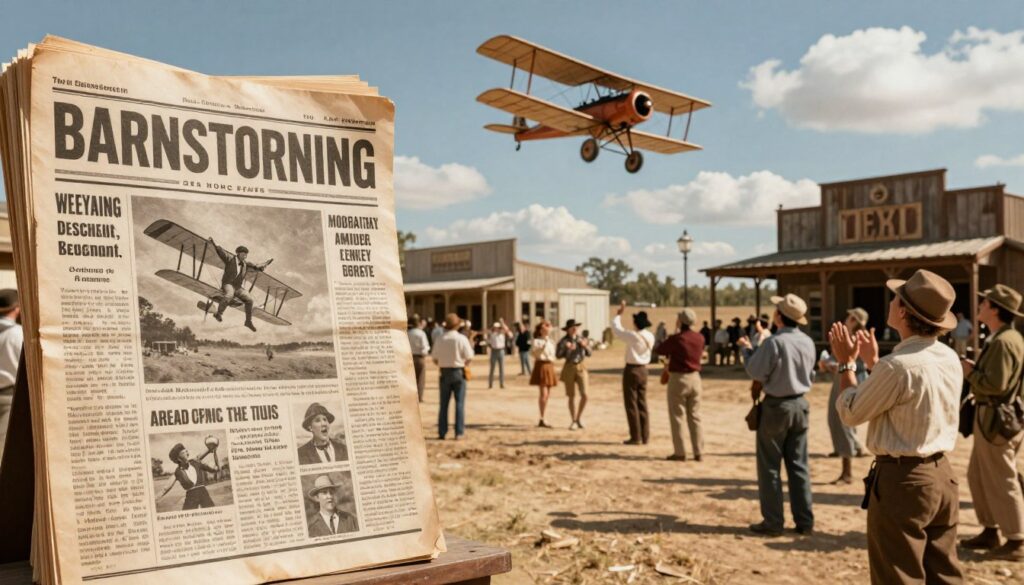
The written legacy extends beyond daily news. Biographies and historical accounts have meticulously preserved these stories. Lieutenant William J. Powell’s writings, for instance, carried Bessie Coleman’s mission forward, inspiring aviation clubs for Black youth. This formal preservation ensures the facts endure.
Yet, the soul of the era lives in oral histories. These are the tales told by locals who saw Satchel Paige strike out the town’s best hitter on a makeshift diamond. They are the memories of the roar when a biplane performed a dangerous stunt. These firsthand accounts add color, emotion, and personal texture that official records lack.
They fill in the gaps—the weather that day, the rivalries, the unexpected moments of humor or grace. In Texas, these stories became woven into local folklore, a vital part of community identity. The collective memory of a Barnstorming Tours stop often holds more truth about its impact than any box score.
This dynamic of press and memory wasn’t unique to the United States. Similar mechanisms documented international barnstorming tours, where foreign press reactions shaped the legacy of visiting American teams.
Ultimately, the full picture of barnstorming emerges from this combination. The press provided the immediate hype and record, while oral histories supplied the enduring human connection. It is through both that we truly understand how these fleeting visits left a permanent mark on the American landscape.
Influence on Local Technique and Tactics
The lasting impact of barnstorming wasn’t just the dust from planes. It was the skills they left behind.
Like Bessie Coleman, who inspired many to fly, baseball barnstormers taught on the road. Dizzy Dean’s tours didn’t just entertain. They showed off top-notch pitching and smart game plans. Local players learned from these shows, using what they learned long after the tour left.
These tours were like a national network for sharing skills. A tricky slider or new bunt defense seen in Texas could become part of a local team’s strategy. This helped raise the skill level and tactical thinking in areas far from the major leagues.
This spirit of local growth is seen in today’s game. The strategic lessons learned in Texas minor leagues shape how players are developed and strategies are improved. The barnstormers’ legacy is felt in every coach teaching a curveball and every player studying the game’s details.