
New York holds the history. Los Angeles flashes the cash. Make no mistake: the undisputed capital of the baseball universe officially relocated down south to the Lone Star State. How did two rival franchises historically overshadowed by coastal elites systematically dismantle the league to build an unprecedented dual-dynasty era? For decades, fans across this state watched October baseball on television watching freezing northern cities pop the champagne. The Houston Astros spent years losing 100 games a season. Meanwhile, the Texas Rangers suffered through agonizing postseason heartbreaks leaving scars on an entire generation of fans. Consequently, continuous losing breeds a specific kind of desperation forcing a total teardown of the old ways.
We currently live right in the middle of the golden age of Texas baseball dynasties. The current reality isn’t a fluke; it is the direct result of two brilliant, entirely different front-office masterclasses. Houston built a self-sustaining machine through homegrown analytics. Conversely, Arlington executed a masterstroke in aggressive, high-stakes veteran acquisitions. Ultimately, these two blueprints completely reshaped the entire league. Want to know the exact formula they used to hijack America’s pastime? Keep reading. We break down the scouting, the brutal trades, and the sheer financial willpower that cemented Houston Astros success and birthed a Texas Rangers World Series championship.
However, neither of these massive rebuilding efforts would have been possible without a thriving farm system right in their own backyard. Understanding the growth of minor league baseball in Texas is essential to seeing exactly where these organizations incubated their championship talent before unleashing it on the major leagues.
The Houston Blueprint: Building a Monster in the Lab
Let’s get one thing straight right out of the gate: tearing down a major league roster gets ugly fast. During the early 2010s, Houston bottomed out completely. They fielded minor league talent against grown men. They absorbed massive losses night after night. That pain had a clear purpose. The front office realized you cannot beat the Yankees by playing their game with less cash. You have to invent a new game.
This sparked the baseball analytics revolution. Houston turned their entire organization into a sprawling laboratory where exit velocities, spin rates, and biomechanics replaced gut feelings and tobacco-spitting scouts. They didn’t just find good players. They manufactured them. When you track the Evolution of MLB analytics and sabermetrics, you see Houston’s fingerprints all over the timeline. The Astros rebuilding process became the gold standard for tearing a team down to the studs and rebuilding it into a Death Star.
So, where do your loyalties lie: Team Houston or Team Rangers? To fully grasp the magnitude of this Texas-sized rivalry and the Astros’ reign, check out this insightful video from iTalk Studios.
Drafting the Core & Unearthing Gems
Initially, the front office hit the jackpot on early draft picks like Carlos Correa and Alex Bregman. However, the real magic happened in the margins. The Astros turned overlooked prospects into superstars. Subsequently, the organization built a pitching factory. Coaches took guys with average stuff, tweaked their release points, adjusted their pitch grips, and turned them into unhittable monsters.
Opposing teams started scrambling, trying to figure out how the Houston Astros build their dynasty out of spare parts and discarded arms. Therefore, look at their approach to acquiring talent:
- Targeting Spin Rate: Houston identified undervalued pitchers with high spin rates on breaking balls.
- Maximizing Launch Angle: Hitters revamped their swings to put the ball in the air, ignoring outdated advice about hitting ground balls.
- Aggressive International Scouting: Scouts mastered the international market and locked up young talent on team-friendly deals before those players even reached their prime.
It was a cold, calculated, and devastatingly effective strategy. When you combine high Texas baseball draft picks with an elite player development system that constantly churns out fresh arms, you create an unstoppable force. This machine just keeps rolling over the competition year after year without skipping a single beat even when star players leave for massive free agent contracts elsewhere. The team simply trades away veterans, plugs in a rookie from Double-A, and wins another 95 games. In essence, that is how modern MLB dynasties operate.
The Arlington Counter-Punch: Spending Big and Striking Hard
If Houston operates like a calculated scientist, Arlington fights like a heavyweight boxer swinging haymakers. The Texas Rangers watched their cross-state rivals parade around with trophies and decided they had seen enough. Instead, the front office bypassed waiting half a decade to grow their own talent from scratch. Consequently, ownership opened the checkbook and bought immediate dominance.
First, executives looked at the best baseball teams in Texas history and realized that sometimes you just need dudes who mash baseballs. Then, the franchise bypassed the slow burn and threw hundreds of millions of dollars at proven, elite talent. As a result, Texas completely rewrote the rules on MLB front office strategies. Ultimately, you don’t have to tank for five years. You just need an owner willing to write massive checks.
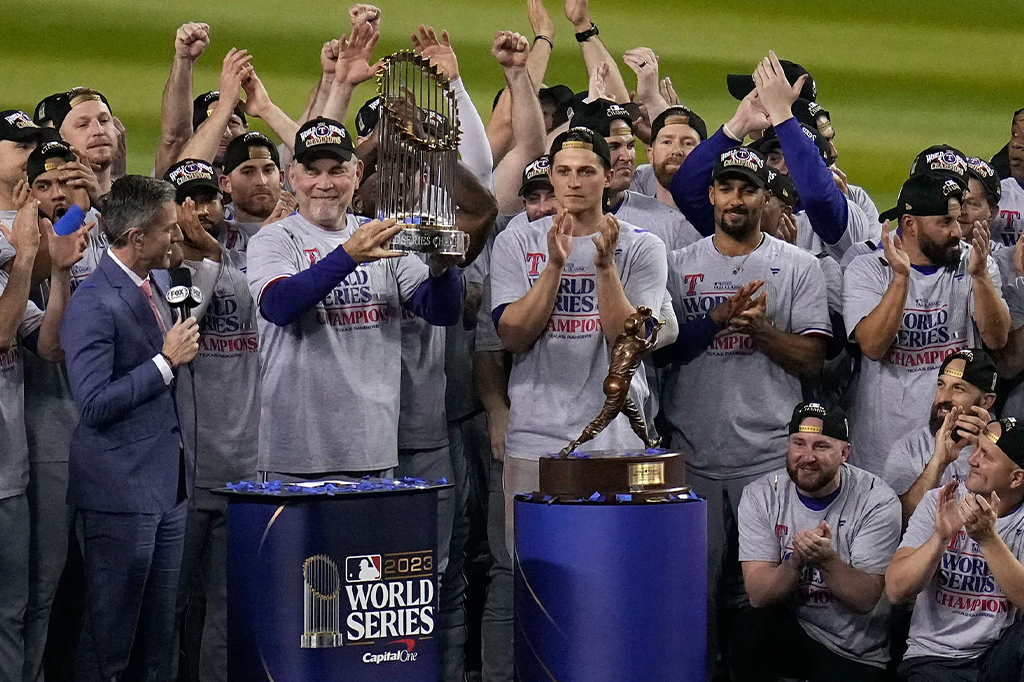
The Turning Point: Corey Seager, Marcus Semien, and Bruce Bochy
For example, look directly at the 2021 offseason. The Rangers dropped a cool half-billion dollars on Corey Seager and Marcus Semien in a matter of hours. That single day sent a shockwave through the league. However, spending cash is easy. Spending it correctly is the hard part. Moreover, Arlington paired these massive financial commitments with the hiring of legendary manager Bruce Bochy. The front office brought in a steady hand who knew exactly how to manage October pressure.
Let’s look at the Texas Rangers World Series championship roster breakdown. Admittedly, the team didn’t have a perfect rotation. In fact, the staff suffered brutal injuries to top pitchers. Nevertheless, management built a lineup that punished mistakes and a culture that refused to quit. When analyzing Modern scouting and draft strategies, analysts often ignore the sheer value of raw, battle-tested veterans. Ultimately, Arlington proved that cash still plays a massive role in building championships.
Furthermore, the front office rented aces like Max Scherzer and Jordan Montgomery at the trade deadline. Ownership risked top prospects for a shot at glory. Essentially, it was high-stakes poker. The Rangers shoved all their chips into the middle of the table, and the gamble paid off with a parade.
The Lone Star Collision: Iron Sharpening Iron
You want to know what makes this era so special? Hatred. Pure, unadulterated sports hatred. Previously, the Lone Star Series rivalry served as a geographic gimmick to sell a few extra tickets in June. Conversely, now it operates as a blood feud.
What is the history of the Lone Star Series? It started as a sleepy interleague matchup and exploded into an American League West turf war. Basically, having a powerhouse neighbor forces a team to constantly adapt. You can’t rest on your laurels when the guys three hours up I-45 are dropping bombs into the second deck. Consequently, the Rangers playoff runs are permanently tied to Houston. To reach the mountaintop, Texas had to slay the dragon.
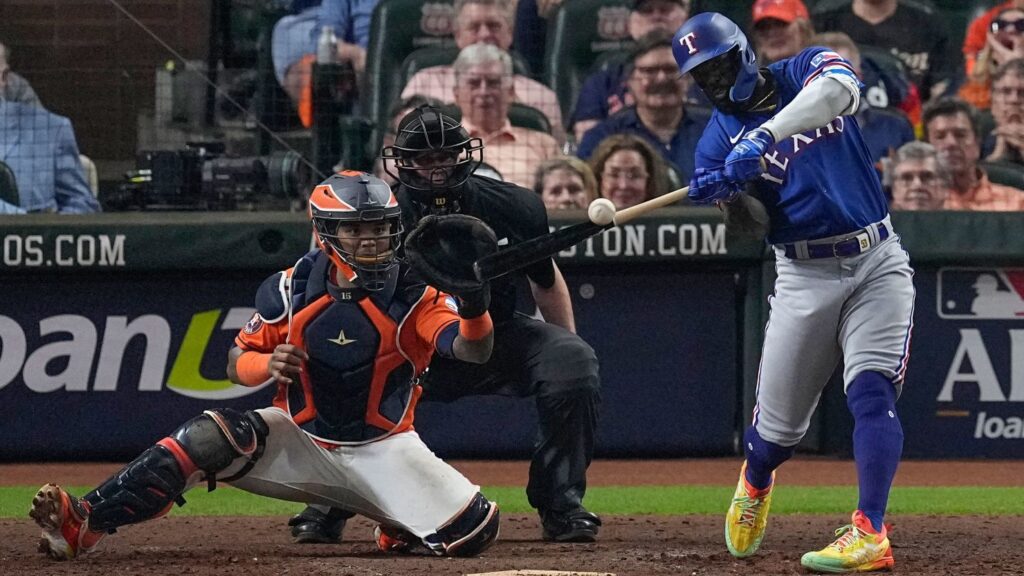
Throughout the matchup, the 2023 American League Championship Series served as the absolute peak of this collision. It featured seven games of absolute torture and triumph. Benches cleared. Additionally, grand slams silenced opposing crowds. Interestingly, road teams dominated the entire series. It felt exactly like a heavyweight title fight masquerading as a baseball series.
Moreover, the historic World Series viewership trends show that fans tune in for compelling narratives. Nothing beats two Texas juggernauts trying to end each other’s season. Specifically, that ALCS proved that Texas baseball dynasties aren’t just built in the front office; they are forged in the fire of intense, bitter competition. Adolis Garcia getting hit by a pitch, bench-clearing brawls, and Jose Altuve hitting a clutch ninth-inning home run created memories that will outlive us all. In the end, iron sharpened iron. While the Astros pushed the Rangers to spend money, the Rangers pushed the Astros to keep innovating.
They rented aces like Max Scherzer and Jordan Montgomery at the trade deadline. They risked top prospects for a shot at glory. It was high-stakes poker. The Rangers shoved all their chips into the middle of the table. The gamble paid off with a parade.
Why the Texas Golden Era is Built to Last
So, what’s the bottom line? Is this just a fleeting moment in Texas baseball history? Are these teams here to stay? Place your bets on the latter. Both franchises possess the two most critical assets in modern sports: smart front offices and owners willing to spend.
Houston continues to draft incredibly well. They continue to pull aces out of thin air. Arlington boasts a rejuvenated farm system with young stars like Evan Carter and Wyatt Langford arriving ahead of schedule. Arlington maintains a willingness to plug any roster hole with a massive check.
Study the Impact of the expanded MLB playoff format to see that roster depth means everything. Getting to October requires surviving a brutal 162-game marathon. These Texas teams have built organizational depth that can withstand injuries to star players. They both have deep pitching staffs, powerful lineups, and managers who know how to win close games late in the season. The American League West goes through Texas. Teams like the Seattle Mariners and Los Angeles Angels are constantly playing catch-up, throwing money and prospects at the wall hoping something sticks against the Texas powerhouses.
If you want to witness this dominance firsthand, buy Texas baseball tickets online and secure a seat at the ballpark. Stream MLB games in Texas and watch the tactical chess match unfold every single night. The rest of the league is desperately trying to copy the Texas blueprint. You can’t easily replicate this specific blend of scouting, spending, and sheer will.
A Legacy Written in Texas Dirt
The days of East Coast bias dominating the baseball conversation are over. The Astros and Rangers ripped the power away and brought it south. Houston proved that data and development can sustain a decade of dominance. Texas proved that bold spending and elite leadership can buy a ring. The current era of Texas baseball isn’t a lucky streak. It is the direct result of two brilliant front-office masterclasses forcing the rest of the league to play a completely different game.
Whether you bleed orange or rock the red and blue, gear up. Grab your official Astros championship gear or Texas Rangers World Series memorabilia. Next, fire up your best Texas baseball tailgating gear and enjoy the ride. Beyond the trophies and front-office analytics, it is important to remember the role of baseball in Texas communities and how these historic runs bring millions of fans together. After all, this is our time. Therefore, don’t sit on the sidelines.
Frequently Asked Questions
How did the Houston Astros build their dynasty?
Houston tore down their major league roster in the early 2010s to acquire top draft picks. They invested heavily in data analytics, biomechanics, and international scouting to turn overlooked prospects into star players. They built a self-sustaining player development system that constantly replaces departing veterans with young, cheap talent.
What is the history of the Lone Star Series?
The Lone Star Series began in 2001 as an interleague rivalry between the Houston Astros and Texas Rangers. It escalated into a fierce divisional rivalry when the Astros moved to the American League West in 2013. The rivalry reached its absolute peak during the 2023 ALCS, where the Rangers defeated the Astros in a grueling seven-game series.
How analytics changed modern baseball?
Analytics completely shifted how teams evaluate talent and strategy. Front offices now prioritize exit velocity, launch angle, and pitch spin rates over traditional batting averages and pitcher wins. Teams use massive databases to position defensive shifts, optimize pitching matchups, and identify undervalued players in the draft and free agency.
Who are the best baseball teams in Texas history?
The 2022 Houston Astros and the 2023 Texas Rangers stand at the very top of the list. The 2022 Astros won 106 games and dominated the postseason with a historic pitching staff. The 2023 Rangers won their first World Series title by setting records for road wins in the playoffs and featuring a historically powerful lineup.
Where can I buy Texas baseball tickets online?
Fans can purchase tickets directly through the official MLB websites for the Astros and Rangers. Secondary markets like StubHub, SeatGeek, and Vivid Seats also offer wide selections for regular season and playoff games. Always verify the seller to ensure authentic tickets.