When you think Texas baseball, what comes to mind? Nolan Ryan’s blazing fastball? The Rangers’ World Series dreams? Not women playing baseball, as society thought they should stay home.
But Texas is different. It’s a place where tradition meets independence. This mix made women’s baseball both hard to find and yet, it thrived in secret spots.
Take Herlinda Morales Rodríguez from 1938. She sponsored a team when women in baseball were rare. Now, Texas players like Abigail Moore are going pro.
So, how did this happen? We’ll explore the cultural and economic hurdles. And the moments that changed everything for women’s baseball in Texas.
Trailblazing Teams & Leagues
Hal Sayles managed men’s teams, while Milton Price oversaw leagues for them. But Texas women were creating their own baseball world with little help and no recognition. They had to make their own rules, find fields, and build fans.
Women’s baseball needed genius to survive. They faced a system made to keep them out. No one helped them with schedules, stadiums, or media coverage.
- Semi-pro barnstorming teams that traveled like rock bands on tour
- Industrial league teams sponsored by factories and businesses
- Independent clubs formed through community organizations
These teams were more than just baseball. They showed incredible resourcefulness. While men had support, women had to find gas money for games.
| Aspect | Men’s Leagues (1940s-50s) | Women’s Teams | Resource Gap |
|---|---|---|---|
| League Structure | Formal leagues with commissioners | Ad-hoc scheduling | No administrative support |
| Financial Backing | Franchise owners & investors | Local sponsors & community funds | 10:1 funding disadvantage |
| Media Coverage | Regular newspaper coverage | Word-of-mouth promotion | Near-total media blackout |
| Facility Access | Reserved stadium times | Last-minute field arrangements | Scheduled vs scavenged |
| Travel Support | League-organized transportation | Car pools & borrowed vehicles | Professional vs amateur |
Industrial leagues were key for women’s baseball. Companies saw women’s value on the field. They provided uniforms, equipment, and even salaries.
This network of women’s baseball is a fascinating part of Texas history. They built a parallel economy with their own systems and talent pipelines.
Women’s teams showed incredible resilience. They worked without plans, precedents, or permission. Yet, they kept going, leaving a lasting legacy.
Their story is about innovation and determination. Women made space for baseball when it seemed impossible. This part of Texas history should be celebrated, not just mentioned.
Key Players and Stories
While Texas celebrated its male baseball heroes, the real story was hidden. Where were the Texas women who could throw a mean curveball or hit a home run? They were everywhere, yet nowhere at the same time.
Historical irony: Dave Philley and L.D. Meyer were famous, but Texas women with talent were playing in obscurity. Their stats and stories were lost to history.
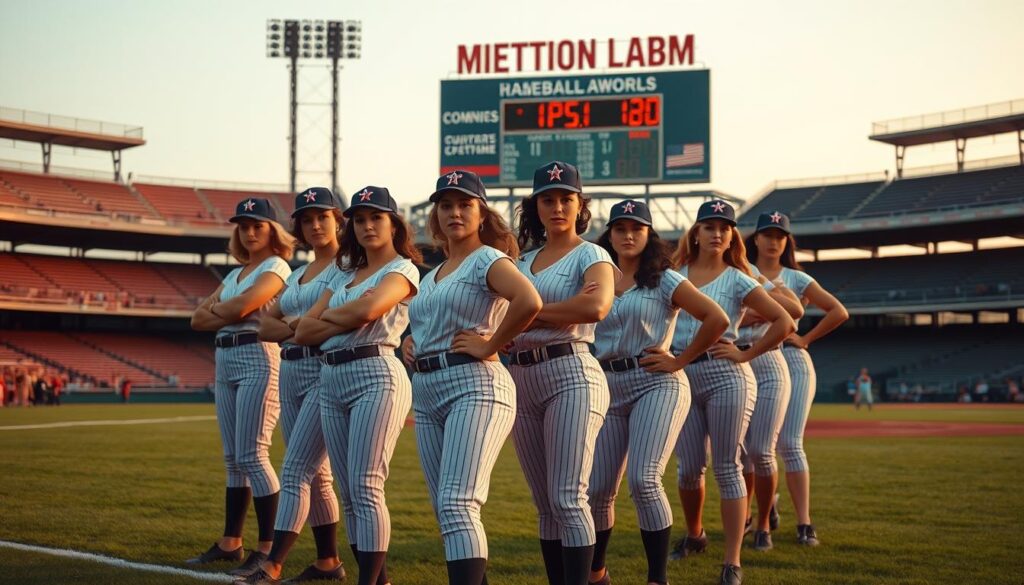
The AAGPBL scouting system gives us clues about these forgotten athletes. Scouts looked at “makeup” – family background, work ethic, character. Texas women had all these qualities in abundance.
But, gender barriers stopped most from playing. Christy Wood’s later success as a scout shows what should have happened earlier. The tragedy is not the lack of talent, but the lack of vision.
A Texas-born AAGPBL star would have had Texas swagger and toughness. She’d know the game’s nuances, as baseball was a language in Texas.
The real loss is the stories we never heard. The woman who out-pitched her brothers. The factory worker who hit homers on weekends. The athlete who never got her chance.
Texas documented its baseball culture, but ignored its women players. We know minor league pitchers’ ERAs from 1947, but not the names of women players from the same era. This is a historical crime.
The AAGPBL showed women could play professional baseball. Texas showed it could produce talent. The missing link was opportunity, recognition, and curiosity.
Today, we’re piecing together clues – newspaper mentions and family stories. Each one tells us Texas women were playing well. They just didn’t get the credit they deserved.
Barriers and Triumphs
Imagine stepping up to the plate, knowing everyone doubts you. That was life for women in Texas baseball. It was more than just playing; it was fighting against being left out.
In the 1930s, only 27% of Mexican women in Texas worked, mostly for low pay. The baseball field was another place where women faced barriers. There was little money, doubt, and skepticism about women in baseball.
Herlinda Morales Rodríguez was a trailblazer in business. She owned a business and sponsored a baseball team. Her actions were a powerful statement for women in business.
The decline of African Americans in baseball shows barriers affect everyone. But these women didn’t give up.
They were doing more than playing baseball. They were changing the game. They organized games, found funding, and showed up when they shouldn’t have.
| Barrier Type | 1930s Reality | Modern Equivalent | Impact on Women’s Baseball |
|---|---|---|---|
| Economic Access | Limited funding sources | Pay disparity in sports | Fewer teams and facilities |
| Social Acceptance | Gender role expectations | Media coverage gaps | Reduced participation rates |
| Business Inclusion | 27% female employment | Leadership representation | Limited sponsorship opportunities |
| Cultural Barriers | Racial segregation | Diversity initiatives | Intersectional challenges |
Rodríguez’s story is more than sports history. It shows how one person can change things. Her sponsorship was a smart move, showing women’s abilities.
These women faced more than just other teams. They battled tradition, money issues, and what society expected. Every game was a fight for equality.
Today, we see these women as the start of women’s baseball. Their fight for equality in sports is ongoing. But they showed that everyone can play.
ESPN Moments
Imagine if ESPN had shown Texas women’s baseball history. What would their “30 for 30” series be like? It would be epic.
Before “30 for 30,” there were untold stories. The media ignored these athletes. But their achievements were worth watching.
“Fielding Dreams” showed the world of baseball scouts. Why not Texas women baseball players? It’s all about media bias.
Today, we could see these historic moments on ESPN. Here’s what we might have seen:
| Potential ESPN Feature | Historical Moment | Modern Impact |
|---|---|---|
| “Diamond Rebels: The Texas League That Changed Everything” | 1940s women’s industrial teams | Could have inspired earlier Title IX implementation |
| “Glove Stories: The Catchers Nobody Saw” | 1950s barnstorming players | Might have created earlier professional opportunities |
| “The Fastball That Wasn’t Heard” | 1960s championship games | Could have rewritten baseball history books |
| “The Changeup That Changed Everything” | 1970s integration breakthroughs | Might have accelerated women’s sports funding |
Right coverage would have changed how we see these athletes. They were making history, but nobody noticed.
The Society for American Baseball Research now tells these stories. But where was the media when it mattered? That’s a story worth telling.
Texas history is full of these moments. Women were making sports history, but cameras were elsewhere. It’s time to imagine what proper coverage would have looked like.
What if ESPN had shown these pioneers? It could change how we see sports media and Texas history forever.
Lasting Recognition
Pete Runnels has a plaque in the Texas Sports Hall of Fame. But many women who shaped Texas baseball are forgotten. The way we remember baseball has a strange bias against women.
The Baseball Hall of Fame has never honored a scout. This shows what it values. Women players from the AAGPBL era face a double challenge: getting recognized and fighting against being forgotten.
In Texas, we remember men’s baseball achievements well. But women’s contributions are often overlooked. Here’s what we know:
- Men’s achievements: well-documented and celebrated
- Women’s contributions: often ignored or forgotten
- Academic recognition: mostly for men
- Historical societies: focus on men’s sports
The AAGPBL players, who kept baseball alive during World War II, deserve more. They’re not asking for a trophy. They want their place in history.
This isn’t just about adding plaques. It’s about filling in the gaps in history. We know a lot about Pete Runnels but little about the women who inspired future players.
The AAGPBL is a key part of baseball history. But its Texas connections are mostly unknown. Women’s baseball history is ignored, while men’s artifacts are treasured.
We’re not just missing out on history. We’re actively excluding women from baseball’s heritage. Until we fix this, our view of Texas baseball is incomplete.
The AAGPBL veterans and other women baseball pioneers need more than just recognition. They deserve to be part of the story of America’s pastime. Right now, that story is missing important chapters.
Modern Inspiration
The history of Texas women’s baseball is not weak. It’s our greatest strength. The stories of survival against all odds tell a true tale of courage.
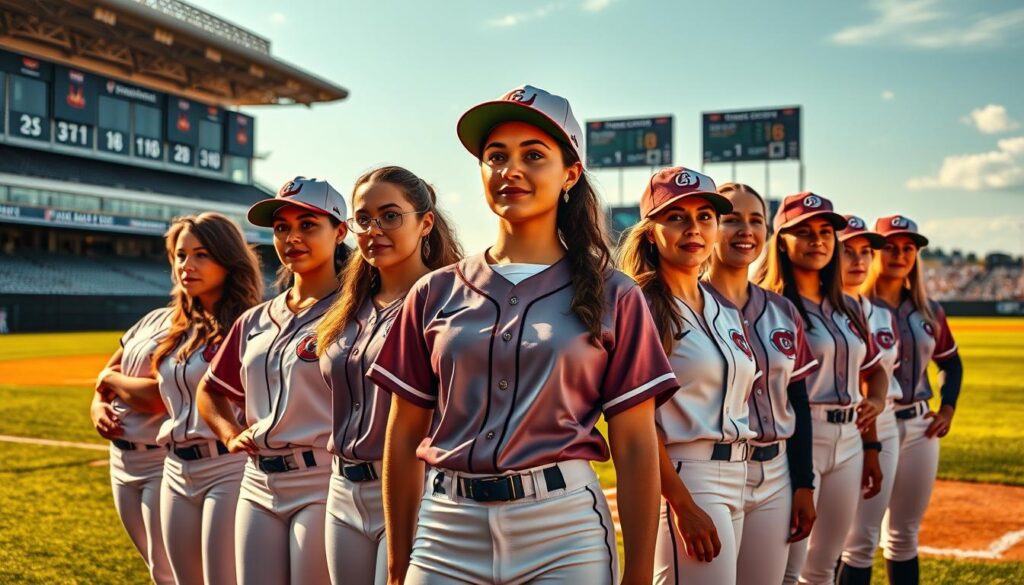
Think about Christy Wood’s career as a scout. It shows us that gender barriers in baseball are real today. We need new ways to overcome them.
MLB’s efforts to increase diversity take on a new light. They’re not just nice gestures. They’re necessary corrections. Texas’ history shows us that women were already playing without support.
The true inspiration lies in the fragments of history. Those old newspaper stories about women’s teams? They’re not just old news. They show women’s determination to play despite all odds.
Today’s women’s baseball opportunities are rooted in this history. Texas could lead the way in valuing women’s baseball talent. We just need to start paying attention.
This isn’t about looking back. It’s about seeing the future in those forgotten games. The fragments are the essence, not just pieces to be found.
Conclusion
Ever watch a rain-delayed baseball game where the scorecards blur? That’s what women’s baseball in Texas history is like. It’s not a clear story but a mix of wet pieces.
Why do we try to put these pieces together when the whole picture is gone? The documentary teams and historians got it right. Sometimes, the best Texas history is hidden in the gaps.
What we’ve lost tells us as much as what we have left. It shows us about resilience, being left out, and the love for the game. Keeping these pieces isn’t just about remembering the past. It’s a fight against forgetting.
Texas history, like baseball, teaches us to swing at what we can’t fully see. The real win isn’t in having all the stats. It’s in realizing every piece of this story counts. And isn’t that how we all play life’s games?