
Everything is bigger in Texas, or so the saying goes. But in the batter’s box at the old Arlington Stadium, that cliché got tested by fire.
Was it Rafael Palmeiro’s 321 homers? Or Adrian Beltre’s defiant swing? Or Ivan Rodriguez’s shocking force as a catcher?
We’re not just counting home runs. We’re looking at the legends. The men whose swings made history in Texas.
This is a deep dive into their legacies. We’ll mix sabermetrics with cultural insights. Why do these power hitters mean so much in Texas?
Forget the simple stats. True greatness is about timing, consistency, and will. It’s what makes a slugger a legend.
As we look at these iconic Rangers, think about how they fit into different power hitter profiles in baseball history. Their stories are more complex than the numbers show.
Record-Setting Moments
Records are just numbers until we add context. Texas Rangers history shows this well. We’ll look at moments where great achievements became unforgettable, for good or bad.
Rafael Palmeiro joining the 500-home run club was a big deal. It should have made him a legend. But, his denial of steroid use during a congressional hearing changed everything. This moment made his legacy complex, showing how one event can overshadow many achievements.

Ivan “Pudge” Rodriguez’s 1999 AL MVP season was different. He dominated every aspect of the game, not just hitting. His record was about his incredible all-around play, showing true power and purpose.
Adrian Beltre’s 199-hit season in 2013 defied aging. Most players slow down by 34, but Beltre was getting better. His record showed that some legends shine brightest later in their careers.
Michael Young’s 2005 batting title and leading the MLB in hits were impressive. He was known for his consistent hitting. His records were built on precise, repeated contact, showing a quieter but no less impressive dominance.
| Player | Record-Setting Season | The Nature of the Feat | Lasting Context |
|---|---|---|---|
| Rafael Palmeiro | 500+ Career HRs | Cumulative Power Milestone | Forever shadowed by PED controversy |
| Ivan Rodriguez | 1999 AL MVP | Peak All-Around Dominance | Pure, positional rarity |
| Adrian Beltre | 199 Hits (2013) | Defiant Late-Career Excellence | Redefined the aging curve |
| Michael Young | .331 Batting Title (2005) | Mastery of Consistent Contact | The archetype of the pure hitter |
Nolan Ryan’s two no-hitters as a Ranger past 40 are also noteworthy. They show that record-setting isn’t just for hitters. It adds to the rich history of Texas baseball, where legends are made by doing the impossible.
So, what do these records tell us? Palmeiro’s story warns us about the importance of legacy. Pudge’s achievement shows the power of focused talent. Beltre’s record teaches us about longevity. Young’s shows the value of consistency. Together, they paint a picture of what it means to be a home run leader in both stats and memory. The numbers are important, but it’s the stories that truly last.
Innovations in Batting
Innovation in baseball often brings to mind technology like TrackMan and Rapsodo. But the biggest changes come from players who redefine what’s possible. They don’t just put up numbers; they change the game.
These players are like intellectual property written in pine tar and box scores. They didn’t just play the game; they edited the rulebook on hitting.
The Prototype: Ivan “Pudge” Rodriguez
Pudge Rodriguez changed the game for catchers. Before him, catchers were mostly defensive players. But Pudge was different. He was a lineup anchor who could win a Silver Slugger.
He made the league question: What if the most demanding defensive position also produced one of your most feared bats? Pudge was the prototype, a defensive fortress who also terrorized pitchers.
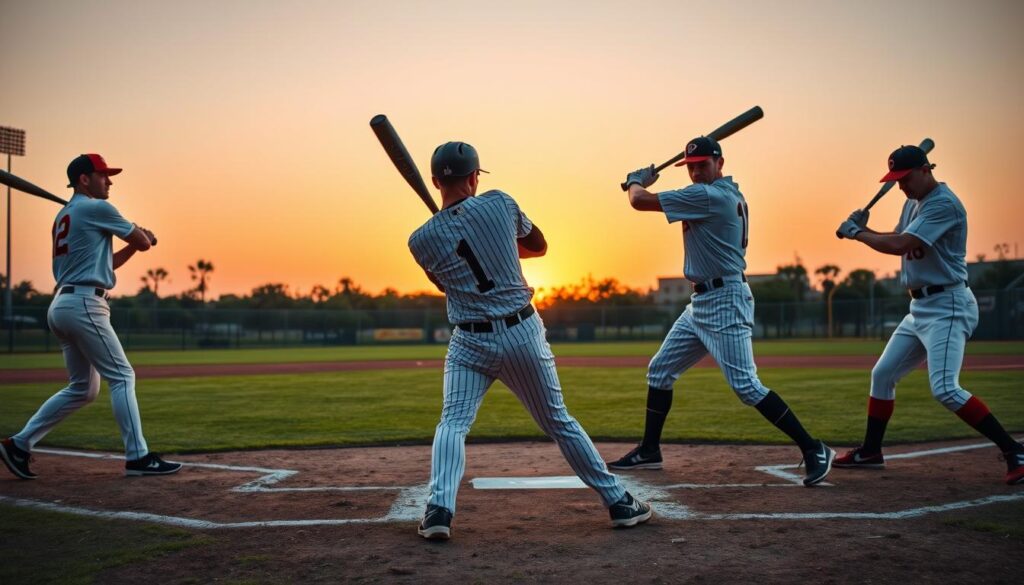
If Rodriguez innovated spatially, Beltré’s genius was temporal. His Texas renaissance is a masterclass in career arc manipulation. Most players peak in their late 20s. Beltré, with his trademark helmet-grab and laugh, decided to peak after 30.
His innovation was the art of the late-career supernova. He combined veteran pitch recognition with bat speed that refused to decay. While others faded, he perfected a new manual for productive longevity. Beltré didn’t just age well; he aged better, turning his 30s into a decade of elite production.
The Philosopher of Contact: Michael Young
In an era seduced by the three-true-outcome gospel, Michael Young was a glorious anachronism. While the league swung for the fences, he swung for the gaps. His innovation was philosophical.
In the face of mounting strikeouts, Young championed the relentless, high-average approach. He led the league in hits, proving that contact could be the engine of a potent offense. He was the counter-argument to the all-or-nothing ethos, a reminder that sometimes the most revolutionary act is to master the fundamentals everyone else is abandoning.
This table isn’t just a stat sheet; it’s a thesis statement on their unique forms of genius.
| Hitter | Core Innovation | Impact | Key Metric |
|---|---|---|---|
| Ivan Rodriguez | Redefining the offensive ceiling for catchers | Made elite two-way catcher the new standard | 13 Gold Gloves & 7 Silver Sluggers |
| Adrián Beltré | Mastering the late-career peak (post-age 30) | Rewrote the timeline for elite performance | Over 1,700 hits & 4 All-Stars after 30 |
| Michael Young | Championing contact in a three-true-outcome era | Validated the high-average approach as a modern weapon | Led AL in hits (2x), Career .300 AVG |
True innovation isn’t always a louder crack of the bat. Sometimes, it’s the quiet revolution of a changed expectation, a rewritten timeline, or a stubborn adherence to a fading art. These players were architects. They built new models of success that others would spend years trying to replicate. While the game continues to evolve towards a new era of power-hitting, the legacies of Rodriguez, Beltré, and Young stand as permanent proof that there are multiple blueprints for greatness. That’s what separates very good hitters from the genuinely legendary hitters.
Lasting Impact
Legacy is the final score, written by history and memory. Numbers like Ivan Rodriguez’s #7, Adrian Beltre’s #29, and Michael Young’s #10 are symbols in Arlington. True impact is felt culturally.
Pudge was the cornerstone, building a contender from scratch. Beltre’s legacy is a mix of fun and fierce competition at third base. Young showed what it means to be consistent and selfless. They were more than MVPs; they were franchise legends.
Nolan Ryan’s role as CEO adds depth. His Hall of Fame status gives the team credibility. It makes us think about other lasting legacies.
Think about José Canseco’s impact. The 1988 MVP exposed baseball’s steroid problem. His revelations changed the game’s rules and values. That’s a lasting impact.
So, what leaves the biggest mark? Cooperstown plaques and retired jerseys are important. But it’s the stories fans share that truly matter. The real MVPs are those who change the game’s heart and soul.