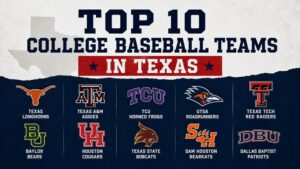
In Texas, baseball history isn’t found in press releases or stats. It’s etched in our memories by intense moments. These moments feel like myths, not sports.
Nolan Ryan’s career numbers are incredible. But we remember him for his seven no-hitters. Each one wasn’t just a win. It was a defining moment that pushed the limits of human pitching.
The Arkansas-Texas feud is rooted in raw, foundational hate. Its story isn’t in trophies. It’s in the early, brutal Southwest Conference games. These games were more than matches. They were cultural declarations.
So, what makes an event legendary? It’s a mix of sublime skill, high stakes, and a story so good, Hollywood would say it’s too good to be true.
Turning Points in Players’ Careers
Think about the last time you watched a game and felt the air change. It wasn’t just a play; it was a pivot. A single, pressurized moment where an athlete’s story gets a hard edit, shifting from “possible” to “permanent.” These are the defining moments that separate roster filler from lasting lore.
Nolan Ryan’s arm is a great example. Everyone knows about his seven no-hitters. But the real turning point for his legacy wasn’t a single game. It was his defiant, almost absurd longevity. Pitching with ferocious velocity into his 40s wasn’t just a personal achievement. It was a philosophical rebellion against the baseball clock.
His 27-season career arc forced a rethink. Front offices began to see a pitcher’s shelf life not as a fixed expiration date, but as a challenge. Ryan’s sustained dominance became the blueprint. It asked a new question: what if peak performance isn’t a moment, but a marathon?
Now, zoom into the college diamond, where the stakes feel even more personal. Take the Arkansas-Texas rivalry. For a player there, a game isn’t just a contest. It’s a high-definition, nationally-scouted audition. A legendary performance in that cauldron doesn’t just boost team morale. It rewrites a resume and can launch a professional paycheck into a different tax bracket.
This is where raw talent gets pressure-tested. A power hitter launching a game-winning homer in the bottom of the ninth? A star pitcher mowing down the lineup under a glaring spotlight? These acts become career-defining lore. They answer the only question that matters in high-stakes sports: can you deliver when the entire narrative hinges on this single at-bat, this one pitch?
The player stops being a name on a lineup card. They become a chapter. Their defining moment gets woven into the rivalry’s fabric, replayed in highlights and remembered in barroom debates for decades. It’s a terrifying responsibility. But for the ones who seize it, it’s the beautiful moment their career narrative gets its exclamation point.
These pivots are why we watch. We’re not just waiting for a win. We’re waiting for history to tip, for a player to cross that invisible line from participant to legend. The next legendary performance is always just one pitch away.
Historical Context
Understanding a legendary sports moment needs its historical setting. It’s like trying to enjoy a symphony with just one note. You hear the sound, but miss the full experience.
Defining moments don’t occur in isolation. They are shaped by the unique challenges of their time.
The Arkansas-Texas football rivalry is a prime example. Those early games were more than just sports. They were fights for control in the Southwest Conference (SWC). Every game was a clash of family, geography, and institutions.
Later, the rivalry evolved. Conference changes, first to the Big 12, then the SEC, changed the stakes. But the rivalry’s core remained the same. The setting changed, but the rivalry’s essence did not.
Nolan Ryan’s legacy is more than his strikeouts. He played in four different eras of baseball. His consistency in a changing game made his legend.
When we call an event iconic, we’re not just talking about the score. We’re highlighting a moment in time. It’s the mix of league politics, cultural trends, and technology that makes a moment stand out.
Grasping this context is key, whether it’s a modern game or the history of Texas baseball. The setting is as important as the event itself.
| Conference Era | Primary Stake | Audience Scope | Nature of the Rivalry |
|---|---|---|---|
| Southwest Conference (SWC) | Regional supremacy & conference title | Regional, intensely local | Annual grudge match; deeply personal and geographic |
| Big 12 Conference | Conference championship & national ranking | National, but conference-centric | Major conference showdown; traditional hate meets new league stakes |
| Southeastern Conference (SEC) | National playoff berth & national reputation | Fully national, media-saturated | Blockbuster national event; historic animosity amplified by the nation’s toughest league |
The game may look the same on the field. But the why it matters changes with history and structure. Missing this context is like analyzing a game without understanding its significance.
Media and Fan Reaction
What makes a great play legendary? It’s the buzz in places like Fayetteville and Austin. A legendary performance needs fans to witness it. The energy at Baum-Walker or Disch-Falk Field is where history starts, written by fans.
Now, that excitement is shared online. Fans experience games through many platforms. The “Boomstick” at Globe Life Field is a prime example. It’s a chili-slathered hot dog and beer bat, symbolizing Texas’s love for excess.
Fans’ desire to celebrate and share drives the reaction video world. A study shows how sports teams use fan and player for huge engagement. Liverpool FC’s alternative commentary got over 5 million views. Arsenal’s bench cam celebrating a goal hit 2 million views. These videos show our collective excitement is valuable.
The media gives us the highlight reel. Fans add the cultural heartbeat. A defining moment isn’t just recorded. It’s felt, filmed, and sometimes, deep-fried.