Let’s talk about America’s favorite contradiction: a national pastime that excluded most of the nation. For decades, Major League Baseball had a “gentleman’s agreement.” It was about keeping doors closed based on skin color.
Imagine the best pitcher in Texas, his fastball humming, but his World Series dreams dead. Jim Crow cast a shadow, building a separate stadium.
Here’s where the plot twist lands. When white majors drew their color line, Black communities acted. They didn’t protest outside the ballpark. They built their own ballparks.
This is the untold story of segregation as a perverse incubator. Racial exclusion didn’t just deny opportunity. It fueled a parallel universe of Black-owned teams, fierce competition, and athletic brilliance. Oppression, meet your ingenious opposition.
We’re rewinding to an era when Texas dirt infields hosted legends you’ve never heard of. The Negro Leagues Figures who emerged from this crucible didn’t just play baseball. They built an institution from scratch while the existing one pretended they didn’t exist.
Prominent Texas Teams & Figures
The story of Texas Negro Leagues is about stars, not underdogs. These African-American players didn’t wait for MLB to open its doors. They created their own league.
The Houston Eagles were a force to be reckoned with. Their 1949 season was a record-breaker, with a .721 win percentage. This shows their dominance in a segregated world.
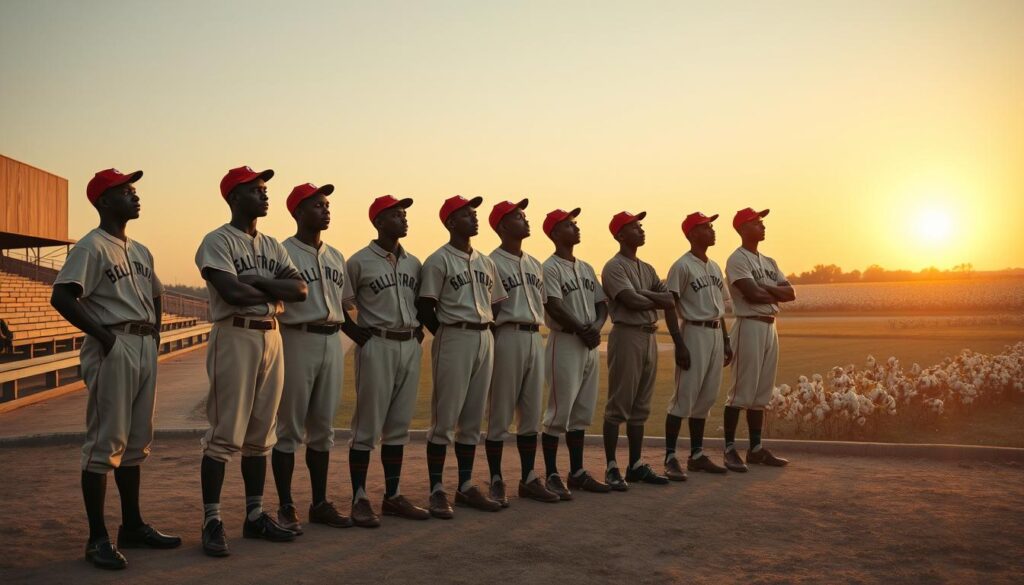
The Austin Black Senators were the hidden gem. They were where talent was honed for greatness. They were the heart of Texas’s Negro Leagues success.
Meet the players who made Texas ballparks legendary:
- Willie “El Diablo” Wells: Born in Austin, he hit .392 against major leagues. He changed baseball with his power hitting.
- Satchel Paige: His 47-3 record in Texas is a mythic tale. Each pitch was a call for integration.
- Rube Foster: Though in Chicago, his strategy drew Texas teams to the national stage. He was the mastermind behind the league.
- Smokey Joe Williams: At 44, he threw a 1.12 ERA season. Today, he’d be a star with a big contract.
Now, these stats are part of MLB’s official records. Willie Wells’s .392 average is recognized as a baseball achievement, not just a “Negro Leagues stat.”
Wells later coached Jackie Robinson. Paige’s performances in Texas pressured MLB to integrate. These players were more than athletes; they were change-makers.
The Houston Eagles’ .721 win percentage in 1949 shows what a Negro Leagues team could do. They were a dynasty in a parallel universe we’re discovering.
Texas was a key player in the Negro Leagues story. It was a hub for African-American players whose talent MLB couldn’t ignore. They eventually integrated and recognized their achievements.
These figures are not just footnotes. They are the heart of the story. Their careers answer “what-if” questions with “what-were” evidence. Their talent shone in Texas, waiting for MLB to notice.
Societal Impact
To understand the Texas Negro Leagues, you have to see it as more than just baseball. It was a game played for high stakes, like a three-dimensional chess game. On the surface, it was sport. But beneath, it was a thriving Black-owned business in a hostile economy.
Looking deeper, the ballpark was a secret place for survival and civil rights planning. The Negro Leagues Figures who worked here were not just athletes. They were urban planners, economists, and social architects.
Imagine a Sunday afternoon at the ballpark. The talk wasn’t just about the game. It was about voter drives, boycotts, and supporting Black businesses. The stadium was the town square that Jim Crow denied.
This wasn’t just a side effect. It was the main goal. The game gave people a reason to gather. While they watched, they worked on building a new society.
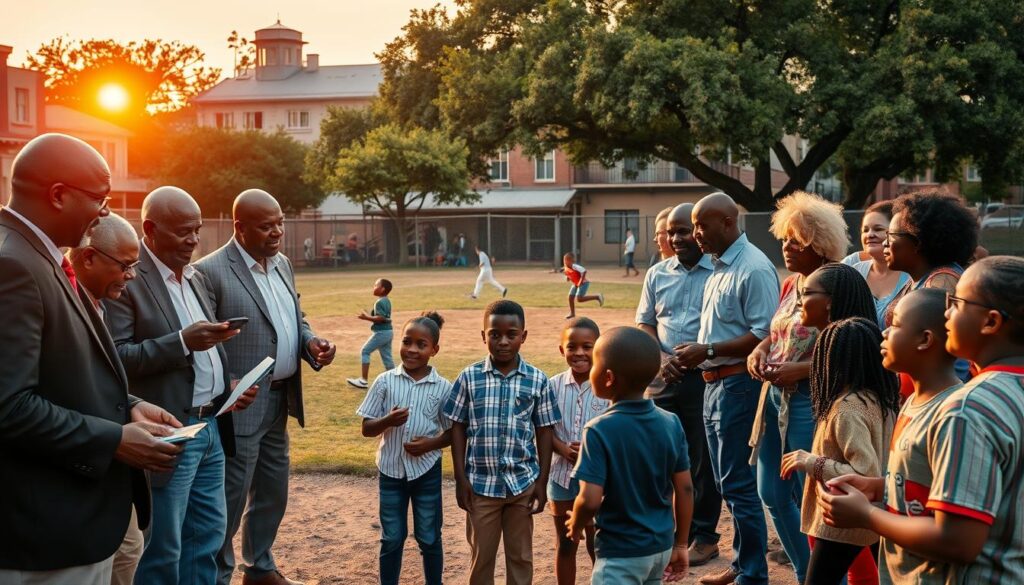
The leagues were financially successful, despite low pay. Players worked over 200 days a year for just $2 to $5 a game. They made money through night games and secret betting deals.
They even drew crowds with night games before the majors did. Informal agreements with betting sites helped them when banks refused loans. You can learn more about this socio-economic impact in dedicated research.
The cultural impact was priceless. Every win and packed stadium was a challenge to the myth of Black inferiority. It showed excellence couldn’t be separated; it would find its own stage.
Then, the unthinkable happened. The wall came down. Jackie Robinson broke the color barrier in 1947. The leagues that nurtured him began to fade.
Integration, the ultimate goal, became a threat. Why watch the Houston Eagles when you could see a Black player in the majors? Talent and fans left.
In Texas, the bottom fell out. Attendance dropped by 62% between 1948 and 1952. It wasn’t the product that failed. It was the “legitimate” league opening its doors. The history of Negro League baseball in Texas is marked by this painful shift.
So, what’s the final score? The leagues showed Black excellence could thrive under oppression. They built economic engines and social bonds for communities. Yet, their greatest triumph—proving their players belonged on the biggest stage—ended their own era. The legacy of the Negro Leagues Figures is a double-edged sword: monumental gain and profound loss.
Oral Histories and Archival Efforts
How do you bring back a lost legacy? The Texas Negro Leagues’ story was almost forgotten. Now, historians are working hard to keep it alive.
Oral history is key. People like John Holway recorded stories before they were lost. His work, backed by the Society for American Baseball Research, set the standard. These stories are the foundation.
Today, archaeology digs deep. It uses old schedules and church bulletins. The 2006 Hall of Fame inductions of 17 Negro Leagues figures were a big step. MLB’s 2020 move to include their stats in official records was a major victory for history.
Museums like the Negro Leagues Baseball Museum are now key players. They work with others to create interactive exhibits and digitize important documents. A 1928 team photo is now just a click away thanks to the Digital Public Library of America.
This effort makes sure players like Willie Wells are remembered. They’re not just names on graves. They’re part of baseball’s history. Forgetting is not just forgetting; it’s a form of exclusion. Now, their achievements are recognized.